

The Enduring Citadel: How a Constitution Stands Against Tyranny
The human longing for order is often a double-edged sword. While it can forge societies and foster progress, it can also, paradoxically, lead to the very conditions that stifle human flourishing: tyranny. For millennia, philosophers and political thinkers have grappled with the fundamental challenge of empowering a government to protect its citizens without simultaneously granting it the means to oppress them. The answer, often painstakingly crafted and fiercely defended, lies in the constitution. This foundational document, far more than a mere set of rules, is humanity's most sophisticated and vital defense against the arbitrary exercise of power, a bulwark designed to secure liberty and prevent the descent into oppressive rule. It is a testament to the collective wisdom of ages, a living covenant that defines, limits, and legitimizes power, ensuring that those who govern remain servants of the people, not their masters.
Defining Tyranny: A Philosophical Perspective
Before we can fully appreciate the constitution's role, we must first understand its adversary: tyranny. In the classical sense, as explored by thinkers like Plato in his Republic and Aristotle in Politics, tyranny is not merely harsh rule but a specific form of government where power is seized and exercised solely for the benefit of the ruler, not the common good. It is characterized by:
- Arbitrary Power: Decisions are made based on the whim of the ruler, not established law.
- Suppression of Dissent: Opposition is crushed, and free expression is stifled.
- Disregard for Justice: Laws serve the tyrant's interests, not fairness or equality.
- Erosion of Liberty: Individual freedoms are curtailed or eliminated.
Aristotle, observing various city-states, noted that a tyrant governs without accountability, often through force and fear, directly contrasting with a well-ordered polity where law reigns supreme. The danger, then, is not just the presence of a strong leader, but the unlimited nature of that power.
The Constitution's Blueprint: More Than Just Rules
A constitution is the fundamental law of a state, laying out the principles by which it is governed. It's a social contract, outlining the powers and responsibilities of the government and defining the rights of the governed. Its primary purpose in preventing tyranny is multifaceted:
The Rule of Law vs. The Rule of Man
At its heart, a constitution establishes the rule of law. This principle dictates that everyone, including those in power, is subject to the same laws, impartially applied. This stands in stark contrast to the "rule of man," where the whims of a ruler dictate policy. The constitution codifies this by:
- Establishing Fixed Principles: It sets out enduring principles that guide governance, making it difficult for temporary majorities or ambitious leaders to deviate.
- Limiting Power: Explicitly defines what the government can and cannot do, creating boundaries beyond which it cannot legitimately operate.
- Providing Accountability: Establishes mechanisms for holding government officials responsible for their actions.
Key Constitutional Principles for Preventing Tyranny
| Principle | Description | Role in Preventing Tyranny The constitution is not merely a technical document; it is a philosophical statement about how power should be structured to maximize human liberty. It represents a societal agreement that no single individual or branch of government should wield unchecked authority.
Mechanisms of Constitutional Safeguards
The genius of a well-designed constitution lies in its ability to divide power, creating a system of internal checks and balances that makes the emergence of tyranny difficult.
Separation of Powers
Inspired by Montesquieu's analysis in The Spirit of the Laws, this doctrine divides governmental authority into distinct branches, typically:
- Legislative: Makes laws (e.g., Parliament, Congress).
- Executive: Implements and enforces laws (e.g., President, Prime Minister).
- Judicial: Interprets laws (e.g., Courts).
This separation ensures that no single entity controls all aspects of governance, thus limiting the potential for abuse.
Checks and Balances
Beyond merely separating powers, a constitution often grants each branch the ability to limit the powers of the others. As articulated by James Madison in The Federalist Papers, this system is designed to prevent any one branch from becoming too powerful. Examples include:
- Legislative Checks: Congress can impeach the President or judges, override presidential vetoes, and approve appointments.
- Executive Checks: The President can veto legislation, appoint judges, and issue executive orders.
- Judicial Checks: Courts can declare laws or executive actions unconstitutional (judicial review).
Protection of Individual Liberty
A cornerstone of any constitution designed to prevent tyranny is the explicit enumeration and protection of individual rights and liberties. Drawing from the natural rights philosophy of John Locke, who argued for inherent rights to life, liberty, and property, many constitutions include a Bill of Rights. These provisions act as direct limitations on government power, ensuring that even a majority cannot infringe upon fundamental freedoms such as:
- Freedom of speech and expression
- Freedom of religion
- Right to a fair trial
- Protection against arbitrary arrest and detention
These rights are not granted by the government; they are recognized as inherent, and the constitution serves to prevent the government from violating them.
Historical Lessons: When Constitutions Fail (or Prevail)
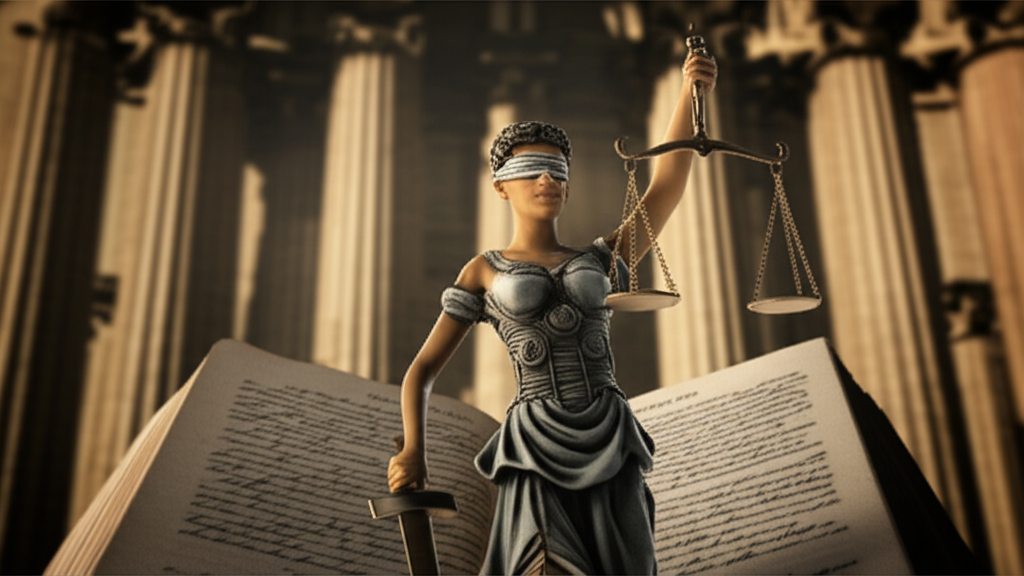
History offers a stark lesson: societies that fail to establish or uphold constitutional principles are perpetually at risk of tyranny. The rise and fall of ancient republics, the absolutist monarchies of Europe, and the totalitarian regimes of the 20th century all underscore the fragility of liberty in the absence of a robust constitutional framework. Conversely, the endurance of systems like the American republic, despite its imperfections, is often attributed to the resilient structure of its constitution, with its built-in mechanisms for amendment and adaptation. It is a constant reminder that the fight against tyranny is an ongoing vigilance, demanding active participation from citizens to ensure the government remains bound by its foundational law.
The Enduring Battle for Liberty
The concept of a constitution as a safeguard against tyranny is not a static ideal; it is a dynamic and evolving struggle. The Enlightenment thinkers, building on ancient philosophies, recognized that true liberty could only exist where power was constrained by law. Documents like the Magna Carta, the English Bill of Rights, and the American Constitution and Bill of Rights are not just historical artifacts; they are living testaments to humanity's continuous effort to define and defend freedom. Each generation faces new challenges to these principles, whether from technological advancements, economic pressures, or ideological shifts. The strength of a constitution is ultimately measured by its ability to adapt while preserving its core commitment to limiting power and protecting rights.
Conclusion: The Perpetual Vigilance
The constitution stands as humanity's most profound invention for governing ourselves without succumbing to the temptations of tyranny. It is a carefully engineered framework that channels power, diffuses authority, and enshrines the fundamental liberties that make a free society possible. From the classical Greek discussions on ideal polities to the intricate designs of modern democratic states, the underlying principle remains the same: a government must be bound by a higher law, a covenant with its people. While no document can ever guarantee freedom absolutely, a strong, respected, and continually defended constitution remains our most potent weapon in the perpetual battle against the forces that seek to undermine liberty and impose tyranny. It demands our understanding, our engagement, and our unwavering commitment.
YouTube: "John Locke Social Contract Philosophy Explained"
YouTube: "Checks and Balances US Government Explained"
📹 Related Video: What is Philosophy?
Video by: The School of Life
💡 Want different videos? Search YouTube for: "The Importance of Constitution in Preventing Tyranny philosophy"