

The Enduring Paradox: How Wealth Reshapes the Family Structure
The family, often considered the bedrock of society, is a dynamic institution, constantly molded by forces both internal and external. Among these forces, few exert as profound and complex an influence as wealth. This article explores how the accumulation, distribution, or absence of wealth fundamentally alters the structure, dynamics, and very definition of family, challenging age-old customs and conventions and precipitating significant change across generations. From ancient philosophical inquiries into property and kinship to modern sociological observations, the interplay between material prosperity and familial bonds remains a central concern for understanding human society.
Wealth and the Ancient Family: Foundations and Obligations
From the earliest philosophical texts, the relationship between wealth and family has been a subject of intense scrutiny. For thinkers like Aristotle, the oikos – the household, encompassing family, property, and slaves – was the fundamental unit of the polis. Wealth, in this context, was not merely personal accumulation but a means to sustain and perpetuate the family line, ensuring its place within the broader social order. The custom and convention of primogeniture, dowries, and arranged marriages were all deeply entwined with the economic status of the family, designed to consolidate assets, secure alliances, and maintain social standing.
- Aristotle's View: In Politics, Aristotle discusses household management (oikonomia) as a vital precursor to statecraft. The prudent management of wealth within the family was seen as essential for its stability and the fulfillment of its civic duties.
- Plato's Ideal: While Plato, in The Republic, suggests a communal approach to family and property for the guardian class to prevent factionalism, this very proposition underscores the perceived power of private wealth to shape and potentially corrupt traditional family structures.
In these ancient frameworks, wealth often dictated roles, responsibilities, and even the emotional landscape of kinship. A family's economic standing determined its social capital, its access to education, and its capacity to care for its elderly or infirm members. The change in a family's fortune could rapidly elevate or diminish its status, often with dramatic consequences for its members.
The Winds of Change: Wealth as a Catalyst for Familial Evolution
The advent of new economic systems and philosophical ideas has continually reshaped the impact of wealth on family. The transition from agrarian societies to mercantile and later industrial economies introduced unprecedented opportunities for change in individual and collective fortunes, subsequently altering customs and conventions of family life.
Table 1: Historical Shifts in Wealth's Impact on Family
| Era | Primary Source of Wealth | Dominant Family Structure | Key Impact of Wealth on Family |
|---|---|---|---|
| Ancient/Feudal | Land, inherited property | Extended, patriarchal | Preservation of lineage, social status, arranged marriages. |
| Early Modern | Trade, crafts | Extended, then nuclear (urban) | Increased mobility, individual enterprise, dowry significance. |
| Industrial/Modern | Wages, capital, finance | Nuclear, increasingly diverse | Greater individual autonomy, delayed marriage, reduced family size, inheritance planning complexities. |
The rise of the nuclear family, for instance, can be partly attributed to economic change. As individuals became more mobile for work, and less dependent on inherited land, the necessity of large, multi-generational households diminished. Wealth accumulation through individual enterprise, rather than solely through inheritance, fostered a greater sense of individual agency, challenging traditional familial hierarchies and the customs and conventions that bound individuals to their birth families.
Affluence, Alienation, and the Modern Family
In contemporary society, the impact of wealth on family continues to evolve in complex ways. Extreme affluence can create unique pressures, leading to both immense opportunities and potential disconnections. The pursuit and maintenance of wealth can demand significant time and attention, sometimes at the expense of familial intimacy.
- Inheritance and Intergenerational Dynamics: Wealth introduces the complexities of inheritance, trust funds, and estate planning, which can be sources of both security and profound conflict within families. The expectation of inherited wealth can alter the work ethic and life choices of younger generations, challenging traditional notions of responsibility and contribution.
- Globalized Family Structures: For the ultra-wealthy, families often become geographically dispersed, with members living in different countries, pursuing diverse interests. While technology bridges distances, it also highlights a change from the localized, cohesive family unit of the past.
- The Paradox of Plenty: Philosophers like Rousseau, in his Discourse on Inequality, touched upon how property and its unequal distribution could lead to social ills. Similarly, within families, immense wealth can sometimes paradoxically lead to emotional alienation, as material comfort replaces the necessity of interdependence. The custom and convention of family support might be undermined by the ability to purchase services previously provided by kin.
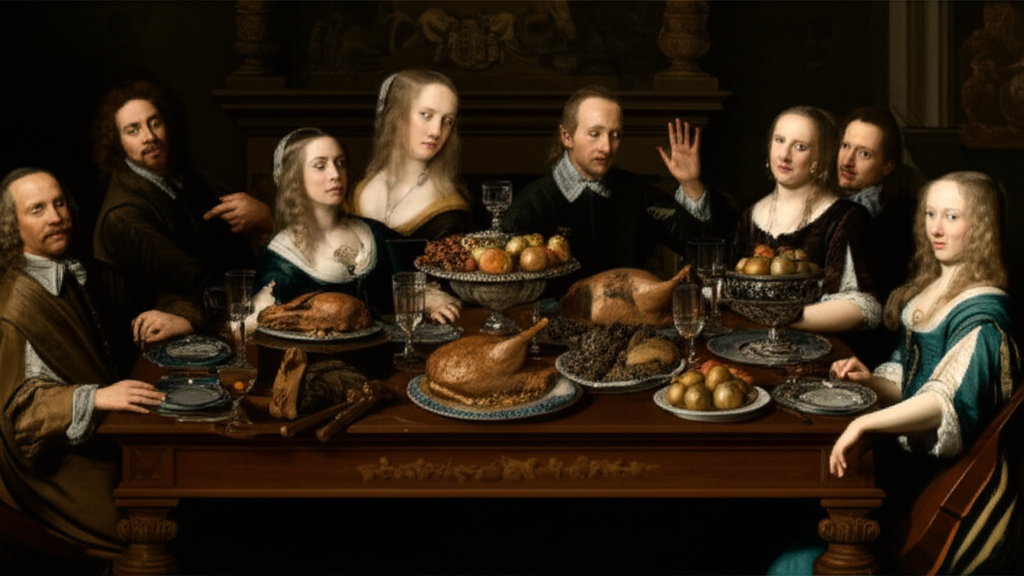
The very concept of family undergoes a subtle change under the weight of significant wealth. Is it still primarily a unit of emotional support and shared experience, or does it become a corporation, a brand, or a legal entity primarily concerned with asset management and legacy preservation? These questions challenge our deepest assumptions about kinship.
Philosophical Reflections on Wealth, Kinship, and the Human Condition
The philosophical tradition offers a rich tapestry for understanding the impact of wealth on family. From Plato's concerns about the corrupting influence of riches on the state, to Locke's defense of private property as a natural right, and Marx's critique of how economic structures determine social relations, each perspective sheds light on the enduring tension.
The change wrought by wealth is not merely economic; it is deeply psychological and ethical. It forces us to re-evaluate the customs and conventions we hold dear regarding familial duty, love, and obligation. Does immense wealth free individuals from the bonds of family, or does it merely create new, more intricate chains? The Great Books continually invite us to ponder whether true flourishing within the family unit is best achieved through material abundance, or through a focus on virtues that transcend economic status.
Ultimately, the impact of wealth on family structure is a testament to the human capacity for adaptation and the enduring philosophical challenge of balancing material pursuits with the cultivation of meaningful human relationships. It is a dialogue that continues to shape our understanding of who we are, and who we aspire to be, within the most intimate of our social structures.
YouTube: "Philosophy of Wealth and Society"
YouTube: "Great Books on Family and Property"
📹 Related Video: What is Philosophy?
Video by: The School of Life
💡 Want different videos? Search YouTube for: "The Impact of Wealth on Family Structure philosophy"