

In Phaedrus, Plato weaves a vivid tapestry of the soul’s immortality, offering readers a journey beyond life’s final threshold. His dialogue invites us to imagine the soul not as a mere product of bodily existence but as a timeless entity, perpetually in pursuit of the divine. This exploration isn’t just philosophical musing; it’s a pathway to understanding what it means to be truly alive. When we talk about life beyond death, Plato suggests it’s a question of purpose—a journey that continues whether or not we’re prepared to see beyond the physical.
Plato’s vision of the soul’s immortality isn’t about supernatural assertions; it’s a deeply human quest to understand what endures when everything else falls away. Picture the soul as a traveler, a seeker, whose true nature is revealed when it encounters the limits of mortal life. In our modern context, these questions have transformed into scientific inquiries, spiritual explorations, and personal reflections. Consider this: when we think of legacy, what do we envision? Is it a legacy of actions, values, or impact—a bit of ourselves that lives on? By placing this question of immortality in today’s context, Plato calls us to live in a way that leaves something worth remembering.
Would Plato agree that we’re more than just our physical bodies? Likely so. But he’d also challenge us to contemplate how the life of the mind, our “inner philosopher,” can continue to grow and seek even in the face of mortality. This ideal resonates on planksip.org, where Plato’s vision is more than a historical idea—it’s an imaginative framework for pursuing purpose in our own lives. What part of your “inner philosopher” do you think is immortal?
From the Archives of Ancient Greece: Featuring Dr. Michael Sugrue
Dr. Sugrue’s insights into the Phaedrus reveal a profound interpretation of the soul’s journey. He describes Plato’s depiction of the soul as a chariot drawn by two horses, each representing different facets of our character: one noble and aspiring, the other impulsive and desirous. The charioteer, tasked with guiding these forces, represents reason striving to steer us toward wisdom. It’s a struggle many of us recognize: the balancing act between ambition and temptation, between immediate gratification and long-term goals.
Sugrue’s analysis brings to life the way Plato viewed the soul’s journey as a blend of discipline and divine inspiration. Imagine, for example, a decision to pursue a difficult goal—learning a new skill, building a career, or contributing to your community. The “noble horse” embodies the drive to push forward, to aspire for something greater, while the “impulsive horse” may pull you toward distractions or quick wins. Plato, as Sugrue interprets, invites us to embrace this tension as part of our journey toward a higher calling, a purpose that echoes beyond our lifetime.
This analogy is more than just an illustration; it’s a call to reflect on our inner struggles and aspirations. Are we aligning our pursuits with something enduring, something that might “live” beyond us? Readers can explore more about how this concept lives on today by joining discussions on planksip.org, where Plato’s ideals are re-imagined in our modern context, inviting everyone to contribute their own insights to this timeless journey.
Insights from the Dialogues: Quoting Plato
In Phaedrus (245c-250d), Plato provides a poetic vision of the soul’s immortality, describing it as a divine charioteer guiding two horses through a challenging terrain. The imagery here is layered: the charioteer represents the rational part of the soul, struggling to control the spirited and appetitive parts, symbolized by the two horses. It’s not just an epic battle of willpower but a philosophical statement about the journey every soul undertakes, one where success requires balance and self-understanding.
This struggle for balance is deeply relatable. Consider times in life where our choices reflect this very battle—a career decision between ethical integrity and personal ambition, or a relationship choice that balances affection with independence. Plato’s metaphor speaks to all of us, encouraging reflection on what guides our actions and the ultimate “goal” we’re striving toward. Do we harness our desires for personal gain, or do we set our sights on a purpose that transcends the self, something Plato would call “the Good”?
Readers on planksip.org can dive deeper into this symbolism, where Socratic and Platonic dialogues inspire personal reflections on balancing reason, desire, and courage. Each dialogue can become a touchstone, a guide in the ongoing work of shaping our character and values. How would you interpret Plato’s charioteer in your own life? How do you guide your “horses”?
Chance and Fate: Exploring Ancient Games
In ancient Greece, games of chance like knucklebones (astragali) were often played during significant life events, including rites of passage and even funerary rites. These games, which combined skill with randomness, mirrored life’s unpredictability and the mysterious journey of the soul after death. Plato’s contemporaries saw such games not merely as pastimes but as ritualistic acts, reminders that fate plays an unrelenting role in life—and possibly beyond it.
Imagine a scenario in which a person casts knucklebones before a major decision, invoking the favor of fate. For ancient Greeks, this act represented both an acknowledgment of chance and a hopeful appeal to the divine. Today, our “games of fate” might look different—perhaps the risks we take in relationships, career choices, or personal growth, where outcomes are uncertain yet transformative. Plato’s concept of the soul’s journey reminds us that life’s uncertainties are part of a larger, perhaps even divine, design.
Explore the Mystical World of Astraguli: Ancient Games of Chance with Cultural Significance.
This week on planksip.org, we explore how such games connect us to deeper questions about fate and free will. By reinterpreting these ancient practices, we’re encouraged to ponder our own beliefs about destiny. Do we trust that some part of our journey is guided by a higher principle, or do we see life as a series of random events? Readers are invited to share their perspectives on chance, fate, and purpose in the Reader’s Corner, creating a modern-day symposium inspired by Plato’s insights.
Virtues Revisited: Practical Lessons for Today
This week’s virtue focus is temperance, or self-control, which Plato elevates as essential in achieving harmony within the soul. The analogy of the charioteer in Phaedrus reminds us that self-mastery isn’t a one-time achievement but a continuous effort to balance desires and virtues. In today’s world, temperance might mean setting boundaries with technology, practicing patience with others, or pursuing goals without sacrificing integrity.
Imagine a moment where you’ve had to exercise restraint, perhaps resisting an impulse to respond angrily in a difficult conversation or choosing to prioritize long-term goals over short-term rewards. Each of these moments is a small act of temperance, a step toward becoming the “charioteer” Plato envisioned. Temperance teaches us that freedom isn’t the absence of restriction but the ability to direct our desires toward meaningful ends.
On planksip.org, readers are invited to share their personal stories of temperance—moments where they’ve balanced impulses with intentions. Each story contributes to a community exploring Plato’s virtues in practice, creating a space where the wisdom of the past meets the challenges of the present. How does temperance play a role in your life, and what does it teach you about the soul’s journey?
Engage with Us: Reader’s Corner
As we explore the concept of the soul’s immortality, we invite you to reflect on your own beliefs about what endures beyond life. Do you find Plato’s portrayal in Phaedrus compelling, or do you interpret the soul’s journey differently? Each perspective offers a unique lens on this age-old question, and we’d love to hear your thoughts. Whether you’re inspired by philosophical ideals, personal reflections, or even modern interpretations of fate and the divine, your insights are welcome.
Share your reflections in our Reader’s Corner on planksip.org, where each contribution builds a collective exploration of these profound questions. Let’s imagine together what a modern “immortal soul” might look like in our lives. How does the legacy you leave reflect your highest ideals?
Closing Reflection: Socrates’ Enduring Legacy
Plato’s vision of the soul’s immortality is inextricably tied to Socrates’ life and teachings. In Phaedrus, the image of the soul’s divine journey serves as both a metaphor and a reality for Socrates, who approached his own death with calm confidence in the continuity of his soul. Socrates’ fearlessness in the face of death wasn’t just a personal trait; it was the logical conclusion of a life devoted to wisdom and truth, a life that transcended the boundaries of mortality.
In honoring Socrates’ legacy, we’re reminded to approach our lives with the same commitment to higher ideals. What would it mean to live as if our soul truly is immortal, to act as if every decision contributes to a lasting journey? Socrates’ example inspires us to consider what kind of “immortality” we seek, whether through wisdom, virtue, or the legacy we leave behind.
Join us on planksip.org to continue the discussion, where philosophy’s timeless wisdom offers a framework for living a meaningful, purposeful life. Perhaps together, we can imagine a world where the ideals of beauty, goodness, and truth are not just aspirations but realities within reach.
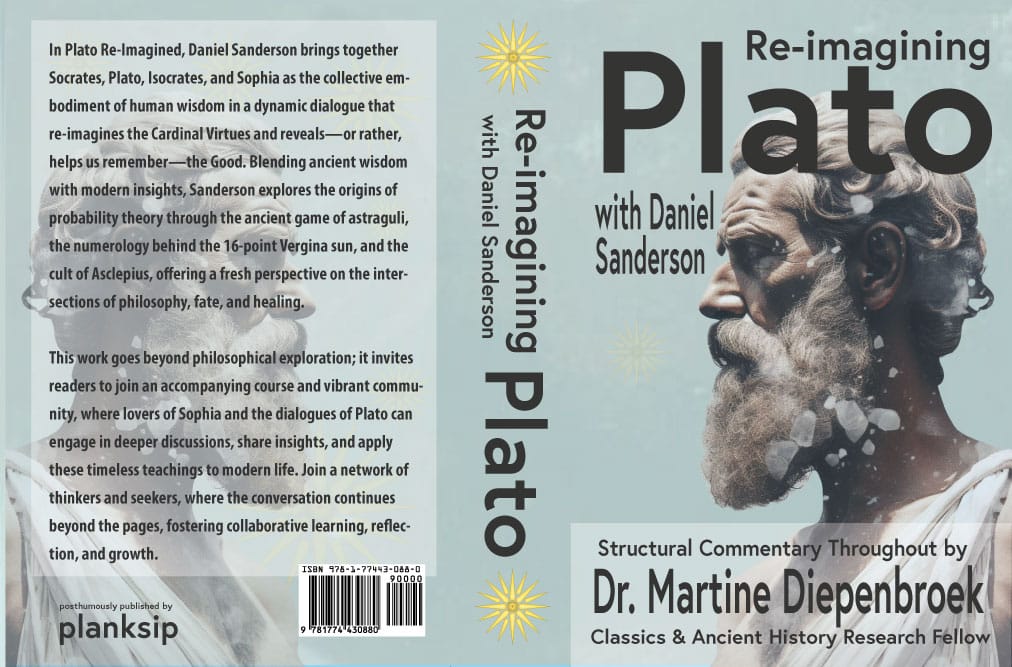
Plato Re-Imagined
This course offers 32 comprehensive lectures exploring most of Plato's dialogues. These lectures guide students toward a consilient understanding of the divine—a concept that harmonizes knowledge across disciplines and resonates with secular and religious leaders. As a bonus, Lecture #33 focuses on consilience, demonstrating how different fields of knowledge can converge to form a unified understanding.


