

The Enduring Enigma: A Journey into the Immortality of the Soul
The question of whether our individual consciousness, our very essence, persists beyond the physical demise of the body is one of humanity's most ancient and profound inquiries. This article delves into the philosophical and religious traditions that have grappled with the concept of the Immortality of the Soul, exploring its historical development, key arguments, and enduring significance in Metaphysics and Religion. From the speculative dialogues of ancient Greece to the intricate theological systems of later eras, we trace the relentless human quest to understand our ultimate fate.
Introduction: The Soul's Journey Beyond the Flesh
For millennia, thinkers across cultures have pondered the nature of the human soul. Is it merely an emergent property of complex biological processes, or does it possess an independent, perhaps eternal, existence? This fundamental question lies at the heart of countless philosophical systems and religious doctrines, shaping our understanding of life, death, morality, and purpose. The notion of an immortal soul offers not only comfort but also a profound framework for conceiving the universe and our place within it.
Ancient Echoes: Plato's Eternal Forms and the Soul's Persistence
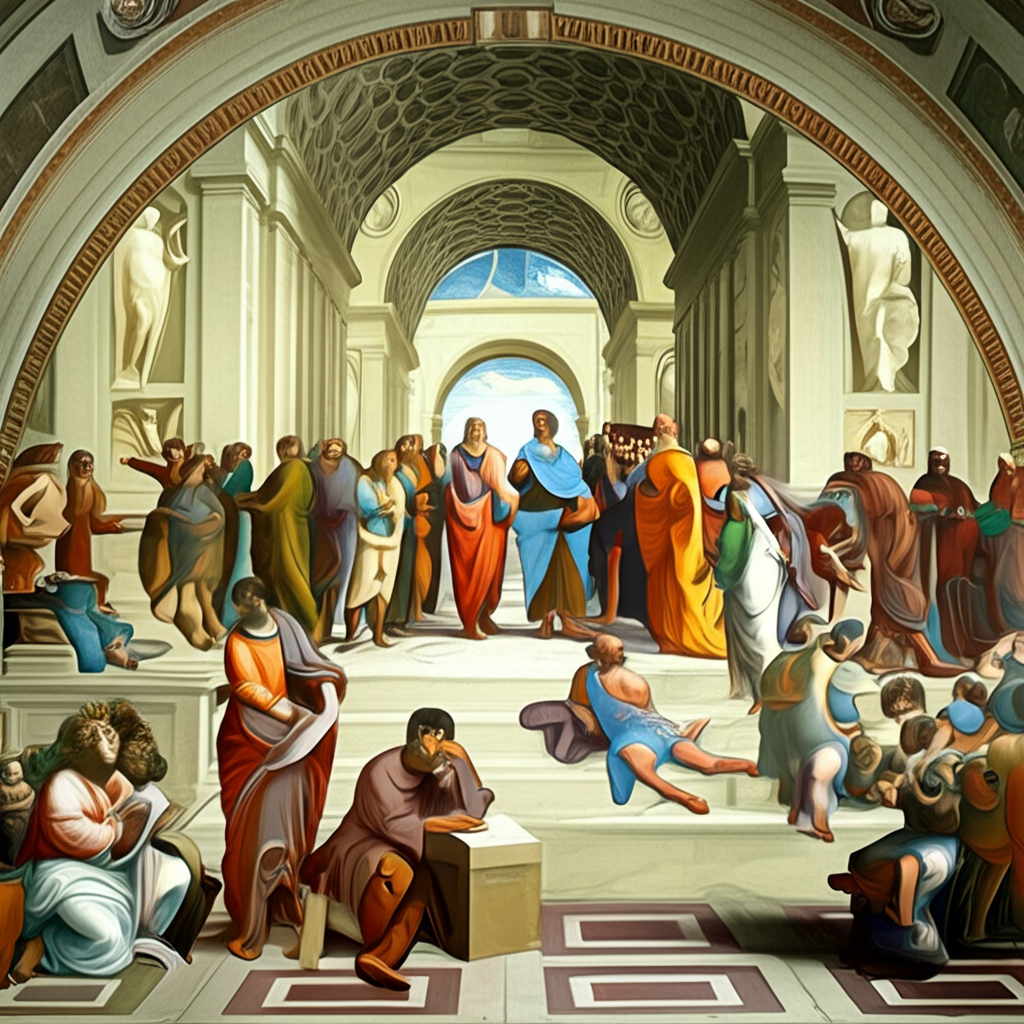
Among the earliest and most influential proponents of the soul's Immortality was Plato, whose dialogues, particularly the Phaedo, lay out compelling arguments for the soul's existence independent of the body. For Plato, the soul is not merely a life-giving principle but the seat of reason and the true self, capable of apprehending eternal and unchanging Forms.
Plato's arguments often hinge on several key ideas:
- The Argument from Recollection: Knowledge, particularly of abstract concepts like perfect equality or beauty, seems innate. Plato suggested this knowledge is recollected from a prior existence of the soul before its embodiment.
- The Argument from Opposites: Life arises from death, and death from life, suggesting a continuous cycle where souls must exist in some state before and after bodily life.
- The Argument from Simplicity and Indivisibility: The soul, being simple and non-composite, cannot be broken down or destroyed like physical objects. It is akin to the eternal Forms themselves.
- The Argument from Affinity: The soul, being rational and invisible, is akin to the divine and immortal Forms, while the body is akin to the visible and perishable world.
Plato's vision profoundly influenced Western thought, establishing a dualistic understanding of human nature where the soul is seen as superior to and distinct from the corporeal body.
Aristotle's Nuance: The Soul as Form of the Body
While a student of Plato, Aristotle offered a more nuanced and empirical perspective on the soul in his work De Anima. For Aristotle, the soul is the "form" of the body, the principle of life and organization that animates matter. It is what makes a living thing what it is.
Aristotle identified different types of souls:
- Nutritive Soul: Possessed by plants, enabling growth and reproduction.
- Sentient Soul: Possessed by animals, adding sensation and locomotion.
- Rational Soul: Unique to humans, encompassing thought, reason, and intellect.
Aristotle's view of the soul's Immortality is more complex and debated. While the nutritive and sentient souls are clearly tied to the body and perish with it, the rational part of the human soul, particularly the "active intellect," sometimes seems to be described in ways that suggest a potential for separation and persistence. However, his primary emphasis was on the soul as inextricably linked to the body, making a clear-cut case for personal Immortality less direct than Plato's.
Theological Foundations: Immortality in Religious Thought
The concept of an immortal soul is a cornerstone of many major world religions, profoundly shaping their eschatology, ethics, and understanding of divine justice.
The Abrahamic Traditions
- Judaism: While early Hebrew texts focused more on communal survival and a shadowy afterlife (Sheol), later Jewish thought, particularly influenced by Hellenistic philosophy, developed a stronger belief in individual resurrection and the Immortality of the soul.
- Christianity: The doctrine of the immortal soul is central to Christian theology. It posits that humans are created in the image of God, possessing a soul that survives physical death and faces judgment, leading to eternal life or damnation. Thinkers like St. Augustine and St. Thomas Aquinas (drawing heavily from Aristotle but reinterpreting him through a Christian lens) integrated Greek philosophical concepts of the soul into a robust theological framework. Aquinas, in his Summa Theologica, argues for the soul's Immortality based on its immateriality and its capacity for intellectual understanding, which transcends physical limitations.
- Islam: Islamic theology also affirms the Immortality of the soul, which is believed to be created by God and to return to Him after death for judgment. The Qur'an and Hadith extensively describe the journey of the soul, the Day of Judgment, and the eternal rewards of Paradise or punishments of Hell.
Rationalist Inquiries: Descartes and the Mind-Body Divide
In the modern era, René Descartes offered a new philosophical foundation for the soul's Immortality through his radical dualism. In works like Meditations on First Philosophy, Descartes argued for a clear distinction between two fundamental substances:
- Res Cogitans (Thinking Substance): The mind or soul, characterized by thought, consciousness, and indivisibility.
- Res Extensa (Extended Substance): The body, characterized by spatial extension, divisibility, and mechanical operation.
For Descartes, the soul's capacity for thought and self-awareness, independent of the body's physical processes, served as proof of its non-physical nature and, by extension, its potential for Immortality. The soul, being immaterial, cannot be broken down or corrupted in the way a physical body can. This sharp distinction between mind and body became a defining feature of Western Metaphysics.
Modern Challenges and Metaphysical Debates
The concept of the immortal soul has faced significant challenges from various philosophical and scientific perspectives, particularly in the wake of the Enlightenment and advancements in neuroscience.
- Materialism/Physicalism: Many contemporary philosophers and scientists argue that consciousness and the mind are entirely products of brain activity. From this view, there is no separate, non-physical soul to survive the death of the brain.
- Identity Theory: This theory posits that mental states are identical to brain states. If the brain ceases to function, so does the mind.
- Emergentism: Consciousness emerges from complex neural networks, but is not reducible to individual neurons. However, it is still seen as dependent on the physical substrate.
Despite these challenges, the debate over the soul's nature and potential Immortality continues to be a vibrant area of inquiry within Metaphysics, touching upon questions of personal identity, the nature of consciousness, and the limits of scientific explanation.
The Enduring Significance of the Immortal Soul
Why does the concept of the immortal soul continue to captivate and influence human thought? Its enduring significance stems from several profound implications:
- Meaning and Purpose: It offers a framework for understanding human life as having a transcendental purpose beyond earthly existence.
- Ethical Frameworks: The belief in an afterlife and divine judgment often underpins moral systems, providing motivation for virtuous living and accountability for actions.
- Hope and Comfort: For many, the idea of the soul's Immortality provides solace in the face of death, offering hope for reunion with loved ones and a continuation of consciousness.
- Personal Identity: It addresses the fundamental question of what constitutes the "self" and whether that self can persist through radical change or death.
Conclusion: A Timeless Quest
From the ancient Greek philosophers seeking rational explanations for human existence to the profound doctrines of world Religion, the Immortality of the Soul remains one of humanity's most persistent and intriguing questions. While scientific advancements continue to illuminate the intricate workings of the brain, the philosophical and Metaphysical dimensions of the soul's nature offer a rich tapestry of thought that encourages us to look beyond the observable, to ponder the unseen, and to reflect on the very essence of what it means to be human. The quest for understanding the soul's journey, whether finite or eternal, is a timeless testament to our insatiable curiosity about ourselves and the universe.
📹 Related Video: PLATO ON: The Allegory of the Cave
Video by: The School of Life
💡 Want different videos? Search YouTube for: "Plato's Argument for the Immortality of the Soul"
📹 Related Video: What is Philosophy?
Video by: The School of Life
💡 Want different videos? Search YouTube for: "Does the Soul Exist? Philosophy Discussion"