

Echoes of Eternity: Exploring the Immortality of the Soul
The question of the soul's immortality stands as one of humanity's most ancient and profound inquiries, a cornerstone of both philosophy and religion. From the earliest civilizations to contemporary thought, the notion that some essential part of us transcends physical death has shaped our understanding of existence, morality, and our place in the cosmos. This article delves into the rich history of this concept, examining its origins in ancient metaphysics, its development through various spiritual traditions, and the enduring arguments for and against the soul's eternal nature.
A Timeless Question: What is the Soul?
At its heart, the concept of the soul refers to the non-physical essence of a living being, often considered the seat of consciousness, personality, and moral identity. The belief in its immortality posits that this essence survives the death of the body, continuing to exist in some form or realm. This idea has captivated thinkers across millennia, prompting intricate philosophical systems and providing solace and meaning within countless spiritual frameworks.
The Philosophical Genesis: Plato's Enduring Arguments
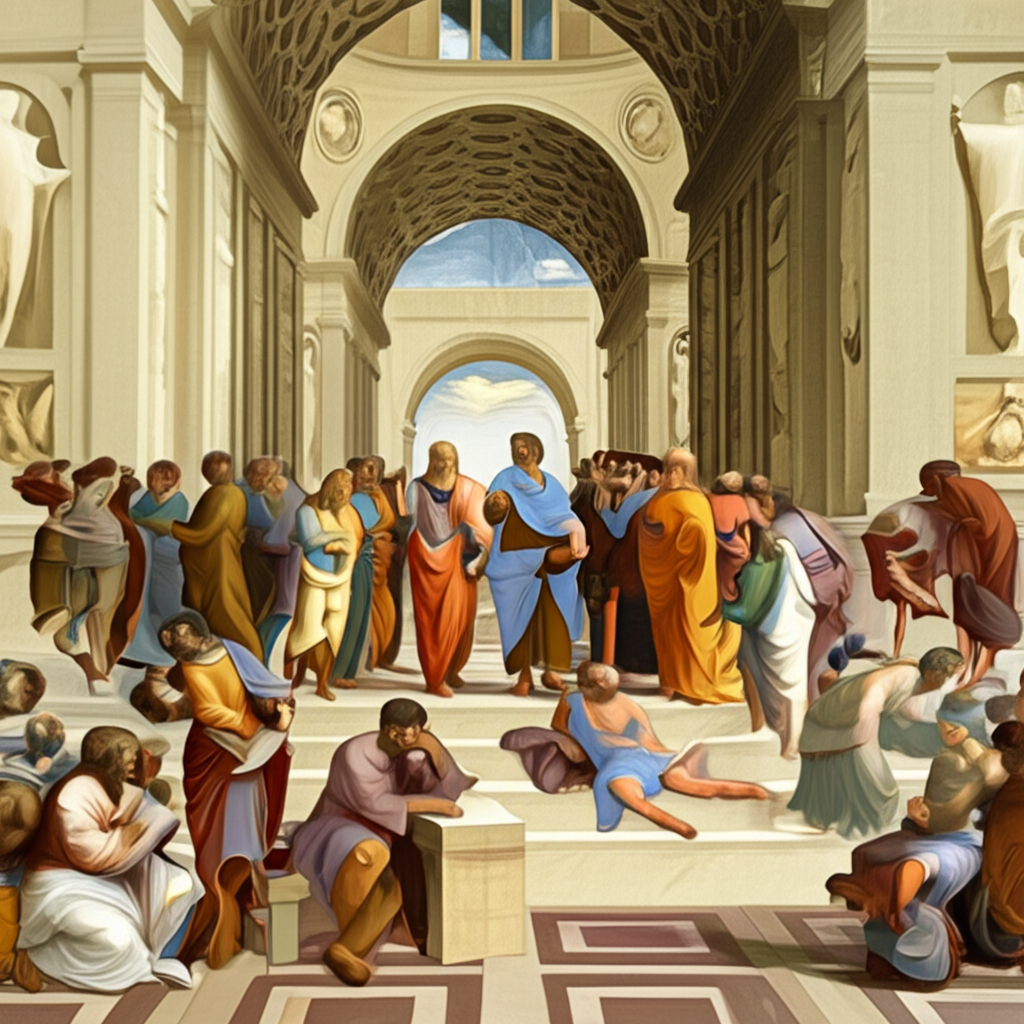
One of the most influential proponents of the soul's immortality in Western thought was Plato, whose arguments, primarily found in his dialogue Phaedo (a pivotal text within the Great Books of the Western World), laid a foundational bedrock for subsequent metaphysical discussions. Plato believed the soul was distinct from the body, and indeed, superior to it.
Here are some of Plato's key arguments for the soul's immortality:
| Argument Title | Description |
|---|---|
| The Argument from Opposites | Life comes from death, and death from life. Just as sleep follows waking, and waking follows sleep, so too must life follow death, implying a cycle of souls moving between realms. |
| The Theory of Recollection | Plato argued that learning is not acquiring new knowledge but recalling knowledge the soul possessed before birth. This implies the soul existed prior to its embodiment and therefore can exist after it. |
| The Argument from Simplicity | The soul, being simple and non-composite, cannot be broken down or corrupted, unlike the body, which is composite. What is simple and unchanging is therefore eternal. |
| The Affinity Argument | The soul is akin to the Forms (eternal, unchanging ideals), while the body is akin to the sensible, changing world. Like seeks like, so the soul, being aligned with the eternal, must itself be eternal. |
| The Argument from Life | The essence of the soul is life; it brings life to the body. Something whose essence is life cannot admit its opposite, death. Therefore, the soul is deathless. |
Plato's vision of the soul's journey, its pre-existence, and its ultimate return to a realm of pure Forms, profoundly shaped Western philosophy and theology.
Religious Horizons: Faith in the Eternal Soul
Beyond philosophical inquiry, the immortality of the soul is a central tenet in many of the world's major religions, offering comfort, moral guidance, and a framework for understanding human purpose.
- Christianity: The belief in an immortal soul, created in the image of God, is fundamental. It posits that after death, the soul faces judgment, leading to heaven, hell, or purgatory, awaiting bodily resurrection.
- Islam: The Quran teaches that the soul (ruh or nafs) is created by Allah and is distinct from the body. Upon death, the soul enters an intermediate state (Barzakh) before the Day of Judgment, where it will be reunited with a resurrected body for eternal reward or punishment.
- Judaism: While views vary, many Jewish traditions affirm the immortality of the soul, believing it returns to God after death and that there will be a future resurrection of the dead.
- Hinduism: The concept of Atman (the individual soul) being eternal and part of Brahman (the universal spirit) is central. The soul undergoes a cycle of rebirth (samsara) based on karma, eventually seeking liberation (moksha) from this cycle.
- Buddhism: While often debated, early Buddhism generally rejects a permanent, unchanging "self" or soul (Anatta). However, it acknowledges a continuity of consciousness or a stream of being that transmigrates, carrying karmic imprints from one life to the next, striving for Nirvana.
These diverse religious perspectives underscore the deep human yearning for continuity and meaning beyond the finite confines of earthly existence.
Contemporary Challenges and Metaphysical Debates
In the modern era, the concept of the immortality of the soul faces scrutiny from scientific and philosophical naturalism. Advances in neuroscience, for instance, have illuminated the intricate relationship between the brain and consciousness, leading some to argue that the mind is an emergent property of the brain, and thus, ceases to exist upon bodily death.
The Mind-Body Problem Revisited
The enduring "mind-body problem" is central to this debate. If the mind (or soul) is merely a function of the brain, how can it exist independently? Dualists, like René Descartes (whose Meditations on First Philosophy also features prominently in the Great Books), argued for a fundamental distinction between the thinking substance (mind/soul) and the extended substance (body). However, explaining the interaction between these two distinct entities remains a significant metaphysical challenge.
Materialist perspectives typically contend that there is no independent soul; consciousness is purely a neurological phenomenon. This view directly challenges the notion of immortality, suggesting that personal identity and experience are inextricably tied to the physical brain.
The Enduring Quest
Despite the philosophical and scientific challenges, the question of the immortality of the soul continues to resonate. It speaks to our deepest hopes and fears, influencing our ethical frameworks, our approach to grief, and our vision of ultimate destiny. Whether approached through the rigorous logic of metaphysics, the comforting embrace of religion, or the empirical lens of science, the inquiry into what, if anything, survives us remains a defining feature of the human condition, a testament to our perennial quest for meaning in an expansive universe.
📹 Related Video: PLATO ON: The Allegory of the Cave
Video by: The School of Life
💡 Want different videos? Search YouTube for: "Plato Phaedo Immortality Soul Explained"
📹 Related Video: What is Philosophy?
Video by: The School of Life
💡 Want different videos? Search YouTube for: "Dualism vs Materialism Philosophy of Mind"