

The Unseen Wellspring: Imagination as the Source of Art
Art, in its myriad forms—from the sculptor's stone to the poet's verse, the painter's canvas to the composer's symphony—is often perceived as a reflection of reality, a mirror held up to nature. Yet, to confine art to mere imitation is to misunderstand its profoundest origin. This article posits that the true genesis of art lies not in replication, but in the imagination—that boundless faculty of the human mind which conjures new worlds, synthesizes disparate experiences, and gives form to the unformed. It is the imaginative leap that transforms observation into insight, memory into myth, and raw emotion into resonant expression, making it the indispensable bedrock of all creative endeavor.
The Primacy of Imagination Over Mere Mimesis
For centuries, philosophers have grappled with the nature of art. Early Greek thinkers, notably Plato, viewed art primarily through the lens of mimesis, or imitation. While acknowledging art's capacity to reflect reality, a deeper philosophical inquiry reveals that truly great art transcends simple mimicry. It is here that the imagination asserts its supremacy.
- Beyond the Visible: The artist, unlike a mere copyist, does not simply reproduce what is seen. Instead, they delve into the realm of the possible, the felt, the dreamt. The imagination allows them to perceive the essence beyond the appearance, to envision alternative realities, or to distill complex emotions into tangible forms.
- Synthesizing and Innovating: Whether it's the creation of a mythical creature, the abstract representation of a feeling, or the reinterpretation of a historical event, the mind actively constructs rather than passively records. This constructive process is the hallmark of imagination.
Memory and Imagination: The Mind's Creative Crucible
The imagination does not operate in a vacuum. It is profoundly intertwined with memory and imagination, drawing from the vast repository of past experiences, sensations, and knowledge. This symbiotic relationship is crucial for artistic creation.
Table: The Interplay of Memory and Imagination in Art
| Aspect of Creativity | Role of Memory | Role of Imagination | Artistic Outcome |
|---|---|---|---|
| Inspiration | Recalling vivid experiences, emotions, or observations. | Reinterpreting, combining, or transforming these memories. | A unique concept, motif, or narrative. |
| Technique & Skill | Remembering learned methods, forms, and tools. | Envisioning new applications, pushing boundaries of form. | Innovative use of medium, novel artistic approaches. |
| Symbolism | Drawing on shared cultural or personal associations. | Creating new symbols, imbuing old ones with fresh meaning. | Layered depth, universal resonance, personal expression. |
| Narrative Construction | Recalling events, character archetypes, plot structures. | Inventing new scenarios, characters, and dramatic arcs. | Engaging stories, compelling worlds, thought-provoking plots. |
The mind acts as a forge where raw materials from memory—images, sounds, feelings, ideas—are heated, hammered, and reshaped by the imagination into something entirely new. An artist doesn't just remember a sunset; they remember the feeling of that sunset, the mood it evoked, and then, through imagination, they translate that remembered experience into colors and forms that convey not just the sight, but the essence of that moment.
The Artist's Vision: From Inner World to Outward Expression
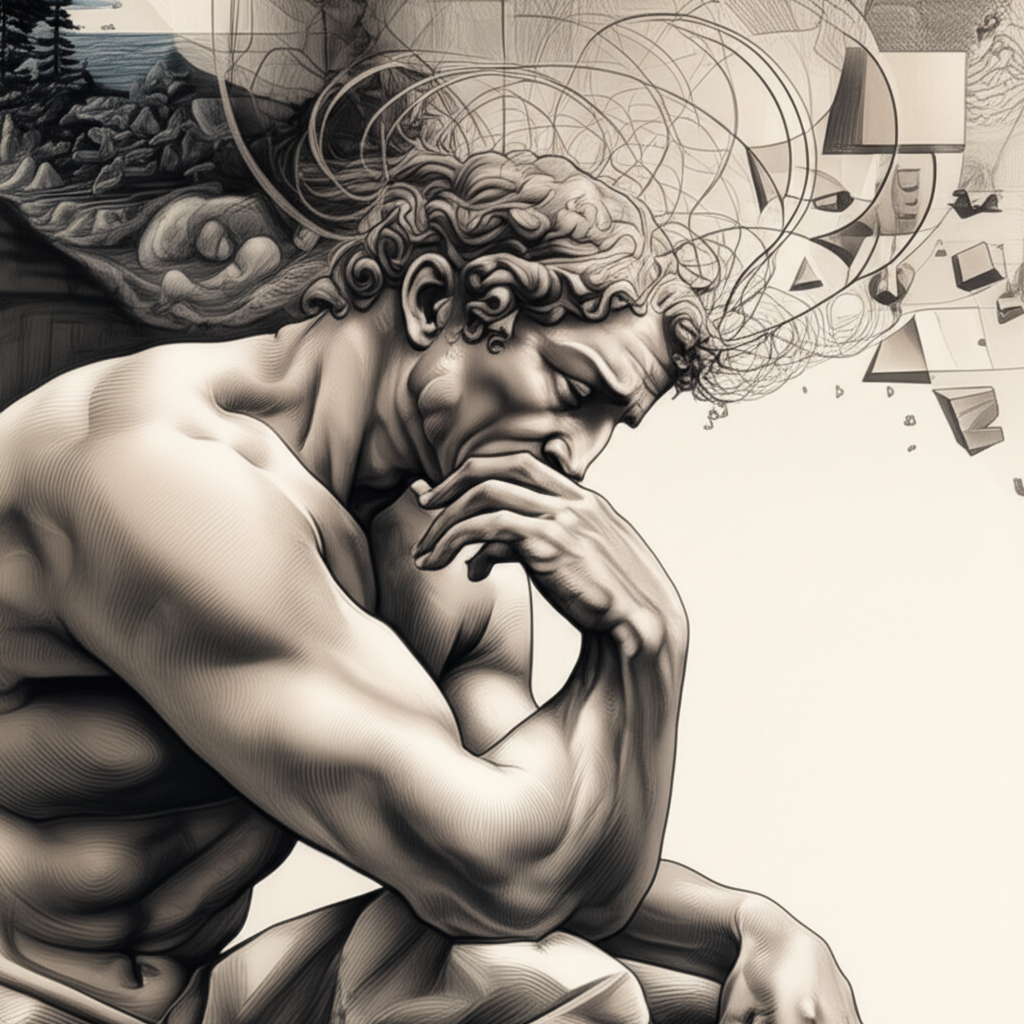
Every true work of art begins as an internal vision, a flicker within the mind that the imagination nurtures into a coherent concept. This internal world, often richer and more complex than external reality, is the artist's primary domain.
- The Unseen Blueprint: Before a brush touches canvas or a chisel strikes stone, the artist "sees" the finished work in their imagination. This mental blueprint guides their hand, informing every decision, from composition to color palette, rhythm to texture.
- Giving Form to the Formless: How does one paint sorrow, or sculpt joy? Not by merely depicting a crying or smiling face, but by drawing upon the imagination to find forms, colors, and textures that evoke these emotions, tapping into a universal human experience that transcends literal representation. This is where the profound power of art truly lies.
The Transformative Power of Imaginative Art
The impact of art born from the imagination extends far beyond the artist. It shapes our perceptions, challenges our assumptions, and offers new ways of understanding the world and ourselves.
- Expanding Horizons: Imaginative art invites us into alternative realities, prompting us to consider possibilities beyond our immediate experience. It can transport us to distant lands, future worlds, or the depths of the human psyche, broadening our intellectual and emotional landscapes.
- Evoking Empathy and Understanding: Through the artist's imaginative lens, we can experience the perspectives of others, fostering empathy and a deeper understanding of the human condition. A novel, a play, or a film, all products of profound imagination, can make us walk in another's shoes, feel their joys and sorrows.
- Catalyst for Innovation: Beyond the aesthetic, the imaginative impulse in art often precedes innovation in other fields. The ability to envision what does not yet exist, to connect disparate ideas in novel ways, is a fundamental human capacity cultivated and expressed through art, and essential for progress in science, technology, and philosophy itself.
Conclusion
Ultimately, the distinction between a craftsman and an artist often lies in the degree to which imagination is employed. While skill and technique are vital, it is the imaginative faculty that elevates mere craft to profound art. It is the wellspring from which novelty flows, the forge where memory and experience are transmuted into something transcendent, and the lens through which the human mind can not only reflect the world but also reinvent it. Without the boundless realm of imagination, art would be a sterile imitation; with it, art remains an eternal testament to humanity's capacity for creation, wonder, and insight.
YouTube: "Plato on Art and Imitation"
YouTube: "Kant's Philosophy of Aesthetic Judgment and Imagination"
📹 Related Video: What is Philosophy?
Video by: The School of Life
💡 Want different videos? Search YouTube for: "The Imagination as a Source of Art philosophy"