

The Imagination as a Source of Art
By Daniel Fletcher
The very essence of human creativity, particularly in the realm of art, springs forth from the boundless wellspring of the imagination. It is the mind's extraordinary capacity to conjure, combine, and conceive beyond the immediate constraints of sensory perception that allows us to forge new realities, express profound truths, and imbue the mundane with meaning. Far from being a mere flight of fancy, imagination is the foundational faculty that transforms raw experience into aesthetic form, proving itself indispensable to every artistic endeavor.
The Mind's Canvas: Imagination's Role in Creation
At its core, art is not merely an imitation of nature, but a profound re-interpretation and re-presentation of it. This transformative process is entirely dependent on the mind's imaginative faculty. Where perception offers us the world as it is, imagination empowers us to envision the world as it could be, as it feels, or as it symbolizes. It enables the artist to see beyond the surface, to intuit hidden connections, and to give form to abstract ideas or emotions that defy simple description.
Consider the painter who renders not just a landscape, but the feeling of a storm approaching; the writer who weaves narratives from disparate observations and inner reflections; or the composer who constructs symphonies from silence. Each act is initiated by an imaginative leap, a departure from the purely empirical to the conceptual and expressive. The mind, through imagination, becomes an active participant in shaping reality, rather than a passive recipient.
Beyond Imitation: Art as a Product of Inner Vision
While art often draws inspiration from the observable world, its true power lies in its ability to transcend mere representation. The artist, guided by imagination, doesn't just copy; they invent, distort, idealize, or synthesize. This is where the crucial interplay between Memory and Imagination comes into play. Our memories provide a vast reservoir of images, sensations, and experiences, but it is imagination that acts as the alchemist, distilling, combining, and reconfiguring these elements into something entirely new.
Without imagination, art would be a sterile exercise in replication, devoid of the unique perspective and emotional resonance that defines true masterpieces. It is the inner vision, shaped by the artist's subjective experience and imaginative prowess, that imbues a work with its distinctive character and enduring impact.
The Interplay of Memory, Idea, and Aesthetic Form
The creative process is a dynamic dialogue between what has been experienced and what can be conceived. Memory and Imagination are deeply intertwined, each feeding the other in the genesis of art. Memory furnishes the raw material – the colors seen, the sounds heard, the emotions felt, the stories told. Imagination then takes these fragments and reassembles them, often in novel and unexpected ways, to articulate a new idea or feeling.
Here are some ways imagination manifests in artistic creation:
- Conceptualization: Forming the initial idea or vision for a piece, often before any physical execution.
- Symbolism: Imbuing objects, forms, or narratives with deeper, non-literal meanings.
- Empathy and Perspective: Allowing the artist to inhabit different viewpoints or emotional states to create believable characters or evoke specific feelings.
- Formal Innovation: Conceiving new structures, techniques, or aesthetic principles that challenge existing norms.
- Problem-Solving: Finding creative solutions to artistic challenges within the medium.
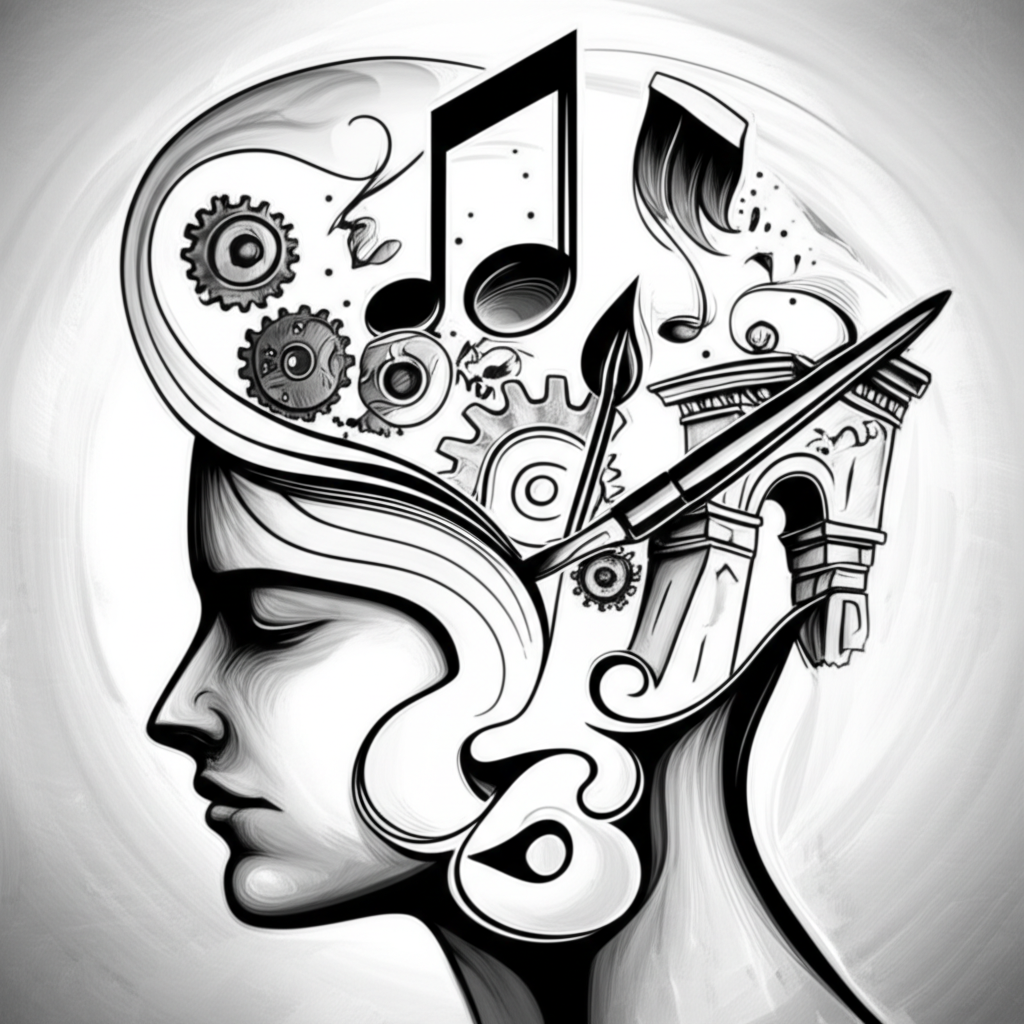
This ceaseless interplay ensures that art remains a vibrant and evolving expression of the human spirit. The artist's mind, far from being a simple recording device, is a forge where the raw materials of existence are transformed by the heat of imagination into something transcendent and beautiful.
Cultivating the Imaginative Faculty
For the philosopher and the artist alike, cultivating the imagination is paramount. It involves more than just daydreaming; it requires active engagement with the world, deep reflection, and a willingness to explore the boundaries of perception and thought. It means nurturing curiosity, embracing ambiguity, and daring to envision possibilities that lie beyond the immediately apparent. Through such cultivation, the mind expands its capacity not only to create art but also to understand the deeper currents of human experience and existence.
The imagination, therefore, is not merely a component of the artistic process; it is the very breath of art, the source from which all creative expression flows, linking the subjective inner world of the artist to the objective beauty they bring into being.
📹 Related Video: PLATO ON: The Allegory of the Cave
Video by: The School of Life
💡 Want different videos? Search YouTube for: ""Plato's Theory of Art and Imitation""
📹 Related Video: KANT ON: What is Enlightenment?
Video by: The School of Life
💡 Want different videos? Search YouTube for: ""Kant's Aesthetic Judgment and the Imagination""