

The Enduring Pursuit: Unpacking the Idea of Universal Justice
The quest for justice is as old as civilization itself, but the notion of a universal justice – a set of principles applicable to all peoples, in all places, at all times – remains one of philosophy's most profound and persistent challenges. This article delves into the intricate Idea of universal justice, exploring its historical roots in the Great Books of the Western World, the inherent tension between the universal and particular, and its complex relationship with law. We'll navigate the arguments for and against its existence, examining how thinkers from Plato to Kant have grappled with defining a justice that transcends mere local custom or individual preference, ultimately seeking to understand why this powerful Idea continues to shape our moral and political discourse.
The Elusive Idea of Justice: A Timeless Quest
From the bustling agora of ancient Athens to the hallowed halls of modern international courts, humanity has consistently sought to establish what is right, what is fair, and what constitutes a just society. Yet, the moment we append "universal" to "justice," the discussion elevates from practical jurisprudence to fundamental metaphysics and ethics. What precisely do we mean by a universal Idea of justice? Is it an innate moral compass, a divine decree, or a product of pure reason?
The foundational texts of the Great Books offer a rich tapestry of perspectives. Plato, in his Republic, meticulously constructs an ideal state, where justice is not merely a legalistic framework but an inherent harmony within the individual soul and the body politic. For Plato, the Idea of Justice exists in the realm of Forms, an eternal and unchanging blueprint that particular instances of justice merely imperfectly reflect. Aristotle, in his Nicomachean Ethics and Politics, provides a more pragmatic, yet equally profound, exploration, distinguishing between distributive justice (fair allocation of goods and honors) and corrective justice (rectifying wrongs). While Aristotle grounds justice in human nature and the pursuit of the good life within a community, he also hints at a "natural justice" that is universally valid, independent of human convention.
Universal and Particular: The Philosophical Tug-of-War
The most significant hurdle in grasping universal justice lies in the chasm between the universal principle and its particular manifestations. How can a single, overarching Idea of justice apply equally to the vastly diverse cultures, histories, and individual circumstances that define our world? This tension is not merely academic; it underpins debates on human rights, international law, and even the moral permissibility of certain cultural practices.
| Aspect | Universal Justice | Particular Justice |
|---|---|---|
| Nature | Abstract, foundational principles, unchanging | Contextual, specific applications, adaptable |
| Source | Reason, Natural Law, Divine Command, Human Nature | Social contract, Custom, Positive Law, Cultural Norms |
| Scope | Applies to all humanity, across all times and places | Applies to specific groups, societies, or situations |
| Goal | Establish fundamental fairness, human dignity | Maintain social order, resolve local disputes, reflect values |
| Challenge | Achieving consensus, practical implementation | Avoiding relativism, ensuring ethical consistency |
Thinkers like Cicero, and later Aquinas, argued forcefully for the concept of Natural Law—an inherent moral order discoverable by reason, which dictates what is just and unjust irrespective of human law. This natural law serves as the bedrock for the Idea of universal justice, suggesting that certain truths about right and wrong are self-evident and universally binding. However, critics often point to the vast array of human laws and customs, questioning whether such a universal bedrock truly exists beyond our aspirations.
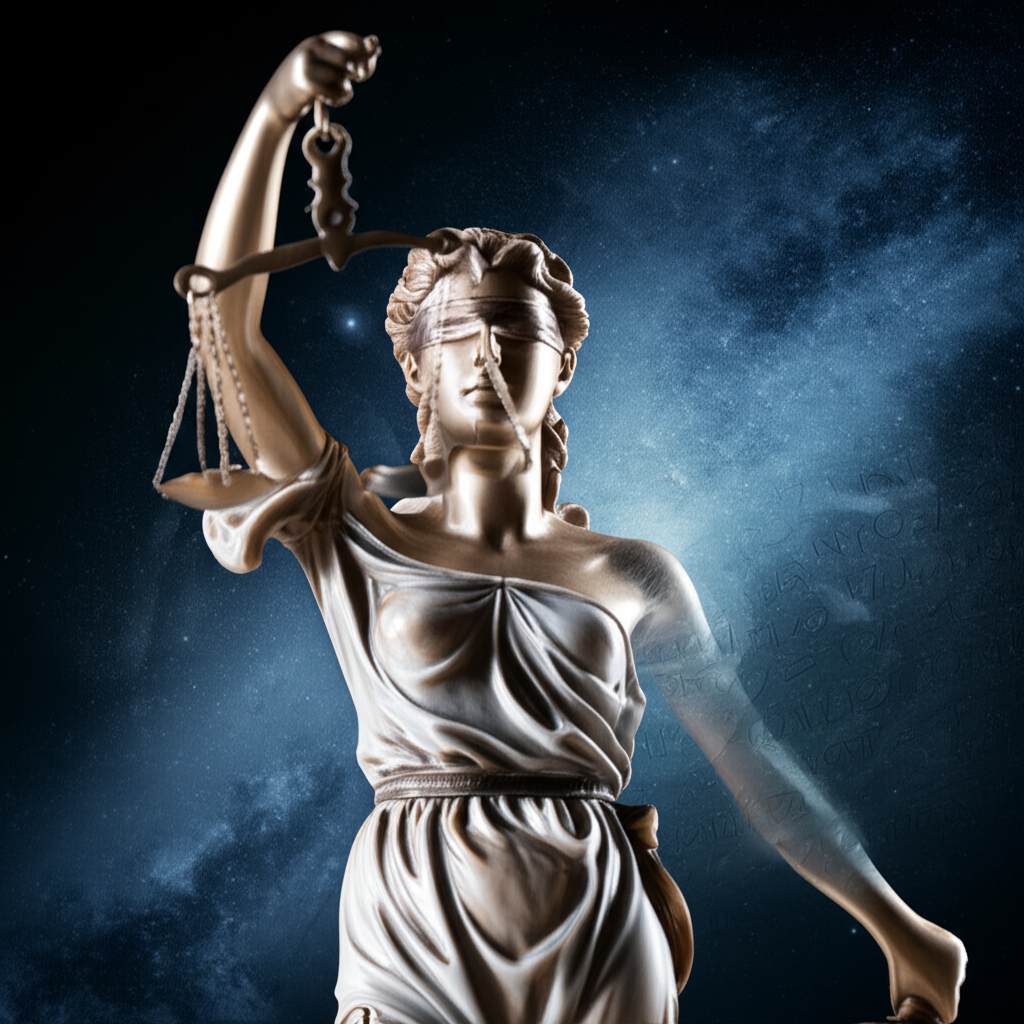
The Hand of Law: Codifying the Ideal
If universal justice is an Idea, then law is humanity's persistent attempt to give it concrete form. The relationship is symbiotic yet often fraught. Is a law just simply because it is enacted, or must it conform to a higher, universal standard of justice to be legitimate?
This question lies at the heart of the distinction between positive law (laws enacted by human authority) and natural law. Philosophers like John Locke, drawing from the tradition of natural rights, argued that legitimate government and its laws must protect certain inherent rights—life, liberty, and property—which are themselves derived from a universal natural law. Any law that violates these fundamental rights is, by definition, unjust.
Immanuel Kant further elevated the Idea of universal moral law with his concept of the Categorical Imperative. For Kant, a moral action is only truly just if its underlying maxim could be universalized—meaning it could be applied to everyone, everywhere, without contradiction. This provides a rigorous, reason-based framework for evaluating the universality of moral and legal principles, asserting that our duties are not contingent on particular desires but flow from a rational recognition of universal moral law.
Navigating the Labyrinth: Challenges and Critiques
Despite its powerful appeal, the Idea of universal justice faces considerable challenges. Skeptics, often drawing from historical and anthropological observations, argue that what one culture deems just, another may find abhorrent. Is the death penalty universally unjust? Is absolute freedom of speech universally just? These questions highlight the difficulty in reaching global consensus on specific applications of justice.
Furthermore, the practical enforcement of universal justice is often elusive. Who arbitrates these universal principles? Who enforces them when powerful nations or groups diverge? These are not merely philosophical conundrums but real-world obstacles in establishing effective international law and human rights frameworks. The very act of defining "universal" can itself be seen as a particular cultural imposition, raising questions about power dynamics and epistemic injustice.
Why This Idea Still Matters
Even if the full realization of universal justice remains an aspiration, the Idea itself is indispensable. It serves as a critical standard against which we measure our laws, our institutions, and our actions. It fuels movements for human rights, inspires international cooperation, and provides a moral compass in a complex world. The ongoing dialogue about universal justice keeps us striving for a better, fairer society, reminding us that while particular circumstances may vary, the fundamental human yearning for equity and dignity is indeed a universal experience.
The journey through the Great Books reveals that the Idea of universal justice is not a static concept but a dynamic, evolving inquiry—a testament to humanity's enduring commitment to understanding and shaping the moral architecture of our shared existence.
YouTube:
- "Plato Aristotle Natural Law Justice Explained"
- "Kant Categorical Imperative Universal Moral Law"
📹 Related Video: What is Philosophy?
Video by: The School of Life
💡 Want different videos? Search YouTube for: "The Idea of Universal Justice philosophy"