

Wings of Thought: The Angel's Enduring Presence in Art
The image of the Angel has soared through human consciousness for millennia, manifesting across cultures and beliefs as a potent Sign and Symbol of the divine. Far more than mere fantastical creatures, angels in Art serve as profound philosophical constructs, embodying humanity's yearning for transcendence, connection to the sacred, and understanding of the unseen. From ancient religious texts to contemporary canvases, the artistic representation of the Angel offers a rich tapestry through which we explore fundamental questions of existence, spirituality, and the very nature of being. This article delves into how Art has historically interpreted the Angel, examining its roots in Religion, its evolving iconography, and its enduring power as a philosophical Sign and Symbol.
The Celestial Messenger: Angelic Origins in Religion and Early Art
The concept of an Angel is deeply interwoven with the history of Religion, particularly within the Abrahamic traditions. As divine messengers, guardians, and celestial beings, angels populate the narratives of Judaism, Christianity, and Islam, acting as intermediaries between the human and divine realms. Their initial artistic depictions were often modest, focusing on their function rather than elaborate form.
- Early Christian Art: Often depicted angels as simple, robed figures, sometimes with nascent wings or a halo, emphasizing their spiritual purity and role as divine emissaries. Their primary function was to convey God's will, as seen in early catacomb paintings or mosaics.
- Byzantine Art: Developed a more stylized and hierarchical representation. Angels, particularly archangels like Michael and Gabriel, were often shown in imperial robes, reflecting their status in the heavenly court, adorned with elaborate wings that became a definitive Sign and Symbol of their celestial nature.
This early period established the Angel as a quintessential Sign and Symbol of divine intervention and spiritual communication, laying the groundwork for its multifaceted evolution in Western Art.
The Angel's Metamorphosis: From Medieval Mysticism to Renaissance Grace
As European Art evolved, so too did the depiction of the Angel, reflecting changing theological perspectives and artistic sensibilities.
Medieval Interpretations: Hierarchy and Otherworldliness
The medieval era, heavily influenced by scholastic philosophy and theological treatises (such as those found in the Great Books of the Western World by thinkers like Thomas Aquinas, who meticulously categorized angelic hierarchies), saw angels depicted with increasing detail and symbolic weight.
| Angelic Order (Simplified) | Primary Role/Symbolism | Artistic Representation Often Featuring |
|---|---|---|
| Seraphim | Burning love, purification | Multiple wings (often six), red/gold |
| Cherubim | Knowledge, wisdom, divine intellect | Often blue, sometimes many eyes |
| Thrones | Justice, divine will | Wheels, often supporting God's throne |
| Dominions | Authority, governance | Scepter, orb |
| Virtues | Miracles, grace | Light emanating, sometimes holding tools |
| Powers | Combat evil, protection | Armor, weapons |
| Principalities | Rulers of nations, protection | Crown, scepter |
| Archangels | Chief messengers, leaders | Distinctive robes, often with specific attributes (e.g., Gabriel with lily) |
| Angels | Messengers, guardians | Human-like with wings, often in groups |
Artists aimed to convey the otherworldly nature of angels, often using elongated forms, ethereal colors, and golden backgrounds to signify their divine realm. The Angel was not merely a figure but a conduit to the divine, its every feature a Sign and Symbol.
Renaissance Humanism: Beauty, Intellect, and Emotion
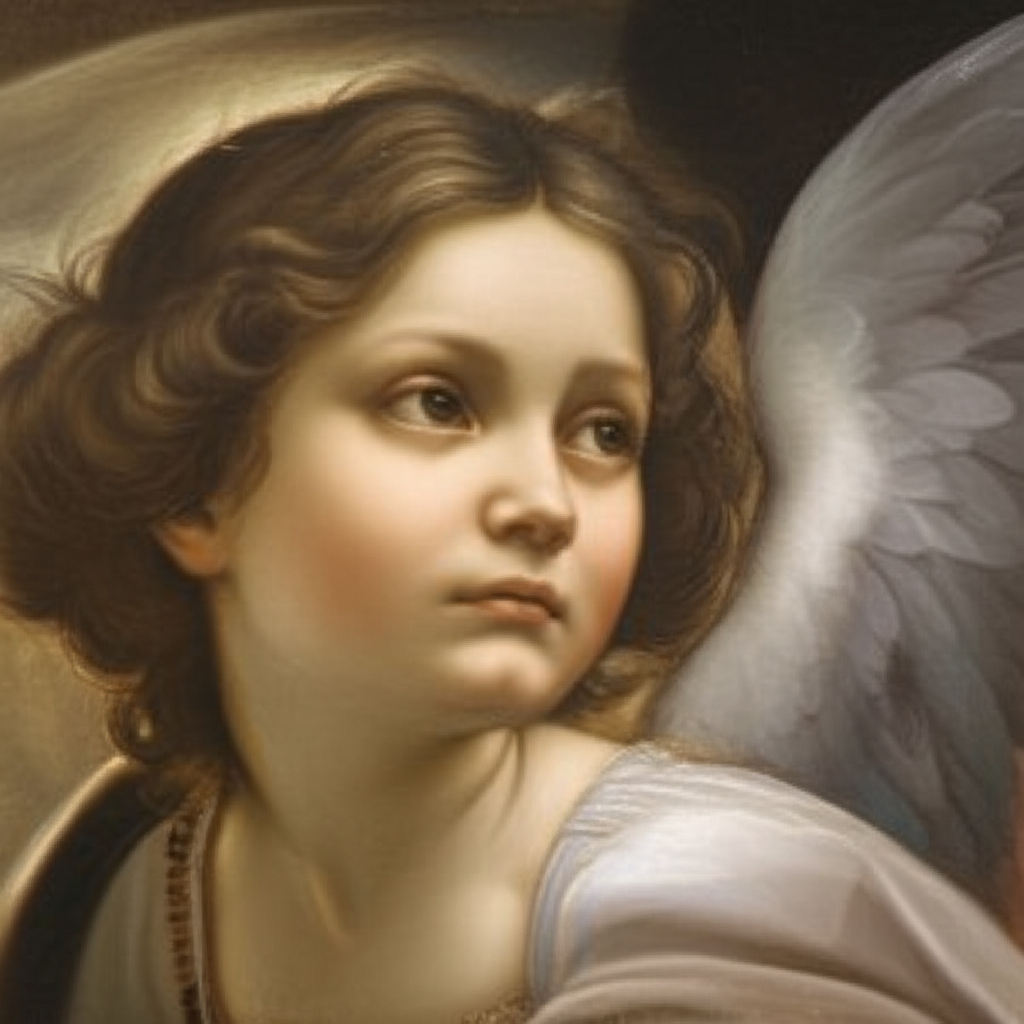
The Renaissance brought a profound shift, infusing angelic depictions with classical beauty, human anatomy, and emotional depth. Artists like Fra Angelico, Giotto, and Raphael rendered angels with a newfound naturalism and grace.
- Humanization: Angels began to resemble ideal human forms, albeit with the unmistakable addition of wings. This reflected the Renaissance's focus on human potential and the harmony between the divine and the human.
- Emotional Resonance: Angels were depicted with nuanced expressions – joy, solemnity, contemplation – inviting viewers to engage emotionally with the divine narrative. The Annunciation, for instance, became a masterclass in conveying the awe and humility of the Angel Gabriel.
- Light and Shadow: The use of chiaroscuro highlighted the ethereal quality of angels, making them appear to emerge from or recede into divine light, a powerful Sign and Symbol of their spiritual essence.
The Philosophical Weight: Angels as Signs and Symbols
Beyond their religious narratives, angels in Art function as sophisticated philosophical Sign and Symbols, inviting contemplation on universal concepts.
- Intermediaries: Philosophically, the Angel bridges the gap between the material world and the realm of pure forms or the divine intellect. They represent the possibility of connection between the finite and the infinite, a concept explored in various philosophical traditions, from Neoplatonism to scholasticism.
- Pure Intellect/Will: For thinkers like Aquinas, angels were beings of pure intellect and will, unburdened by material limitations. Their artistic depiction often strives to convey this purity, intelligence, and freedom from earthly constraints.
- Transcendence and Aspiration: The image of winged beings soaring above the earthly plane inherently symbolizes transcendence – the human desire to rise above limitations, to achieve spiritual enlightenment, or to connect with a higher truth. The Angel becomes a metaphor for human aspiration itself.
- The Unseen and the Unknowable: Angels represent the mysteries of existence, the forces beyond human comprehension. Their often ethereal and sometimes unsettling beauty in Art reminds us of the vastness of the cosmos and the limits of our perception, echoing philosophical inquiries into the nature of reality and the divine.
Modern Echoes: The Angel in Contemporary Art and Culture
Even in increasingly secular times, the Idea of the Angel retains its profound resonance. Contemporary Art often reinterprets the Angel, stripping away traditional religious dogma to explore its universal symbolic power.
- Metaphor for Hope and Guidance: Angels continue to appear as figures of comfort, protection, or inspiration, even outside religious contexts. They represent the unseen forces that guide or protect us, or simply the inherent goodness we hope to find in the world.
- Exploration of Identity and Otherness: Some modern artists use the Angel to explore themes of identity, alienation, or the concept of the "other," questioning what it means to be human in relation to the divine or the supernatural.
- Critique and Reimagining: The Angel can also be used ironically or subversively, challenging traditional notions of purity and goodness, or reimagining celestial beings in a contemporary, often gritty, context.
The enduring power of the Angel in Art lies in its versatility as a Sign and Symbol. It is a canvas onto which humanity projects its deepest fears, loftiest hopes, and most profound philosophical questions. From the solemn icons of Byzantium to the dynamic figures of the Baroque, and into the conceptual works of today, the Angel remains a compelling image, forever inviting us to look beyond the visible and ponder the infinite.
📹 Related Video: KANT ON: What is Enlightenment?
Video by: The School of Life
💡 Want different videos? Search YouTube for: ""Angels in Art History Explained""
📹 Related Video: What is Philosophy?
Video by: The School of Life
💡 Want different videos? Search YouTube for: ""The Philosophy of Angels and Divine Beings""