

The Idea of the Angel in Art: A Celestial Canvas of Meaning
The figure of the angel, ethereal and often winged, has captivated the human imagination for millennia, appearing as a recurring motif across diverse cultures and belief systems. Far more than mere decorative elements, angels in art serve as profound signs and symbols, bridging the material and spiritual realms. They embody humanity's yearning for transcendence, our awe of the divine, and our contemplation of unseen forces. From ancient religious texts to contemporary installations, the artistic representation of the angel offers a rich tapestry through which we can explore theological doctrines, philosophical inquiries, and the very essence of human experience. This article delves into how art has rendered these celestial beings, examining their evolution, their symbolic resonance, and their enduring power as reflections of our deepest convictions.
Messengers of the Divine: Origins and Early Depictions
The concept of an intermediary between gods and mortals is ancient, predating the specific angel figures we recognize today. Winged deities and spirits appear in Mesopotamian, Egyptian, and Zoroastrian mythologies. However, it is primarily through the Abrahamic religions – Judaism, Christianity, and Islam – that the angel gains its most enduring form and theological significance, profoundly influencing Western art.
Early Christian art, often found in catacombs and mosaics, initially depicted angels without wings, resembling human figures adorned with Roman tunics. Their divine status was often indicated by a halo or a scroll. As theological understanding deepened, particularly through the writings of early Church Fathers and later, scholastic philosophers like Thomas Aquinas (whose Summa Theologica dedicates significant thought to the nature of angels), their visual representation evolved. Angels became increasingly distinct, often acquiring the iconic wings that signify their swiftness, their celestial origin, and their ability to traverse the heavens.
Key Characteristics of Early Angelic Art:
- Aniconic or Anthropomorphic: Initially, subtle cues, later evolving into human-like forms.
- Symbolic Attributes: Halos, staffs, scrolls, and eventually, wings.
- Contextual Roles: Annunciation, protection, divine judgment, guidance.
The Angelic Form Through the Ages: An Artistic Evolution
The Renaissance marked a pivotal moment in the artistic portrayal of angels. Artists like Fra Angelico, Giotto, and Raphael brought a new humanism and naturalism to these celestial beings. No longer solely stern divine agents, angels acquired a delicate beauty, often imbued with expressions of tenderness, sorrow, or joy. The concept of the "putto" or cherub, a chubby, winged infant, also gained prominence, symbolizing innocence and divine love, often seen adorning ceilings and altarpieces.
Table: Evolution of Angelic Depiction in Western Art
| Era/Movement | Typical Portrayal | Key Symbolic Meaning | Notable Artists/Works |
|---|---|---|---|
| Early Christian | Human figures, often toga-clad, sometimes winged. | Divine messengers, spiritual guardians. | Catacomb frescoes, Ravenna mosaics. |
| Byzantine | Hieratic, stylized, golden backgrounds, often winged. | Heavenly host, sacred order, divine majesty. | Hagia Sophia mosaics, icons. |
| Gothic | More expressive, elongated figures, often in groups. | Salvation, intercession, heavenly choir. | Chartres Cathedral sculptures, Giotto frescoes. |
| Renaissance | Naturalistic, beautiful, often youthful, expressive. | Humanized divinity, grace, joy, innocence (putti). | Fra Angelico, Raphael, Leonardo da Vinci. |
| Baroque | Dynamic, dramatic, swirling forms, emotional. | Divine power, ecstasy, theatrical spectacle. | Bernini (Ecstasy of St. Teresa), Rubens. |
| Romanticism | Often melancholic, ethereal, symbolic of longing. | Spiritual yearning, loss, the sublime. | William Blake, pre-Raphaelites. |
| Modern/Contemporary | Abstract, conceptual, often questioning or deconstructed. | Idea of transcendence, human condition, ambiguity. | Klee, Chagall, contemporary installations. |
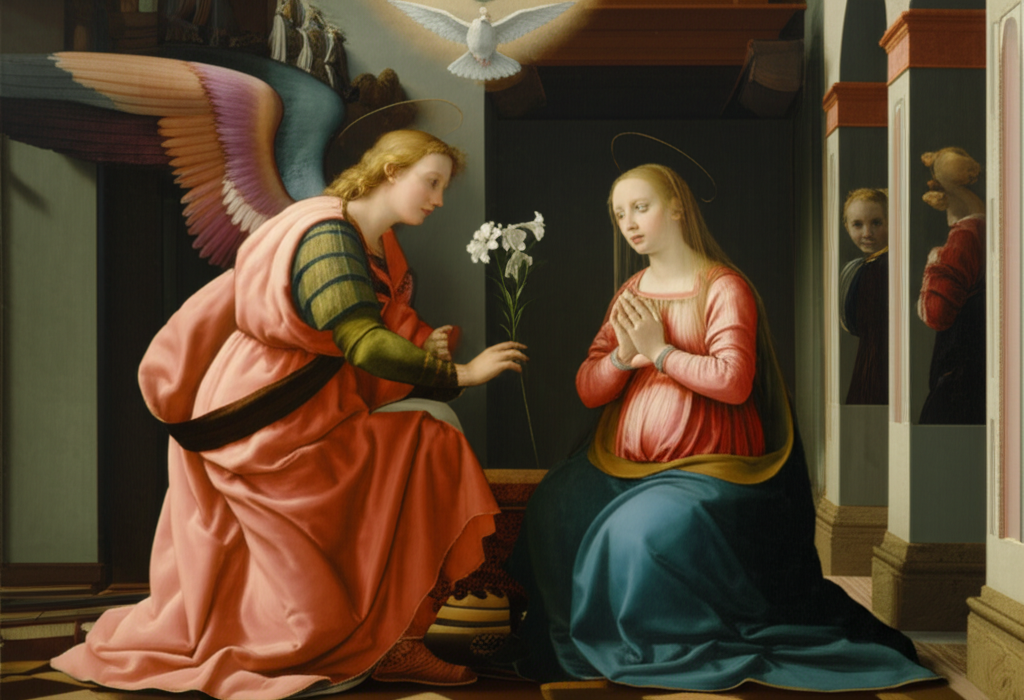
The Baroque period, with its emphasis on drama and emotion, saw angels depicted in dynamic, often theatrical poses, swirling through heavens, embodying divine power and awe. Later, Romanticism and Symbolism imbued angels with a more introspective, sometimes melancholic quality, reflecting themes of spiritual longing, loss, and the sublime.
The Angel as Sign and Symbol: Layers of Meaning
Beyond their aesthetic appeal, angels are potent signs and symbols within art. Their presence immediately elevates a scene, imbuing it with spiritual weight.
- Messengers and Mediators: This is their most fundamental role, conveying divine will to humanity. The Annunciation to Mary is a prime example.
- Guardians and Protectors: Angels often stand watch, shielding the innocent or guiding souls, as seen in funeral art or depictions of guardian angels.
- Warriors and Punishers: Archangels like Michael are frequently shown in armor, battling evil or executing divine judgment, symbolizing the triumph of good over malevolence.
- Harbingers of Judgment: In apocalyptic visions, angels sound trumpets, signaling the end times and the resurrection of the dead, representing ultimate accountability.
- Pure Intellect and Spirit: Philosophically, angels have been conceived as pure intelligences, unburdened by material bodies, representing the highest form of created being, a concept explored extensively in the Great Books of the Western World by thinkers like Pseudo-Dionysius and Aquinas. This aspect often influences their serene and contemplative portrayal.
The wings themselves are powerful symbols – not just of flight, but of transcendence, freedom from earthly constraints, and the ability to move between realms. The light emanating from or surrounding angels signifies their divine nature, purity, and enlightenment.
Beyond Dogma: The Angel in Secular and Philosophical Thought
While deeply rooted in religion, the idea of the angel has transcended purely theological contexts. In literature, from Dante Alighieri's Divine Comedy to John Milton's Paradise Lost (both cornerstones of the Great Books tradition), angels are complex characters whose actions drive epic narratives, exploring themes of free will, rebellion, and redemption. These literary portrayals, in turn, have influenced visual art.
Philosophically, the angel can be seen as a metaphor for the ideal, the perfect, or the unreachable. It prompts questions about existence: What lies beyond human perception? What constitutes pure spirit? Are there hierarchies of being? Even in secular art, the winged figure might symbolize inspiration, a fleeting thought, a memory, or the presence of something intangible yet powerful. Modern art often reinterprets the angel, sometimes stripping it of its traditional beauty to explore themes of alienation, vulnerability, or the loss of faith in a post-religious world.
Conclusion: The Enduring Radiance of the Angel
The idea of the angel in art remains a compelling subject, reflecting humanity's continuous dialogue with the divine, the unknown, and its own spiritual aspirations. As signs and symbols, angels offer a visual language for concepts that defy easy articulation – transcendence, grace, justice, and the eternal. From the solemn mosaics of Byzantium to the vibrant canvases of the Renaissance and the conceptual works of today, the angel continues to inspire, comfort, challenge, and provoke, reminding us of the profound connection between art, religion, and the enduring human quest for meaning.
YouTube Video Suggestions:
- YouTube: "Angels in Art History Explained" (Look for videos that trace the visual evolution of angels across different art periods, perhaps from museum channels or art history educators.)
- YouTube: "Thomas Aquinas Angels Philosophy" (Search for discussions on Aquinas's philosophical and theological understanding of angels, which profoundly influenced their conceptualization in Western thought.)
📹 Related Video: What is Philosophy?
Video by: The School of Life
💡 Want different videos? Search YouTube for: "The Idea of the Angel in Art philosophy"