

The Winged Messengers: Decoding the Idea of the Angel in Art
Angels, those ethereal beings often depicted with wings and an otherworldly glow, have captivated the human imagination for millennia. Far more than mere religious figures, their consistent presence in art across cultures and epochs speaks to a profound philosophical and symbolic resonance. This article explores how the idea of the angel, deeply rooted in religion and philosophical thought, has been translated into visual art, serving as a powerful sign and symbol of the divine, the intermediary, and the aspirational. From ancient iconography to modern interpretations, the artistic representation of angels offers a rich tapestry through which we can understand humanity's enduring quest to visualize the invisible.
The Philosophical Genesis of the Angelic Concept
Before the brush ever touched canvas, the concept of the angel was forged in philosophical and theological discourse. Drawing from texts found within the Great Books of the Western World, we encounter angels not just as messengers of God, but as pure intellects, intermediaries between the divine and the material realms. Plato's concept of Forms and the Neoplatonic emanations laid groundwork for hierarchical spiritual beings, later synthesized by Christian theologians like Pseudo-Dionysius the Areopagite and Thomas Aquinas. For Aquinas, in his Summa Theologica, angels are incorporeal substances, intellects without bodies, existing in a realm beyond human sensory perception.
This philosophical understanding posed a unique challenge to artists: how does one depict the incorporeal? The artistic response has been a fascinating journey of invention, adaptation, and symbolic abstraction.
From Abstract Idea to Tangible Form: Angels in Art History
The artistic representation of angels has evolved dramatically, reflecting changing theological understandings, cultural aesthetics, and artistic techniques. Early Christian art often depicted angels as simple, robed figures, sometimes with halos, emphasizing their spiritual authority rather than physical attributes.
- Byzantine and Medieval Art: Angels gained prominence, often depicted in mosaics and frescoes with elongated forms, serene expressions, and the beginnings of wings, symbolizing their swiftness and celestial origin. These were not merely decorative elements but vital signs of divine presence, guiding the faithful.
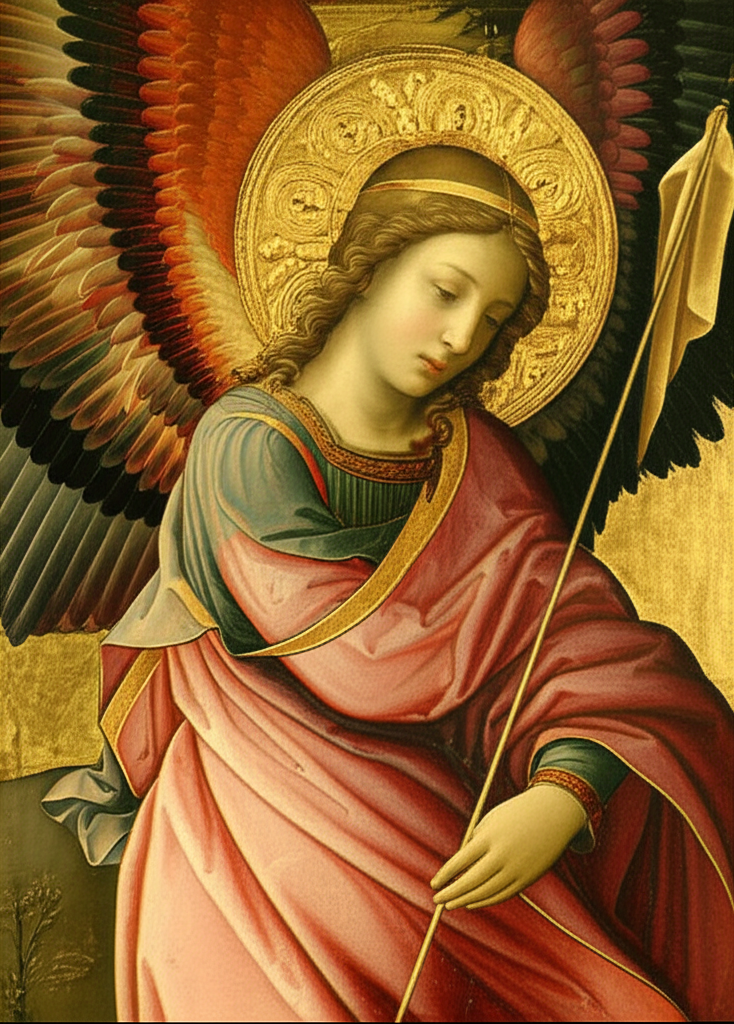
- The Renaissance: This era saw a humanization of angels. Artists like Fra Angelico, Giotto, and Raphael imbued them with grace, beauty, and emotional depth. Wings became more anatomically plausible, feathers meticulously rendered, and expressions conveyed everything from solemn reverence to joyous adoration. Here, the angel becomes a potent symbol of ideal beauty, purity, and divine harmony, bridging the gap between heaven and earth.
- Baroque and Rococo: Angels soared with dramatic flair, often in dynamic poses, surrounded by swirling drapery and light. Caravaggio's angels, for instance, retain their spirituality while possessing a tangible, almost earthly presence, making the divine accessible.
- Modern and Contemporary Art: While traditional religious contexts remain, the angel has also transcended its purely theological role. Modern artists might explore the angel as a symbol of lost innocence, existential longing, or even as an alien presence, reflecting a broader philosophical inquiry into the nature of being and purpose.
The Angel as Sign and Symbol
The enduring power of the angel in art lies in its dual function as a sign and a symbol.
- As a Sign: In religious contexts, the angel is a direct indicator of the divine. Its presence signifies God's message, intervention, or protection. The wings are a sign of its celestial origin and ability to traverse realms. The halo is a sign of sanctity.
- As a Symbol: Beyond direct signification, the angel carries layers of symbolic meaning. It can symbolize:
- Purity and Innocence: Often depicted as children (cherubs) or unblemished beings.
- Guidance and Protection: The guardian angel motif is pervasive.
- Divine Justice and Judgment: Angels of the apocalypse.
- Aspiration and Transcendence: Representing humanity's longing for higher states of being or connection to the spiritual.
- The Unseen and the Ineffable: An attempt to give form to that which is inherently formless.
The angel, therefore, becomes a visual shorthand for complex philosophical and theological concepts, allowing audiences to grasp abstract ideas through concrete, albeit idealized, forms.
The Enduring Legacy in a Secular Age
Even as societies become more secular, the idea of the angel persists in art, literature, and popular culture. This speaks to its deep-seated resonance with universal human experiences. Whether representing hope in times of despair, a whisper of the extraordinary in the mundane, or a poignant reflection on mortality and the afterlife, the angel continues to be a potent symbol. Its journey from the pages of ancient philosophical texts and religious scriptures to the canvases and sculptures of human creation is a testament to art's unique ability to translate the abstract into the tangible, making the invisible visible and the divine relatable.
YouTube Video Suggestions:
-
📹 Related Video: KANT ON: What is Enlightenment?
Video by: The School of Life
💡 Want different videos? Search YouTube for: ""Angels in Art History: Evolution of an Icon""
2. ## 📹 Related Video: What is Philosophy?
Video by: The School of Life
💡 Want different videos? Search YouTube for: ""Thomas Aquinas Angels Philosophy Explained""