

The Idea of the Angel in Art: A Philosophical Journey Through Divine Forms
The angel, an ethereal figure often adorned with wings and a celestial glow, has long captivated the human imagination. More than mere decorative elements in religious iconography, angels in art represent profound philosophical and theological concepts, acting as potent signs and symbols that bridge the material and immaterial worlds. From ancient messengers to complex metaphysical constructs, their depiction across various artistic epochs offers a unique lens through which to explore humanity's evolving understanding of the divine, transcendence, and the very nature of existence itself. This article delves into the rich tapestry of angelic representation, examining its roots in religion, its evolution in art, and its enduring philosophical significance.
Whispers of the Divine in Human Form: An Introduction
For millennia, humanity has grappled with the unseen, the ineffable, and the transcendent. Angels, as depicted in countless works of art, serve as tangible manifestations of these abstract concepts. They are often messengers, guardians, or celestial beings that interact with the human realm, embodying virtues, divine will, or even judgment. Their pervasive presence across cultures and centuries is a testament to their deep resonance within the human psyche, reflecting a universal desire to connect with something beyond our immediate grasp. Through the artist's hand, the idea of the angel transforms from a theological tenet into a visual language, inviting contemplation on the spiritual dimensions of our world.
The Angelic Archetype: From Ancient Messengers to Metaphysical Concepts
The concept of an intermediary between gods and mortals is not exclusive to Abrahamic faiths. Ancient civilizations, from Sumeria to Greece, featured winged deities or spirits. However, it is within the monotheistic traditions of Judaism, Christianity, and Islam that the angel as we largely understand it in Western art truly takes shape.
- Judaism: Malakhim (messengers) appear throughout the Torah and prophetic books, often without wings, serving as agents of God's will.
- Christianity: The Greek angelos (messenger) becomes central, with a developed hierarchy of choirs (Seraphim, Cherubim, Thrones, Dominions, Virtues, Powers, Principalities, Archangels, Angels), famously elaborated upon by Pseudo-Dionysius the Areopagite.
- Islam: Malaika are created from light, serving Allah and carrying out specific duties, such as delivering revelations (Gabriel to Muhammad).
Philosophically, these beings posed fascinating questions. Thomas Aquinas, in his Summa Theologica (a cornerstone of the Great Books of the Western World), dedicated extensive sections to the nature of angels, exploring their intellect, will, knowledge, and even their ability to occupy space. He posited them as purely intellectual, incorporeal substances, superior to humans, offering a rigorous philosophical framework that profoundly influenced how later artists and theologians conceived of these celestial entities. The challenge for artists then became: how to depict the incorporeal?
Angels as Signs and Symbols in Artistic Expression
The visual representation of angels is a masterclass in translating abstract theological and philosophical ideas into concrete signs and symbols. Artists have, over centuries, developed a complex iconography to convey their multifaceted roles.
The Visual Language of the Unseen
Early Christian art often depicted angels as simple, toga-clad figures, sometimes with halos, distinguishing them as divine. The addition of wings, though not always scripturally explicit, became a near-universal symbol of their celestial nature, their ability to traverse realms, and their swiftness in carrying out divine commands.
Iconography and Its Evolution
The depiction of angels has evolved dramatically, reflecting changing artistic styles and theological interpretations:
- Byzantine Art (c. 6th-15th century): Angels are often depicted as majestic, ethereal beings, frequently in gold-leafed backgrounds, emphasizing their divine, otherworldly nature. Their faces are serene, almost expressionless, conveying solemnity and reverence.
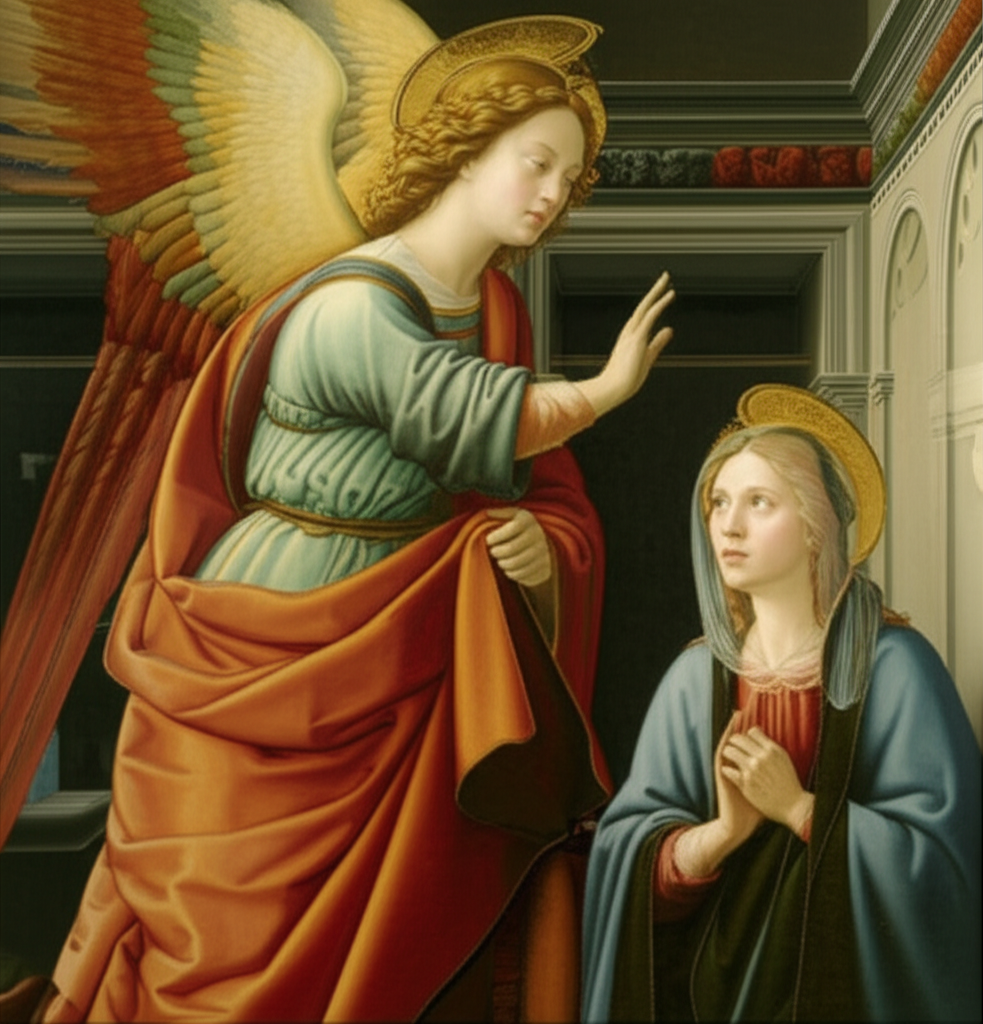
- Renaissance Art (c. 14th-16th century): A move towards humanism brought more naturalistic and idealized forms. Artists like Fra Angelico and Raphael depicted angels with grace, beauty, and often youthful, almost childlike innocence. They became more expressive, their human-like emotions reflecting divine compassion or sorrow.
- Baroque Art (c. 17th-18th century): Characterized by drama and dynamism, Baroque angels are often caught in moments of intense action—swooping, ascending, or descending with dramatic flair. Their forms are robust, muscular, and their expressions convey awe, triumph, or struggle, as seen in the works of Rubens.
- Modern Art (c. 19th-21st century): While less prevalent in traditional religious contexts, the idea of the angel persists, often reinterpreted. They might appear as abstract forms, metaphors for inspiration, or even figures of existential angst, reflecting humanity's complex relationship with faith and the transcendent in a secular age.
Common Angelic Attributes and Their Meanings
| Attribute | Symbolic Meaning | Artistic Representation |
|---|---|---|
| Wings | Celestial nature, speed, transcendence, freedom | Feathered, often large and majestic, sometimes multiple |
| Halo/Nimbus | Divinity, holiness, light, spiritual power | Disk of light around the head, often gold |
| White Robes | Purity, innocence, righteousness, spiritual clarity | Flowing, often classical drapery |
| Trumpet/Horn | Proclamation, judgment, revelation, divine announcement | Held by archangels like Gabriel or at the Last Judgment |
| Sword of Fire | Divine justice, protection, expulsion (e.g., Eden) | Wielded by guardian angels or cherubim |
| Palm Branch | Victory, triumph, martyrdom, peace | Held by angels celebrating saints or divine events |
The Philosophical Weight of Winged Beings
Beyond their aesthetic appeal, angels in art serve as powerful philosophical tools, prompting contemplation on fundamental questions of existence, morality, and the divine.
Bridging the Immaterial and Material: Angels, by their very nature, exist on the cusp of the tangible and intangible. Their artistic depiction is an attempt to materialize the immaterial, to give form to pure spirit. This act of artistic translation forces us to consider the limits of human perception and the possibilities of realities beyond our senses.
Free Will and Divine Order: The narratives of angelic fall (Lucifer's rebellion) or unwavering obedience explore themes of free will, divine sovereignty, and moral choice. Literary works within the Great Books, such as John Milton's Paradise Lost, vividly dramatize these theological debates, with angels acting as protagonists in epic struggles of good versus evil, loyalty versus rebellion. These stories, often accompanied by equally dramatic art, compel us to examine our own moral landscapes and our place within a larger cosmic order.
The Problem of Representation: How can one truly depict something that is, by definition, beyond human comprehension? The artistic challenge of portraying angels highlights the inherent limitations of human expression when attempting to grasp the infinite. Each brushstroke, each sculpted form, is an approximation, a sign and symbol pointing towards a truth that can only be fully apprehended spiritually or intellectually.
Case Studies in Angelic Art
Artists throughout history have offered unique interpretations of the angelic idea:
- Giotto di Bondone (c. 1266-1337): In his Scrovegni Chapel frescoes, Giotto's angels display human-like emotions—grief, joy, and solemnity—making them relatable and emphasizing the emotional impact of divine events.
- Fra Angelico (c. 1395-1455): His angels are renowned for their ethereal beauty and luminous quality, often depicted in vibrant colors, embodying purity and divine grace, perfectly suited for contemplative monastic settings.
- Michelangelo (1475-1564): In the Sistine Chapel, angels are powerful, muscular figures, often supporting the divine will with immense strength, reflecting Michelangelo's emphasis on the human form as a vessel for the divine.
- William Blake (1757-1827): A poet and artist deeply immersed in spiritual visions, Blake's angels are often dynamic, visionary, and sometimes terrifying, reflecting his unique mystical cosmology and critique of conventional religion.
Beyond Dogma: Angels in Secular and Contemporary Art
Even as religion's direct influence on mainstream art has waned in some quarters, the idea of the angel persists. In contemporary culture, angels might appear as metaphors for inspiration, protection, or even as figures of existential loneliness. They are often stripped of their traditional religious connotations but retain their power as signs and symbols of transcendence, hope, or the mysterious forces that shape human destiny. This enduring presence underscores the angel's deep-seated place in the collective human imagination, a testament to our perennial quest for meaning beyond the material.
📹 Related Video: PLATO ON: The Allegory of the Cave
Video by: The School of Life
💡 Want different videos? Search YouTube for: ""Angels in Art History - Renaissance to Baroque""
📹 Related Video: ARISTOTLE ON: The Nicomachean Ethics
Video by: The School of Life
💡 Want different videos? Search YouTube for: ""Thomas Aquinas on Angels and Intelligences""
Conclusion: The Enduring Flight of the Angelic Idea
The idea of the angel in art is a profound journey through philosophy, religion, and human creativity. From the earliest whispers of divine messengers to the complex theological treatises of the Great Books of the Western World, and finally to their diverse artistic representations, angels have consistently served as powerful signs and symbols of our yearning for the transcendent. They challenge us to consider the nature of the unseen, the limits of our knowledge, and the enduring human desire to connect with something greater than ourselves. As long as humanity continues to ponder the mysteries of existence, the idea of the angel will undoubtedly continue its flight, inspiring artists and philosophers alike to seek beauty and meaning in the realms beyond our immediate perception.