

The Enduring Idea of Temperance in Politics
The concept of temperance, often relegated to personal ethics, holds profound and often overlooked significance in the realm of politics and governance. Far from merely abstaining from excess, temperance, as understood by the ancient philosophers, is a fundamental virtue essential for a stable and just society. This article explores the enduring idea of temperance, its role in mitigating vice within government, and why its cultivation remains critical for political leaders and citizens alike, drawing insights from the foundational texts of Western thought.
The Philosophical Roots of Temperance
At its heart, temperance (sophrosyne in Greek) is the idea of self-mastery, moderation, and sound-mindedness. It's the ability to control one's desires and appetites, ensuring they serve reason rather than dominate it.
- Plato's Vision: In Plato's Republic, temperance is presented as a societal harmony, a "concord" among the different parts of the soul and the different classes of the state. For the individual, it's the agreement between the rational, spirited, and appetitive parts of the soul, with reason holding sway. For the government, it signifies a shared understanding of who should rule and who should be ruled, ensuring that the appetites of the masses or the ambitions of the few do not overwhelm the rational pursuit of justice. It's not suppression, but proper ordering.
- Aristotle's Golden Mean: Aristotle, in his Nicomachean Ethics, describes temperance as a mean between two extremes: insensibility (deficiency) and self-indulgence (excess). It's a rational disposition concerning pleasures and pains, particularly those of touch and taste. In a political context, this translates to a prudent approach to public resources, power, and policy – neither neglecting necessary actions nor indulging in reckless overreach.
This ancient understanding firmly establishes temperance not as a severe restriction, but as a balanced and rational approach to life, both personal and communal. It is the wisdom to know "enough."
Temperance as a Political Virtue
When applied to the sphere of government, temperance transcends individual discipline to become a cornerstone of good governance.
Table: Temperate vs. Intemperate Political Characteristics
| Characteristic | Temperate Government / Leader | Intemperate Government / Leader |
|---|---|---|
| Decision-Making | Prudent, deliberative, long-term focused, considers consequences. | Impulsive, reactive, short-sighted, driven by immediate gratification. |
| Use of Power | Restrained, respects limits, serves the common good. | Abusive, overreaching, serves self-interest or factional gain. |
| Resource Management | Fiscally responsible, avoids extravagance and waste. | Indulgent, wasteful, accumulates excessive debt. |
| Public Discourse | Seeks consensus, encourages rational debate, listens to dissent. | Divisive, dogmatic, suppresses opposition, appeals to emotion. |
| Ambition | Guided by duty, seeks service, understands limitations. | Unchecked, seeks personal glory, power for power's sake. |
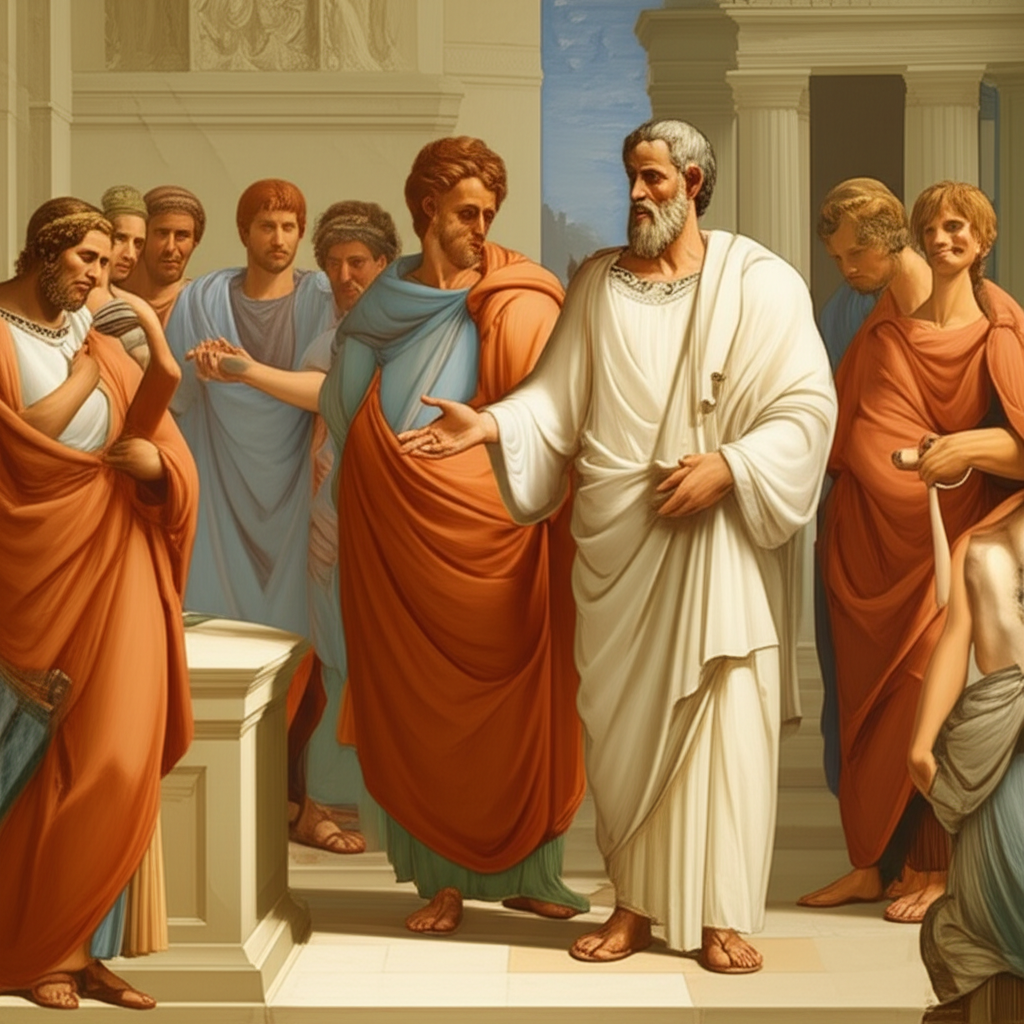
A temperate leader is one who resists the vice of demagoguery, understanding that true leadership lies in guiding citizens towards what is good, rather than merely pandering to their desires. They exercise self-control over their own ambitions, their desire for popularity, and their personal gains. This self-restraint is crucial for maintaining the integrity of institutions and the trust of the populace.
The Vice of Intemperance in Political Life
The absence or rejection of temperance in politics invariably leads to various forms of vice. When rulers or the ruling class succumb to intemperance, the state suffers.
- Tyranny: Plato meticulously details how the "tyrannical man" emerges from an intemperate soul, driven by insatiable desires. In the state, this manifests as a tyrannical government – one that knows no bounds, exploits its citizens, and ultimately collapses under its own excesses.
- Corruption: The vice of intemperance fuels corruption, as individuals in power prioritize personal enrichment or the gratification of their appetites over public duty. This erodes the very foundations of justice and fairness.
- Populist Excess: An intemperate populace, swayed by immediate gratification and emotional appeals, can demand policies that are unsustainable or detrimental in the long run. Leaders who indulge these demands, rather than temper them with reason, can lead the state into significant peril.
- Factionalism and Polarization: When political actors lack temperance, they become unwilling to compromise, to listen, or to acknowledge legitimate opposing viewpoints. This breeds extreme polarization, where the pursuit of partisan victory overshadows the common good, leading to governmental paralysis and societal discord.
Cultivating Temperance in the Modern State
While the idea of temperance might seem an antique notion, its relevance to contemporary government is undeniable. How can we foster this crucial virtue?
- Civic Education: Emphasizing critical thinking, historical understanding, and ethical reasoning can help citizens and future leaders develop the capacity for self-reflection and moderation. Understanding the consequences of political vice and the benefits of virtue is paramount.
- Institutional Design: Constitutions, checks and balances, and independent judiciaries are institutional expressions of political temperance. They are designed to prevent the concentration of unchecked power and to moderate the impulses of any single branch or individual.
- Leadership by Example: Leaders who embody temperance – demonstrating humility, integrity, and a commitment to measured discourse – serve as powerful models. Their actions can elevate the political culture and encourage similar virtue in others.
- Media Literacy and Critical Engagement: In an age of information overload, the ability to discern truth from sensationalism, and to resist emotionally charged narratives, is a form of collective temperance essential for informed democratic participation.
Conclusion
The idea of temperance, a cornerstone of ancient philosophy, remains profoundly relevant to the health and stability of any government. It is the virtue that guards against the insidious creep of vice, fostering environments of reason, moderation, and justice. As Grace Ellis, I believe that for societies to thrive and endure, we must continually revisit and re-emphasize the importance of self-mastery, not just in individuals, but in the very fabric of our political lives. Embracing temperance is not about stifling passion, but about channeling it constructively towards the common good, ensuring that the ship of state sails steadily, guided by wisdom rather than tossed by unchecked desires.
📹 Related Video: PLATO ON: The Allegory of the Cave
Video by: The School of Life
💡 Want different videos? Search YouTube for: ""Plato Republic Temperance" or "Aristotle Nicomachean Ethics Temperance""