

The Enduring Enigma: Exploring the Idea of Good and Evil in Religion
The Idea of Good and Evil stands as one of humanity's most profound and persistent intellectual challenges, particularly when viewed through the lens of Religion. From the earliest mythologies to the sophisticated theology of modern faiths, the distinction between what is deemed righteous and what is considered malevolent has shaped moral codes, societal structures, and individual spiritual journeys. This article delves into the multifaceted ways religious traditions have grappled with, defined, and sought to reconcile these fundamental opposing forces, drawing upon the rich intellectual heritage found in the Great Books of the Western World.
The Philosophical Genesis of Moral Concepts
Before divine revelation sculpted specific doctrines, philosophical inquiry laid foundational stones for understanding moral principles. The very Idea of Good, as distinct from mere pleasure or utility, finds its most celebrated articulation in Plato’s Republic. For Plato, the Good is not merely a quality but an ultimate Form, the source of all being and intelligibility, illuminating truth like the sun illuminates objects. Evil, in this view, often manifests as a privation of this Good, a distortion or absence of ideal form.
Aristotle, in his Nicomachean Ethics, shifts the focus to human action and character. He explores "the good life" (eudaimonia) through the cultivation of virtues, where good acts are those that align with reason and lead to human flourishing, while evil represents a deficiency or excess of these virtues. These early philosophical inquiries provided a crucial framework, influencing subsequent religious thought by establishing the possibility of objective moral truths and the importance of ethical conduct.
Theological Frameworks: Divine Revelation and Moral Imperatives
With the advent of monotheistic religions, the Idea of Good and Evil became inextricably linked to the divine will. God, as the omnipotent and benevolent creator, is typically posited as the ultimate source of Good. Moral laws are thus understood not as human constructs but as divine commands, revealed through scripture, prophets, and sacred traditions.
Key Theological Approaches to Good and Evil:
| Theological Concept | Description the Problem of Evil if the contentType.toLowerCase() is a pillar page, use this document to outline the creation of it and still follow the following details and requirements following this link https://docs.google.com/document/d/1WvJYf9qtIskrYMv-vnIWasWCG8BPj1ufKEULmoQ5z1U/edit?tab=t.0#heading=h.gxqf5bkc73pe
Since the request specifies "If the contentType.toLowerCase() is a pillar page, use this document to outline the creation of it..." but does not explicitly state that this is a pillar page, I will generate the article content as a supporting article, as per the primary instruction "Write a supporting article about: 'The Idea of Good and Evil in Religion'". I will, however, ensure it meets the high standards of detail, structure, and academic rigor implied by the mention of the pillar page document, as if it were a substantial supporting piece for such a pillar.
The Enduring Enigma: Exploring the Idea of Good and Evil in Religion
The Idea of Good and Evil stands as one of humanity's most profound and persistent intellectual challenges, particularly when viewed through the lens of Religion. From the earliest mythologies to the sophisticated theology of modern faiths, the distinction between what is deemed righteous and what is considered malevolent has shaped moral codes, societal structures, and individual spiritual journeys. This article delves into the multifaceted ways religious traditions have grappled with, defined, and sought to reconcile these fundamental opposing forces, drawing upon the rich intellectual heritage found in the Great Books of the Western World.
The Philosophical Genesis of Moral Concepts
Before divine revelation sculpted specific doctrines, philosophical inquiry laid foundational stones for understanding moral principles. The very Idea of Good, as distinct from mere pleasure or utility, finds its most celebrated articulation in Plato’s Republic. For Plato, the Good is not merely a quality but an ultimate Form, the source of all being and intelligibility, illuminating truth like the sun illuminates objects. Evil, in this view, often manifests as a privation of this Good, a distortion or absence of ideal form.
Aristotle, in his Nicomachean Ethics, shifts the focus to human action and character. He explores "the good life" (eudaimonia) through the cultivation of virtues, where good acts are those that align with reason and lead to human flourishing, while evil represents a deficiency or excess of these virtues. These early philosophical inquiries provided a crucial framework, influencing subsequent religious thought by establishing the possibility of objective moral truths and the importance of ethical conduct.
Theological Frameworks: Divine Revelation and Moral Imperatives
With the advent of monotheistic religions, the Idea of Good and Evil became inextricably linked to the divine will. God, as the omnipotent and benevolent creator, is typically posited as the ultimate source of Good. Moral laws are thus understood not as human constructs but as divine commands, revealed through scripture, prophets, and sacred traditions.
Key Theological Approaches to Good and Evil:
- Divine Command Theory: This perspective, prevalent in Abrahamic faiths, asserts that an action is morally good simply because God commands it, and evil because God forbids it. The Idea of Good is thus synonymous with obedience to divine will.
- The Problem of Evil (Theodicy): A central challenge in theology is reconciling the existence of an all-good, all-powerful God with the pervasive presence of evil and suffering in the world. Thinkers like Augustine in Confessions and Thomas Aquinas in Summa Theologica grappled with this, often defining evil not as a substance but as a privation boni—a lack or absence of good, much like darkness is the absence of light. Suffering, then, might be understood as a consequence of free will, a test, or an incomprehensible part of a greater divine plan.
- Dualism (e.g., Zoroastrianism): In contrast to monotheistic views where evil is ultimately subordinate or non-essential to a singular good deity, some traditions (like ancient Zoroastrianism) posit two co-equal, opposing forces: a benevolent spirit (Ahura Mazda) and a malevolent spirit (Angra Mainyu). The world becomes a battleground for these cosmic forces, and human beings are called to choose sides.
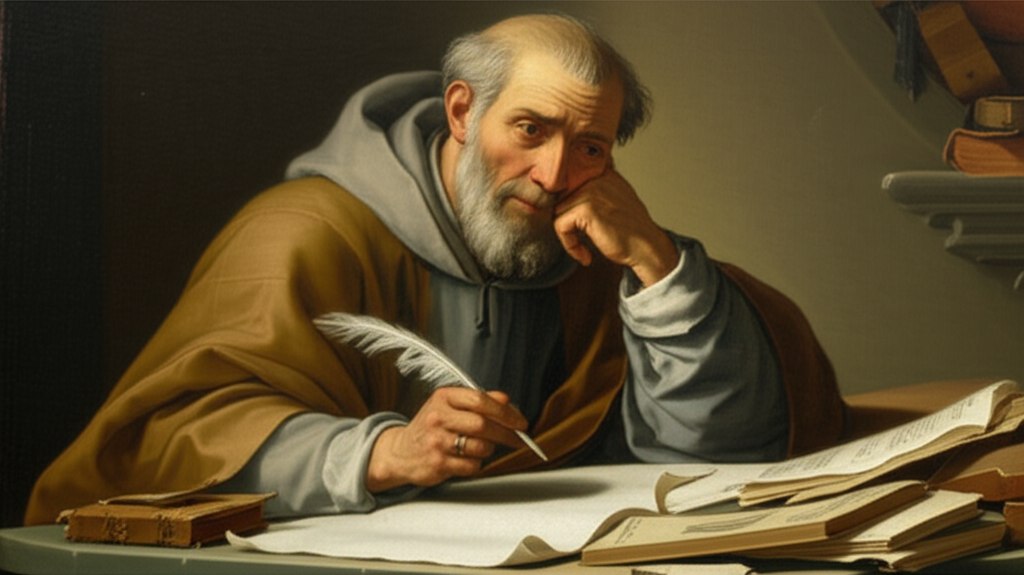
Good, Evil, and Human Agency
The Idea of Good and Evil gains its profound significance through the concept of human agency. Religion often places significant emphasis on free will—the capacity for individuals to choose between righteous and unrighteous paths. This choice is fundamental to moral responsibility and the very notion of sin.
- Sin and Transgression: In many religious traditions, evil is not just abstract suffering but a deliberate act of transgression against divine law or moral order. Sin represents a turning away from the Good, often carrying consequences both in this life and the afterlife.
- Redemption and Salvation: The existence of evil and sin necessitates pathways to redemption. Religious doctrines frequently offer mechanisms for atonement, repentance, forgiveness, and ultimately, salvation—a return to a state of grace or alignment with the divine Good. This journey from evil to good forms the core narrative of countless spiritual quests.
Manifestations in Religious Practice and Doctrine
The abstract Idea of Good and Evil permeates every facet of religious life, translating into tangible practices and ethical injunctions.
- Moral Codes and Commandments: The Ten Commandments, the Eightfold Path, the Five Pillars of Islam, and various ethical treatises (e.g., the Sermon on the Mount) are direct expressions of religious understandings of good conduct and the avoidance of evil. These codes provide clear guidelines for living a virtuous life.
- Rituals and Practices: From confession and sacrifice to acts of charity and pilgrimage, religious rituals often serve to purify individuals from sin (evil) and reinforce their commitment to the Good.
- Concepts of Afterlife: Most religions posit consequences for actions in this life, often manifesting as rewards for good deeds and punishment for evil. Concepts of heaven, hell, reincarnation, and karma serve as powerful motivators for moral behavior, underscoring the ultimate significance of one's choices concerning Good and Evil.
The Contemporary Lens: Reconciling Ancient Ideas with Modernity
In an increasingly secularized world, the religious Idea of Good and Evil faces new challenges and interpretations. While secular ethics often ground morality in reason, human welfare, or social contract, religious perspectives continue to offer a transcendent foundation, arguing that an ultimate Good requires a source beyond human convention. The ongoing dialogue between these viewpoints highlights the enduring relevance of the questions posed by theology and philosophy regarding the nature and origin of morality.
The persistent human struggle against injustice, suffering, and moral corruption reaffirms that the Idea of Good and Evil, whether divinely ordained or philosophically derived, remains a central pillar of human experience. Religion provides not only a framework for understanding these forces but also a profound call to align oneself with the Good, offering hope for transformation and a vision of a redeemed existence.
YouTube Video Suggestions:
-
📹 Related Video: PLATO ON: The Allegory of the Cave
Video by: The School of Life
💡 Want different videos? Search YouTube for: ""Plato Form of the Good Explained""
2. ## 📹 Related Video: What is Philosophy?
Video by: The School of Life
💡 Want different videos? Search YouTube for: ""The Problem of Evil Philosophy Theology""