

The Unmoved Mover of Thought: God as the Ultimate First Principle
Summary:
The concept of God, across myriad philosophical traditions, often transcends mere theological doctrine to emerge as a fundamental First Principle in metaphysics. This article explores how the Idea of God has served as an indispensable starting point for understanding existence, causality, and ultimate reality, as articulated by some of the greatest minds in the Western intellectual tradition. We delve into how this Principle provides a foundational bedrock for constructing coherent philosophical systems, addressing questions of being, knowledge, and moral order.
Introduction: The Primal Urge for a First Principle
In the vast landscape of philosophical inquiry, humanity has perpetually sought the bedrock, the unshakeable foundation upon which all else rests. This quest leads us directly to the notion of a First Principle – an ultimate, irreducible starting point from which all subsequent truths or realities derive. For many of the most profound thinkers, this Principle has been inextricably linked with the Idea of God. It’s not merely about religious belief, but about the logical necessity of a supreme cause, an absolute ground of being, or a perfect intellect that underpins the very fabric of existence. To understand this, we must journey through the intellectual history preserved in the Great Books of the Western World, where the Idea of God frequently appears not as an arbitrary postulate, but as the inevitable conclusion of rigorous metaphysics.
Defining the First Principle: The Anchor of Metaphysics
What exactly constitutes a First Principle? In philosophy, it is that which is primary, uncaused, and self-evident, serving as the ultimate explanation for everything else. It’s the axiom from which all other axioms spring, the initial cause that requires no prior cause. Without such a Principle, philosophical systems risk infinite regress, lacking any firm ground upon which to build knowledge or understand reality.
- Necessity: A First Principle must be necessary; its non-existence would render everything else unintelligible.
- Sufficiency: It must be sufficient to explain the phenomena it purports to ground.
- Irreducibility: It cannot be broken down into simpler components or explained by something prior.
For many philosophers, the Idea of God uniquely fulfills these criteria, positioning itself as the quintessential First Principle. It offers a comprehensive explanation for the existence of the cosmos, the order within it, and the very possibility of knowledge.
Historical Trajectories: God as the Ultimate Explanation
The journey through the Great Books reveals a consistent thread: the need for an ultimate explanatory Principle.
1. Ancient Greek Foundations: The Unmoved Mover and The Good
Even before the monotheistic traditions solidified, Greek philosophy grappled with a supreme principle.
- Plato: In his Republic, Plato posits the Idea of the Good as the ultimate source of all being and knowledge, illuminating the Forms as the sun illuminates sensible objects. While not "God" in the Abrahamic sense, it functions as a divine, ultimate Principle from which all reality and truth derive.
- Aristotle: In his Metaphysics, Aristotle introduces the concept of the Unmoved Mover. This pure actuality, existing eternally, causes all motion in the universe without itself being moved. It is the final cause, the object of desire and thought, and functions as a supreme, perfect intellect – a cosmic First Principle of motion and being.
2. Medieval Synthesis: The Uncaused Cause
The medieval Scholastics, building upon Aristotle and integrating Christian theology, explicitly identified God as the ultimate First Principle.
- Thomas Aquinas: In his Summa Theologica, Aquinas famously presents his "Five Ways" to demonstrate God's existence, many of which hinge on the necessity of a First Principle. For instance, the first way argues for an Unmoved Mover, the second for an Uncaused Cause, and the third for a Necessary Being. Each points to God as the ultimate ground of all existence and change, the very definition of a Metaphysical Principle.
3. Early Modern Rationalism: The Perfect Being and Substance
The rationalists of the early modern period continued this exploration, often placing the Idea of God at the very core of their epistemological and metaphysical systems.
- René Descartes: In his Meditations on First Philosophy, Descartes uses the Idea of a perfect God not only to prove God's existence (the ontological argument) but also to guarantee the truthfulness of clear and distinct perceptions. God, as a non-deceiving, infinitely perfect being, serves as the ultimate guarantor of knowledge – an epistemological First Principle.
- Baruch Spinoza: Spinoza's Ethics presents God (or Nature) as the single, infinite, self-caused Substance from which everything else necessarily follows. For Spinoza, God is the only true Principle, the entirety of reality, embodying both thought and extension. This monistic view makes God the absolute and only Metaphysical First Principle.
- Gottfried Wilhelm Leibniz: In his Monadology, Leibniz posits God as the ultimate monad, the necessary being who creates and sustains all other monads and ensures the "best of all possible worlds." God is the sufficient reason for everything that exists, serving as the ultimate Principle of Sufficient Reason.
The "Idea" of God: More Than Mere Existence
It's crucial to distinguish between the existence of God and the Idea of God as a First Principle. Even for those who might question the former, the latter often remains a potent philosophical construct. The Idea of God encapsulates concepts like ultimate perfection, infinite power, supreme intelligence, and necessary existence. These conceptual attributes make it uniquely suited to function as a foundational Metaphysical Principle – a conceptual anchor in the tumultuous sea of philosophical speculation.
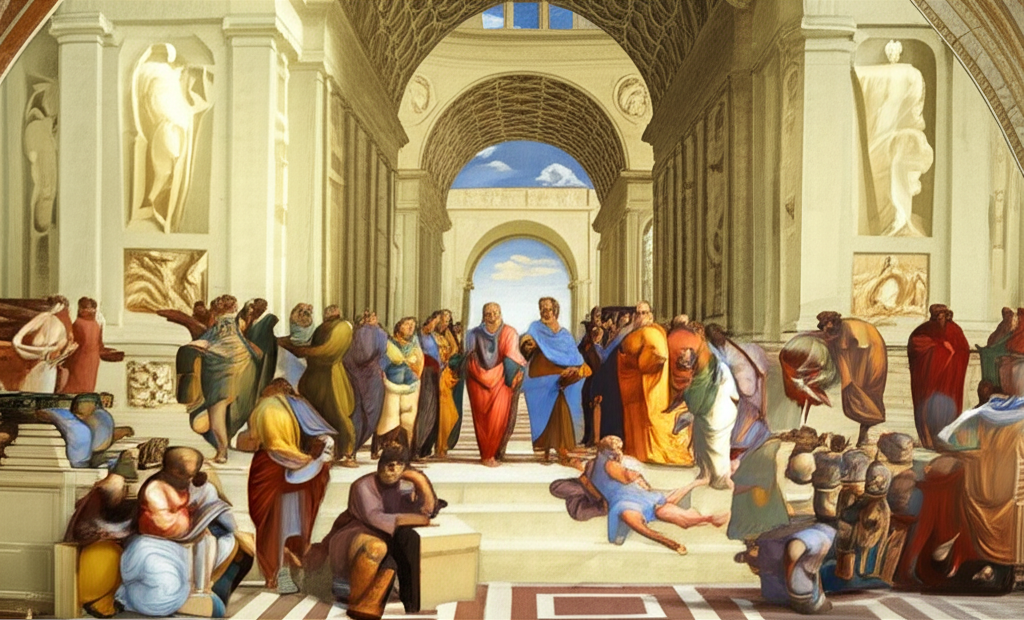
Philosophers and Their God-as-Principle
To illustrate the diverse ways philosophers have employed the Idea of God as a First Principle, consider the following summary:
| Philosopher | Key Work(s) | God/First Principle Role | Keywords |
|---|---|---|---|
| Plato | Republic | The Good (ultimate source of being and knowledge) | Idea, Good, Forms, Metaphysics |
| Aristotle | Metaphysics | Unmoved Mover (first cause of motion, pure actuality) | Prime Mover, Causality, Metaphysics |
| Thomas Aquinas | Summa Theologica | Uncaused Cause, Necessary Being (ultimate ground of existence) | God, Principle, Existence, Metaphysics |
| René Descartes | Meditations | Perfect Being (guarantor of clear and distinct ideas) | Idea, God, Certainty, Epistemology |
| Baruch Spinoza | Ethics | Substance (the one infinite, self-caused reality) | God, Substance, Nature, Metaphysics |
| Gottfried Leibniz | Monadology | Ultimate Monad, Necessary Being (sufficient reason for all) | God, Principle, Sufficient Reason, Metaphysics |
This table highlights how the Idea of God is consistently invoked to address fundamental metaphysical questions concerning origins, causality, and the coherence of reality.
Enduring Relevance: The Unyielding Quest for the Absolute
Even in an era marked by secular thought, the philosophical questions that led thinkers to posit God as a First Principle remain profoundly relevant. The search for ultimate explanations, for a ground of being that is not contingent, continues to drive scientific and philosophical inquiry. Whether one accepts the theological implications or not, the conceptual framework provided by the Idea of God as a First Principle offers a powerful lens through which to analyze the very structure of reality and our place within it. It challenges us to consider the limits of finite explanation and to ponder the possibility of an absolute, indispensable starting point for all that is.
Conclusion: The Indispensable Idea
From the ancient Greeks seeking the arche to modern rationalists grounding knowledge, the Idea of God has served as a potent and often indispensable First Principle in Western thought. It is a concept that transcends mere belief, acting as a profound metaphysical anchor, providing explanatory power for existence, causality, and the very structure of our intellectual landscape. As Daniel Fletcher, I contend that engaging with this Idea is not merely an exercise in theology, but a fundamental exploration of the limits and possibilities of philosophical reasoning itself. The quest for the ultimate Principle continues, and the Idea of God remains a formidable contender for that hallowed position.
Further Exploration:
📹 Related Video: ARISTOTLE ON: The Nicomachean Ethics
Video by: The School of Life
💡 Want different videos? Search YouTube for: ""Aristotle Unmoved Mover explained""
📹 Related Video: What is Philosophy?
Video by: The School of Life
💡 Want different videos? Search YouTube for: ""Descartes God as guarantor of knowledge""