

The Architectonic Principle: How the Idea of Form Shapes Our Understanding of Animals
A Philosophical Blueprint for Biological Order
From the earliest attempts to categorize the bewildering diversity of life, humanity has grappled with an inherent philosophical challenge: how do we group things together? This question, seemingly simple, plunges us into the profound waters of metaphysics and epistemology. This article posits that the ancient Idea of Form, as articulated by philosophers like Plato and Aristotle and preserved within the Great Books of the Western World, provides an enduring, albeit often implicit, framework for modern animal classification in science. We shall explore how the search for underlying essences and shared characteristics – a pursuit of Form – has guided our taxonomic endeavors, from the earliest naturalists to the sophisticated genetic analyses of today. Ultimately, the very act of classification is an attempt to discern the Forms that organize the natural world.
Plato's Ideas and Aristotle's Forms: Blueprints for Being
To understand the philosophical underpinnings of classification, we must first turn to the intellectual giants who first articulated the concept of Form.
-
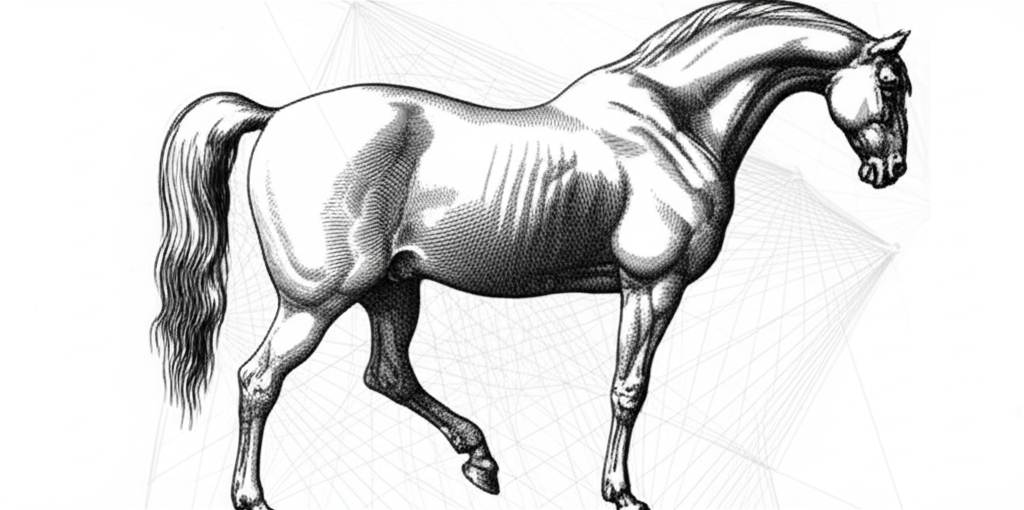
Plato's Realm of Ideas: For Plato, as explored in dialogues such as Phaedo and Republic, true reality resides not in the fleeting sensory world, but in a transcendent realm of perfect, eternal Ideas or Forms. A particular horse, for instance, is merely an imperfect copy of the ideal, archetypal Form of "Horse-ness." These Forms are the true essences, providing the ultimate standards for beauty, justice, and indeed, for what constitutes a particular kind of animal. While Plato's Ideas are separate from the physical world, they offer a conceptual framework for seeking perfect types.
-
Aristotle's Immanent Forms: Aristotle, Plato's most famous student, took a different approach, one more directly applicable to biological science. For Aristotle, as meticulously detailed in his biological treatises and Metaphysics, the Form (eidos) of a thing is not transcendent but immanent within the thing itself. It is the organizing principle, the essence that makes a thing what it is, dictating its structure, function, and purpose. The Form of a bird is what makes it a bird, distinguishing it from a fish or a mammal. Aristotle's extensive observations and classifications of animals were precisely an attempt to discern these inherent Forms through empirical study, laying the groundwork for systematic biology. He sought to define species based on their essential characteristics, a direct precursor to modern taxonomy.
The Great Books illuminate how these foundational philosophical concepts established a powerful intellectual tradition: the belief that the natural world is not chaotic, but ordered, and that this order can be apprehended by discerning its underlying Forms.
From Abstract Form to Tangible Classification: Early Naturalists
Centuries before Linnaeus, naturalists, often steeped in Aristotelian thought, instinctively sought to group animals based on shared characteristics. They observed morphology, behavior, and habitat, attempting to identify the essential features that defined a "kind" of creature. This was, in essence, an intuitive search for Forms.
Consider the following early approaches:
- Observation of Gross Morphology: Grouping birds by their feathers and wings, fish by their fins and gills, mammals by their hair and live birth. These are all observations of the Form of the animal.
- Functional Similarities: Recognizing that different species might have similar adaptations (e.g., flight in birds and insects), even if their underlying Forms were distinct.
- Hierarchical Grouping: Even without a formal system, there was an implicit understanding that some groups were broader than others (e.g., "winged creatures" versus "sparrows").
These early attempts, while lacking the rigor of modern science, demonstrated humanity's innate drive to impose order on complexity, guided by the Idea that discernible Forms exist.
Linnaeus and the Systematization of Form
The 18th century saw a pivotal shift with Carl Linnaeus, often hailed as the "father of modern taxonomy." Linnaeus's system, outlined in his Systema Naturae, provided a standardized, hierarchical method for classifying organisms. Crucially, his system was heavily reliant on morphology – the observable Form of the animal.
Linnaeus sought to identify key anatomical features that would define species and genera, creating a nested hierarchy:
- Kingdom
- Phylum
- Class
- Order
- Family
- Genus
- Species
Each level in this hierarchy was defined by shared Forms or characteristics. For example, all members of the Class Mammalia share the Form of mammary glands, hair, and a specific skeletal structure. While Linnaeus believed in the fixity of species, his genius lay in systematizing the recognition of shared Forms, making biological classification a truly scientific endeavor. His work, while not explicitly philosophical, was profoundly influenced by the Idea that distinct, definable Forms exist in nature.
The Dynamic Form: Evolution, Genetics, and the Modern Synthesis
The advent of evolutionary theory, spearheaded by Charles Darwin, profoundly altered the Idea of fixed Forms. Species were no longer seen as static, divinely created essences, but as populations undergoing continuous change through natural selection. Yet, even within an evolutionary framework, the concept of Form persists, albeit in a dynamic sense.
Modern science integrates multiple lines of evidence for classification:
- Morphological Form: Still crucial, particularly for initial identification and for extinct species in paleontology.
- Genetic Form (Molecular Data): DNA and RNA sequences reveal deep evolutionary relationships, often confirming or refining classifications based on morphology. This can be seen as discovering a deeper, genetic Form or blueprint.
- Developmental Form (Embryology): Similarities in embryonic development often indicate shared ancestry, revealing a common developmental Form.
The modern understanding of a species is not a rigid Platonic Form, but rather a dynamic, evolving Idea – a population sharing a common genetic heritage and reproductive isolation, exhibiting a range of phenotypic Forms within certain boundaries. Even with the fluidity of evolution, biologists still seek to delineate distinct groups, effectively identifying the "boundaries" of these evolving Forms.
| Aspect of Classification | Ancient Philosophical "Form" | Modern Scientific "Form" |
|---|---|---|
| Nature of Essence | Fixed, ideal, inherent | Dynamic, evolutionary, genetic |
| Primary Method | Philosophical contemplation, observation | Empirical observation, molecular analysis |
| Goal | Discover inherent "whatness" | Delineate evolutionary lineages and relationships |
| Role of Observation | To perceive the Form | To gather data reflecting the Form |
The Enduring Philosophical Resonance in Animal Science
In conclusion, the journey from ancient philosophical speculation to cutting-edge biological science reveals a remarkable continuity in the Idea of Form. Whether we are speaking of Plato's transcendent Ideas, Aristotle's immanent essences, or the genetic blueprints that define a species today, the fundamental human drive to understand the underlying structure and order of the animal kingdom remains constant.
Modern taxonomy, while rigorously empirical and data-driven, implicitly acknowledges the philosophical quest for Forms. When a scientist meticulously describes a new species, they are, in a profound sense, articulating its unique Form – its defining characteristics, its place in the grand tapestry of life, and its relationship to other Forms. The Idea of Form continues to be the architectonic principle guiding our efforts to classify, comprehend, and ultimately appreciate the astounding diversity of life on Earth.
📹 Related Video: PLATO ON: The Allegory of the Cave
Video by: The School of Life
💡 Want different videos? Search YouTube for: ""Plato's Theory of Forms and Aristotle's Eidos in Biology," "Philosophy of Biological Classification""