

The Enduring Idea of Form in Animal Classification
The act of classifying animals is not merely an exercise in scientific cataloging; it is a profound philosophical endeavor rooted in humanity's ancient quest to understand the underlying forms and ideas that give structure to the natural world. From the earliest observations to the most sophisticated genetic analyses, our attempts to sort and categorize living creatures have consistently grappled with the question of what constitutes a "kind" of animal, echoing the classical philosophical debates on universal forms and essences. This article explores how the philosophical idea of form, as articulated by figures like Plato and Aristotle, continues to shape and inform the science of animal classification, revealing the deep philosophical underpinnings of even our most empirical endeavors.
The Philosophical Genesis of Classification
Long before Linnaeus drew up his hierarchical taxonomy, ancient Greek philosophers were grappling with how to make sense of the bewildering diversity of life. Their inquiries laid the groundwork for the very idea of classification.
-
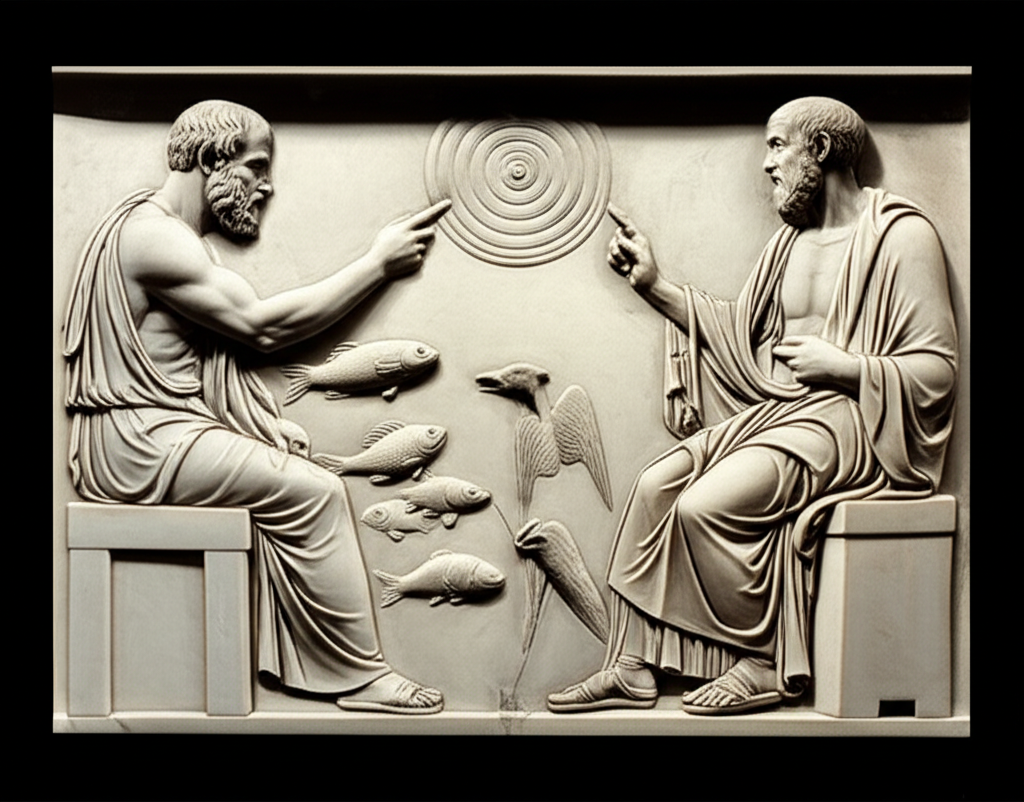
Plato's Ideal Forms: For Plato, the Idea or Form of an animal (e.g., the Form of "Dogness") existed independently in a realm of perfect, unchanging essences. Individual dogs in the physical world were merely imperfect copies or participants in this perfect Form. When we classify, we are, in a sense, trying to grasp these ideal Forms, grouping together those individual animals that share the same essential blueprint, even if their physical manifestations vary. This pursuit of the archetypal Idea suggests that true understanding comes from apprehending the Form, not just the observed particulars.
-
Aristotle's Immanent Forms: Aristotle, a student of Plato and himself a pioneering biologist, offered a more empirical and immanent view of form. For Aristotle, the form of an animal was not transcendent but inherent in the animal itself – its essence, its defining characteristics, and its purpose (telos). He meticulously observed and categorized animals based on shared anatomical features, modes of reproduction, and ways of life. His work, particularly in The History of Animals and Parts of Animals, represents the earliest systematic attempt at biological classification, driven by the idea that understanding an animal meant understanding its intrinsic form or nature. He sought to define species by their essential differences, a method of scientific inquiry that profoundly influenced subsequent thought.
Bridging Ancient Philosophy and Modern Science
The lineage from Plato and Aristotle to modern biological classification is clear. The fundamental idea of grouping organisms based on shared characteristics—whether ideal or immanent—persists.
Consider the following parallels:
- The Quest for Essences: Modern taxonomy, even with its evolutionary basis, still seeks to identify fundamental forms or patterns. When a taxonomist defines a species, they are, in essence, articulating what makes that animal that animal – its distinguishing form or set of characteristics that separate it from others. This echoes Aristotle's search for defining features.
- The Idea of a Type Specimen: The practice of designating a "type specimen" in zoology, a single individual that serves as the basis for the scientific name and description of a species, implicitly acknowledges the idea of an exemplary form, much like Plato's ideal. While not a perfect Form in the Platonic sense, it functions as a concrete representation of the species' defining form.
- Evolutionary Forms and Phylogeny: Even in evolutionary biology, where species are understood as dynamic and constantly changing, the concept of form remains critical. Phylogenetic trees trace the evolution of forms over time, showing how new forms arise from ancestral ones, and how shared forms (homologies) indicate common descent. The "tree of life" is, in a profound sense, a map of evolving forms.
The Continuing Relevance of the Idea of Form
The science of animal classification is a testament to the enduring power of the idea of form. Whether we are discussing morphology, genetics, or behavior, we are constantly seeking the underlying patterns and structures that organize biological diversity.
- Morphological Classification: This traditional method relies heavily on observable forms – the shape, structure, and arrangement of an animal's body parts. It is a direct descendant of Aristotle's empirical approach.
- Genetic Classification: While seemingly distinct, genetic classification also seeks forms – specifically, the forms encoded in DNA. Shared genetic sequences represent a fundamental molecular form that groups organisms and reveals their evolutionary relationships. The "blueprint" idea here resonates with ancient philosophical concepts of underlying design.
- Behavioral Ecology: Even in studying animal behavior, we identify recurring forms of action, communication, and social structure that characterize different species. These behavioral forms are as much a part of an animal's identity as its physical structure.
The very language we use – "species," "genus," "family" – reflects our attempt to categorize based on shared ideas of form. This isn't just a practical necessity for scientists; it's a fundamental human intellectual activity, deeply rooted in philosophical inquiry. The idea of form provides the conceptual glue, allowing us to move beyond individual instances to grasp the universal principles that govern the living world.
Conclusion: The Philosophical Heart of Science
The science of animal classification, far from being a purely empirical pursuit, is imbued with a rich philosophical heritage. The idea of form, whether conceived as a transcendent ideal or an immanent essence, continues to be the guiding principle behind our efforts to understand the diversity of life. From the Great Books of the Western World, we learn that the quest to classify is, at its core, a quest for understanding the forms that shape existence, a testament to the enduring interplay between philosophy and science in our pursuit of knowledge about the animal kingdom.
📹 Related Video: PLATO ON: The Allegory of the Cave
Video by: The School of Life
💡 Want different videos? Search YouTube for: ""Plato Aristotle Forms in Biology""
📹 Related Video: ARISTOTLE ON: The Nicomachean Ethics
Video by: The School of Life
💡 Want different videos? Search YouTube for: ""Philosophical Foundations of Taxonomy""