

The Enduring Form: An Ancient Idea in Modern Animal Science
The very act of categorizing a living creature, assigning it a name, and placing it within a hierarchy of species, genus, and family, might seem like a purely scientific endeavor. Yet, beneath the meticulous observations and genetic analyses of modern biology lies a profound philosophical bedrock: the idea of form. This concept, meticulously explored in the Great Books of the Western World, particularly by Plato and Aristotle, provides an indispensable lens through which to understand how we classify animals and, indeed, all life. From the abstract Idea of an ideal essence to the empirical observation of intrinsic structures, the notion of form remains central to our scientific understanding of the natural world.
The Philosophical Roots of Classification: From Idea to Form
Our innate human drive to sort, differentiate, and understand the world around us is deeply rooted in philosophical inquiry. Before the advent of modern science, thinkers grappled with the fundamental question: what makes a thing what it is?
Plato's Ideal Forms and the Quest for Categories
Plato, with his theory of Forms, introduced the powerful idea that beyond the imperfect, mutable world we perceive, there exist perfect, immutable Forms in an intelligible realm. For every observable animal – a dog, a horse, a bird – there is a quintessential, ideal Form of Dogness, Horseness, or Birdness. While these Forms are abstract and not directly observable, they provide the blueprint, the perfect idea, against which all particular instances in our world are mere shadows or imperfect copies. This philosophical framework underpins our very impulse to categorize: we seek to group individual animals because we intuitively sense they partake in a common, underlying Form. The very notion of a "species" as a distinct group of organisms sharing fundamental characteristics resonates with Plato's enduring idea of an ideal form.
Aristotle's Empirical Forms: The Birth of Biological Science
Aristotle, a student of Plato, took this concept of form and grounded it firmly in the empirical world, effectively laying the groundwork for biological science. While he acknowledged the importance of form (eidos), he sought it not in a transcendent realm, but within the observable characteristics of the animals themselves. In his monumental works, notably History of Animals (a key text in the Great Books collection), Aristotle meticulously observed, dissected, and described countless creatures. For him, the form of an animal was its essence, its intrinsic nature that determined its structure, function, and behavior. He classified animals based on shared characteristics like mode of reproduction, habitat, and presence of blood, differentiating them by their observable forms. This was not merely about shape, but about the organizing principle that makes a creature operate as it does – a profound shift from abstract idea to tangible, scientific investigation.
The Form as Essence: Bridging Metaphysics and Biology
The journey from Plato's abstract Idea to Aristotle's empirical form illustrates the crucial bridge between metaphysics and the nascent stages of biological science. The form became the answer to "what is it?" for any given animal.
Defining Animal Kinds Through Intrinsic Form
For both philosophers, albeit in different ways, the form of an animal was its defining characteristic, its essence. It was not merely the accidental properties, but the inherent structure and organization that allowed us to distinguish, say, a fish from a whale, even if both inhabit the water. The form dictates the internal organization, the physiological processes, and the life cycle. This idea of an intrinsic form allowed for the consistent identification and grouping of animals, moving beyond mere superficial resemblance to a deeper understanding of their nature. This philosophical grounding made systematic classification possible.
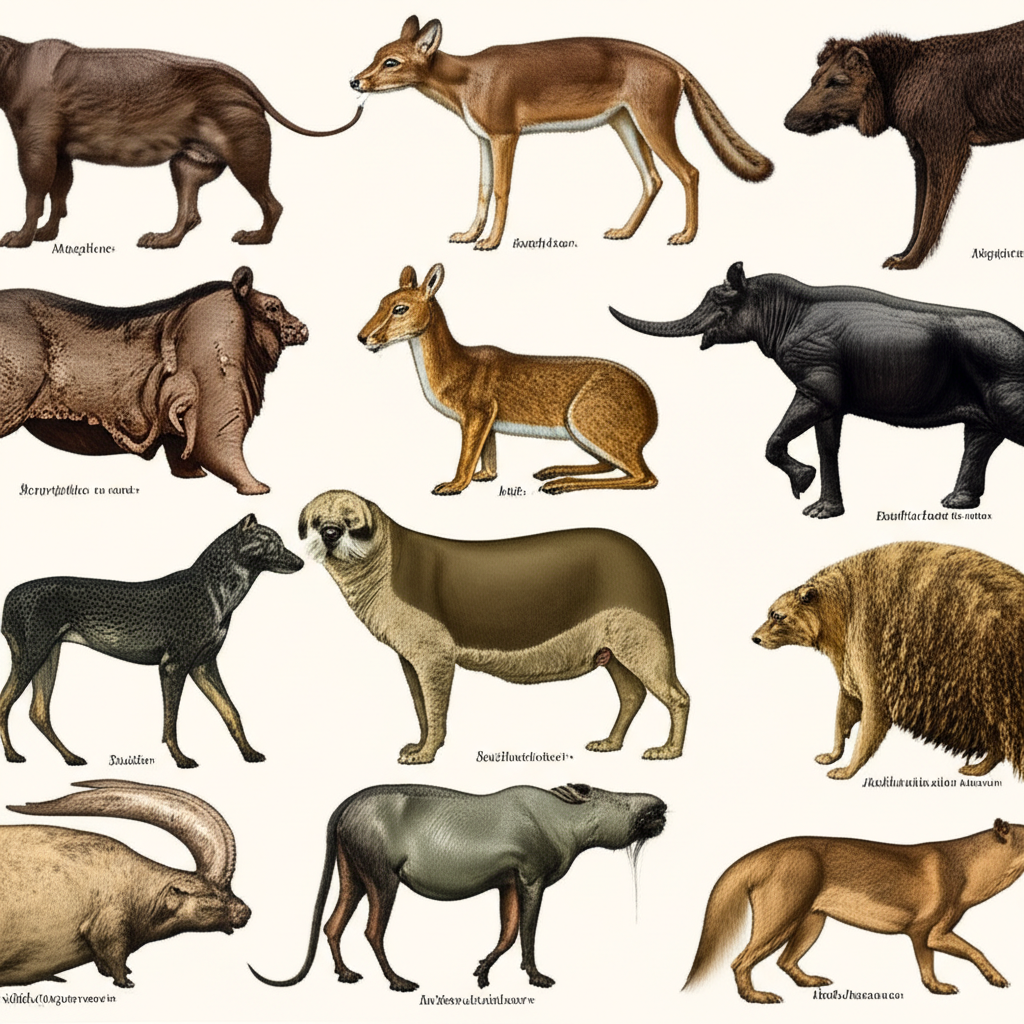
From Ancient Ideas to Modern Animal Science
The philosophical groundwork laid by Plato and Aristotle, particularly the idea of distinct forms, continued to influence classification for millennia, even as explicit philosophical references faded from scientific discourse.
Linnaeus and the Linnaean System: An Unacknowledged Debt to Form
When Carl Linnaeus developed his revolutionary system of binomial nomenclature in the 18th century, he was implicitly building upon this ancient idea of form. His classification system – kingdom, phylum, class, order, family, genus, species – relies fundamentally on the premise that animals can be grouped into discrete, identifiable categories based on shared, inherent characteristics. Each species, for Linnaeus, possessed a unique and fixed form or essence, an idea that resonated strongly with the Aristotelian tradition, though filtered through a more empirical and descriptive lens. The very structure of modern taxonomy, which seeks to identify and name distinct "kinds" of animals, owes an enormous intellectual debt to the philosophical concept of form.
Evolution and the Shifting Sands of Form
The advent of evolutionary science with Darwin presented a profound challenge to the idea of fixed forms. If species evolve and change over time, interbreeding and diverging from common ancestors, how can we speak of immutable forms? This tension forced a re-evaluation. Yet, even in evolutionary biology, the concept of form persists, albeit in a more dynamic sense. We still classify animals based on shared derived characters (homologies), which are essentially shared forms or structures inherited from a common ancestor. The idea of form shifted from a static essence to a dynamic, evolving pattern, but its utility in organizing the vast diversity of animal life remains undiminished. Modern science still seeks to understand the form of an organism – its morphology, physiology, and genetic makeup – to place it within the grand tree of life.
The Enduring Utility of Form in Animal Classification
The philosophical idea of form continues to be an indispensable tool in animal science, providing both a framework for understanding and a subject for ongoing inquiry.
Why the Idea of Form Persists in Science
The persistence of the idea of form in science is a testament to its practical utility. It allows us to:
- Organize Diversity: By grouping animals based on shared forms, we can make sense of the staggering variety of life.
- Predict Characteristics: Knowing an animal's form (i.e., its classification) allows us to predict other characteristics it might possess.
- Understand Relationships: Shared forms suggest evolutionary relationships and common ancestry.
- Communicate Effectively: A universally recognized classification system, rooted in the idea of distinct forms, facilitates clear communication among scientists worldwide.
In conclusion, the journey from Plato's transcendent Ideas to Aristotle's empirical forms laid the essential groundwork for how we perceive and organize the natural world. Modern animal science, though armed with sophisticated tools and evolutionary insights, continues to grapple with and utilize the profound idea of form in its relentless quest to understand the living tapestry of our planet. The Great Books of the Western World remind us that the most fundamental scientific questions often have deep philosophical roots.
YouTube: "Plato's Theory of Forms explained"
YouTube: "Aristotle's Biology and Classification"
📹 Related Video: What is Philosophy?
Video by: The School of Life
💡 Want different videos? Search YouTube for: "The Idea of Form in Animal Classification philosophy"