

The Enduring Canvas: Exploring the Idea of Eternity in Art
The human fascination with the infinite, the timeless, and the unchanging has long found its most profound expression not just in philosophy and religion, but vibrantly within the realm of Art. From the earliest cave paintings to the most avant-garde installations, artists have grappled with the elusive Idea of Eternity, attempting to capture, reflect, or even defy the relentless march of Time. This article delves into how various artistic forms across history have sought to immortalize moments, concepts, and spirits, creating enduring legacies that speak to our deepest desires for permanence in a transient world.
The Artist's Quest: Freezing the Flow of Time
At its heart, the pursuit of Eternity in Art is an existential endeavor. We, as temporal beings, are acutely aware of the passage of Time – its relentless progression, its capacity to erode and transform. Art emerges as a powerful counter-narrative, a deliberate act to halt, if only symbolically, the inevitable decay. Whether it’s the sculptor carving immutable stone, the painter fixing a fleeting expression, or the poet weaving words into an immortal verse, the artist seeks to imbue their creation with a quality that transcends its immediate temporal context. This ambition echoes the philosophical inquiries found in the Great Books of the Western World, where thinkers from Plato to Augustine have debated the nature of the eternal versus the temporal, the ideal versus the material.
Artistic Manifestations of Eternity:
Artists employ diverse strategies to convey the Idea of Eternity:
- Durability of Medium: Utilizing materials like stone, bronze, or tempered pigments designed to withstand the ravages of Time.
- Symbolic Representation: Employing iconography or allegories that refer to eternal truths, divine concepts, or cyclical patterns.
- Idealization: Depicting subjects not as they are, but as perfected, timeless forms, free from the imperfections of temporal existence.
- Narrative Continuity: Crafting stories, myths, or historical accounts that resonate across generations, offering a sense of enduring human experience.
- Abstracting Time: Moving beyond literal representation to evoke a sense of boundless space or cyclical recurrence, challenging linear perceptions of Time.
A Historical Canvas: Eternity Through the Ages
The manifestation of Eternity in Art has evolved significantly, reflecting the dominant philosophical and spiritual concerns of different eras.
Ancient Visions: Permanence and the Afterlife
Ancient civilizations, particularly the Egyptians, demonstrated an unparalleled dedication to Eternity in their Art. Their monumental architecture, funerary masks, and hieroglyphic inscriptions were not merely decorative but functional, designed to preserve the ka (soul) and ba (personality) for an eternal afterlife. The pyramids, for instance, are the ultimate architectural expression of this longing for permanence, built to defy Time itself. Similarly, Greek Art, influenced by Plato's Idea of perfect Forms, often aimed for an ideal beauty that transcended the temporal and imperfect. The serene, balanced proportions of classical sculpture, though depicting human figures, sought to embody a timeless, universal aesthetic.
Medieval Reflections: Divine Eternity
With the rise of Christianity, the Idea of Eternity shifted from an earthly permanence or an afterlife in a shadowy realm to a transcendent, divine realm. Medieval Art became a powerful tool for conveying theological truths about God's eternal nature, the everlasting soul, and the promise of eternal salvation or damnation.
Table: Medieval Art and the Eternal
| Artistic Form | Expression of Eternity | Examples |
|---|---|---|
| Cathedral Architecture | Reaching heavenward, vast spaces evoking the infinite presence of God. | Chartres Cathedral, Notre Dame de Paris |
| Stained Glass | Illuminating sacred narratives with otherworldly light, transcending material reality. | Rose windows of Gothic cathedrals |
| Iconography | Stylized, symbolic representations of saints and divine figures, removed from earthly Time. | Byzantine icons, illuminated manuscripts |
| Liturgical Music | Chants and hymns creating a timeless, spiritual atmosphere, echoing divine harmony. | Gregorian Chant |
Renaissance to Modernity: Humanism and the Endless Moment
The Renaissance brought a renewed focus on human experience, yet the quest for Eternity persisted, often through the celebration of human achievement and the desire for worldly renown. Artists like Shakespeare, in his sonnets, famously asserted that his "eternal lines to time do grow," promising immortality to his beloved through his Art. Baroque Art, with its dramatic intensity and dynamic compositions, often sought to capture a moment of intense emotion or spiritual ecstasy, freezing it for an eternal viewer.
As we move into modernity, the Idea of Eternity in Art becomes more complex, often challenging traditional notions. Abstract Art might evoke Eternity through boundless forms and colors, detaching itself from specific temporal references. Conceptual Art might explore the cyclical nature of existence or the enduring impact of ideas, even through ephemeral installations.
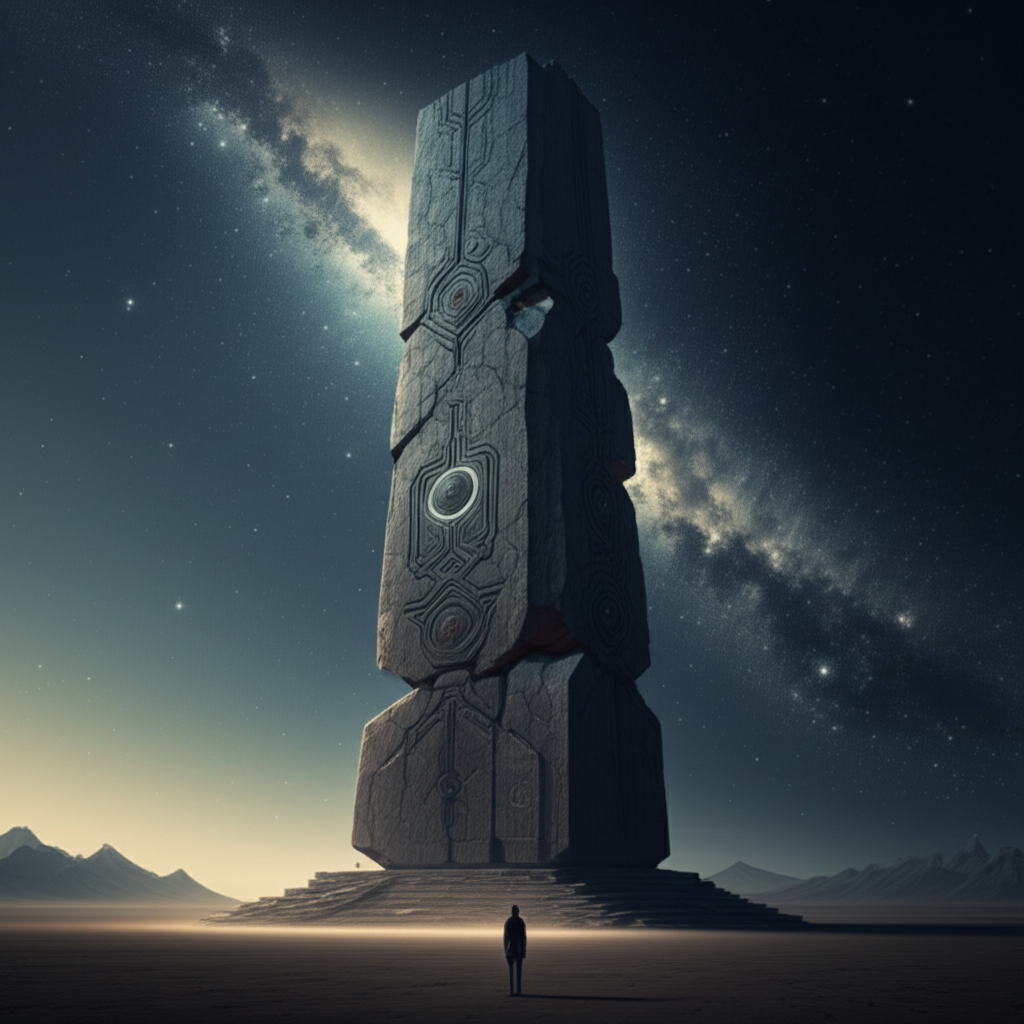
The Paradox of Creation: Art as a Bridge Across Time
The creation of Art is itself an act rooted in Time – the artist spends hours, days, or years on a piece. Yet, the finished work, when successful, transcends its creation moment, becoming a bridge that connects past, present, and future. A viewer in the 21st century can stand before a Roman bust or read an epic poem by Homer and feel a profound connection to the human experience across millennia. This capacity of Art to speak to different generations, to elicit universal emotions and provoke timeless questions, is perhaps its most potent claim to Eternity.
Art doesn't simply represent Eternity; in a very real sense, it creates a form of Eternity. It offers a space where ideas, emotions, and visions can persist beyond the lifespan of their creators and the specific historical context of their origin. It is a testament to the human spirit's refusal to be confined by the fleeting nature of existence, a continuous dialogue with the infinite, rendered tangible.
Conclusion: The Enduring Echo
The Idea of Eternity in Art is a testament to humanity's enduring fascination with the boundless and the unchanging. From the ancient desire to conquer Time through monumental structures to the modern artist's exploration of abstract permanence, Art has consistently served as a profound medium for this timeless contemplation. It is within the canvas, the stone, the word, and the note that we find echoes of the eternal, reminding us that while our individual lives are finite, our collective human spirit, expressed through Art, strives for and often achieves a measure of immortality. The great works, like those celebrated in the Great Books, continue to resonate, proving that true Art is indeed a conversation with Eternity.
📹 Related Video: PLATO ON: The Allegory of the Cave
Video by: The School of Life
💡 Want different videos? Search YouTube for: ""Plato's Theory of Forms Explained""
📹 Related Video: ARISTOTLE ON: The Nicomachean Ethics
Video by: The School of Life
💡 Want different videos? Search YouTube for: ""Art and the Passage of Time: Philosophical Perspectives""