

The Idea of Eternity and the Divine: A Journey Beyond Time
Summary
The concept of eternity, particularly as it relates to the Divine, stands as one of philosophy's most profound and enduring ideas. Far from merely an endless stretch of time, true eternity often denotes a state beyond temporal succession, a timeless present where God's existence is apprehended as a complete and simultaneous whole. This exploration delves into how Western thought, drawing heavily from the Great Books of the Western World, has grappled with this elusive notion, seeking to understand the nature of a being whose very existence transcends the boundaries of our temporal world.
Grappling with the Timeless: An Introduction
For beings enmeshed in the relentless flow of time – creatures of past, present, and future – the idea of eternity presents a profound intellectual and spiritual challenge. How can we, who measure our lives in moments and seasons, truly comprehend a state that exists entirely outside of this temporal framework? Yet, Western philosophy and theology, from the ancient Greeks to the medieval scholastics, have consistently confronted this paradox, particularly when contemplating the nature of God. The Divine is almost universally conceived as eternal, but what precisely does that mean? Is God simply very, very old, or is His existence fundamentally different from anything we experience?
Defining Eternity: More Than Just Endless Time
One of the most critical distinctions in understanding eternity is to separate it from infinite time. To say something lasts forever is merely to posit its existence across an unending sequence of temporal moments. True eternity, as articulated by many of the great thinkers, transcends time entirely.
The most influential definition comes from Boethius in his Consolation of Philosophy, where he describes eternity as "the whole, perfect, and simultaneous possession of interminable life." This definition is pivotal because it emphasizes:
- Wholeness: No part of eternal existence is missing or yet to come.
- Perfection: It lacks nothing, being complete in itself.
- Simultaneity: All of eternity is present at once, a single, indivisible "now." There is no past or future within eternity.
This stands in stark contrast to our human experience of time, which is inherently sequential, moving from one moment to the next.
The Philosophical Journey Through Time and Eternity
The idea of eternity has evolved through centuries of philosophical inquiry, deeply intertwined with the understanding of the Divine.
Early Echoes: Plato and Aristotle
Even before the explicitly theological formulations, Greek philosophers laid groundwork. Plato's theory of Forms, for instance, posits perfect, unchanging ideas existing in a realm beyond the flux of the material world and the passage of time. These Forms, like Justice or Beauty itself, are eternal in their timeless existence, influencing the later conception of God's own eternal nature.
Aristotle's Prime Mover, the ultimate cause of all motion, is pure actuality, without potentiality, and thus exists eternally. While not explicitly timeless in the Boethian sense, its unchanging, self-sufficient nature points towards a being independent of temporal succession.
Augustine and the Creation of Time
Saint Augustine, in his Confessions, grapples profoundly with the relationship between God and time. He famously asks what God was doing before He created the world. His answer is revolutionary: God did not create in time, but rather created time itself along with creation. Therefore, God exists outside of time, in an eternal present. For Augustine, God's knowledge is not foreknowledge (seeing what will happen in the future), but rather a simultaneous apprehension of all things, past, present, and future, in His eternal "now."
Boethius and the Definitive Formulation
As mentioned, Boethius's definition became the standard. Imprisoned and facing death, he found solace in contemplating God's eternal nature, which allowed for God's providential knowledge without negating human free will. If God sees all time simultaneously, then He doesn't "foresee" our choices as future events, but rather "sees" them as eternally present.
Aquinas and the Attributes of God
Thomas Aquinas, synthesizing much of classical and Christian thought in his Summa Theologica, solidified eternity as a core attribute of God. For Aquinas, God is absolutely simple, unchanging, and therefore outside of time. God's eternity is not merely endless duration but is His very essence, an indivisible, timeless "now." This Idea is crucial for understanding God's immutability, omnipotence, and omnipresence.
The Divine Connection: Why God Must Be Eternal
The philosophical and theological consensus that God is eternal stems from several key arguments:
- Immutability: If God were subject to time, He would necessarily change – moving from past to present to future. A perfect God cannot change, as any change would imply either gaining something He lacked (thus not perfect before) or losing something He possessed (thus not perfect after).
- Self-Sufficiency: A being dependent on time for its existence is not truly self-sufficient. God, as the ultimate ground of being, must be utterly independent.
- Creator of Time: As Augustine argued, if God created the universe, He must have created time itself. The creator cannot be bound by His own creation.
- Perfection: The idea of a perfect being naturally leads to one that is complete, whole, and without succession, residing in an eternal present.
Key Thinkers on Eternity and the Divine
The journey to understand eternity is a continuous dialogue within the Great Books.
| Thinker | Key Contribution to Eternity/Divine |
|---|---|
| Plato | Timeless Forms (Ideas) existing in a transcendent realm. |
| Aristotle | Unmoved Mover as pure actuality, eternal and unchanging. |
| Saint Augustine | God as creator of time, existing in an eternal present. |
| Boethius | Definitive concept: "the whole, perfect, and simultaneous possession of interminable life." |
| Thomas Aquinas | God's eternity as an essential attribute, His very essence. |
Challenges and Contemplations
While the idea of eternity provides a profound framework for understanding the Divine, it also opens doors to complex philosophical challenges. How does an eternal God interact with a temporal world? How can free will exist if God apprehends all of time simultaneously? These questions, explored by countless philosophers, underscore the depth and enduring relevance of the idea of eternity. It forces us to confront the limits of our own temporal understanding and reach for concepts that transcend our immediate experience.
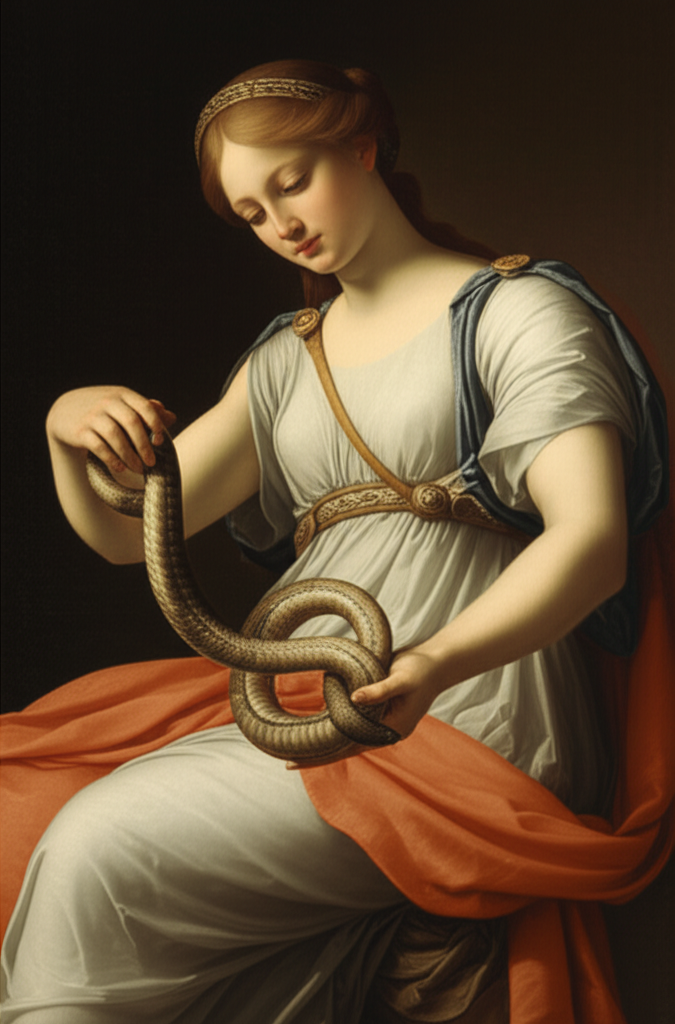 or an hourglass with sand that never depletes, set against a celestial, unchanging backdrop, subtly suggesting a realm beyond temporal human experience.)
Conclusion: The Enduring Idea
The idea of eternity, especially in its relation to the Divine, remains a cornerstone of philosophical and theological inquiry. It is not merely an abstract concept but a profound attempt to articulate the ultimate nature of reality and the being that stands as its source. By distinguishing eternity from infinite time, thinkers throughout the ages, drawing from the wellspring of the Great Books, have sought to grasp the incomprehensible, to define the timeless essence of God. This journey continues to invite us to expand our intellectual horizons, contemplating a realm where past, present, and future converge into a single, eternal "now."
📹 Related Video: What is Philosophy?
Video by: The School of Life
💡 Want different videos? Search YouTube for: "Boethius Consolation of Philosophy Eternity"
📹 Related Video: PLATO ON: The Allegory of the Cave
Video by: The School of Life
💡 Want different videos? Search YouTube for: "Augustine God Time Eternity"