

The Idea of Eternity and the Divine
The concept of eternity is one of philosophy's most profound and enduring mysteries, distinct from mere infinite duration, and inextricably linked to our understanding of the divine. This article explores how Western thought, particularly within the tradition illuminated by the Great Books of the Western World, has grappled with the Idea of eternity, defining it not as endless Time but as a timeless, complete present, and how this definition shapes our conception of God. We will journey through the insights of ancient Greeks, medieval theologians, and modern thinkers who sought to understand a realm beyond the temporal, where the divine resides.
Defining Eternity: Beyond Mere Duration
To grasp the philosophical weight of eternity, one must first distinguish it from its common colloquial usage. Often, "eternity" is conflated with an endless stretch of Time, a never-ending sequence of moments. However, as philosophers from Plato to Boethius have argued, true Eternity is not quantitative but qualitative.
- Eternity as Timelessness: It signifies a state entirely outside of Time, possessing all of life simultaneously and perfectly. It is a complete and perfect possession of unending life all at once.
- The Contrast with Temporal Existence: Our human experience is inherently temporal, marked by past, present, and future. We move through time. Eternity, by contrast, is a singular, unchanging present.
Boethius, in his seminal work The Consolation of Philosophy (a cornerstone of the Great Books collection), offered one of the most influential definitions: "Eternity, therefore, is the whole, simultaneous and perfect possession of unending life." This definition posits Eternity as fundamentally different from Time. It is not a very, very long duration, but the absence of duration altogether.
God and the Eternal Present
This philosophical understanding of Eternity is almost universally applied to the nature of God within Western theological and philosophical traditions. If Eternity is a timeless present, then God, as the eternal being, must exist outside of Time.
- Divine Transcendence of Time: God's existence is not in Time, but rather God is the ground or source of Time itself. All moments – past, present, and future – are simultaneously present to the divine intellect. This means God does not experience a sequence of events as we do; there is no "before" or "after" for God.
- Implications for Divine Knowledge: If God is eternal in this sense, then God's knowledge is not foreknowledge (knowing what will happen), but rather a simultaneous apprehension of all events. This resolves, for many thinkers like Augustine and Aquinas (both extensively featured in the Great Books), the tension between God's omniscient knowledge and human free will. God sees all choices, past, present, and future, as eternally present, not as predetermined future events.
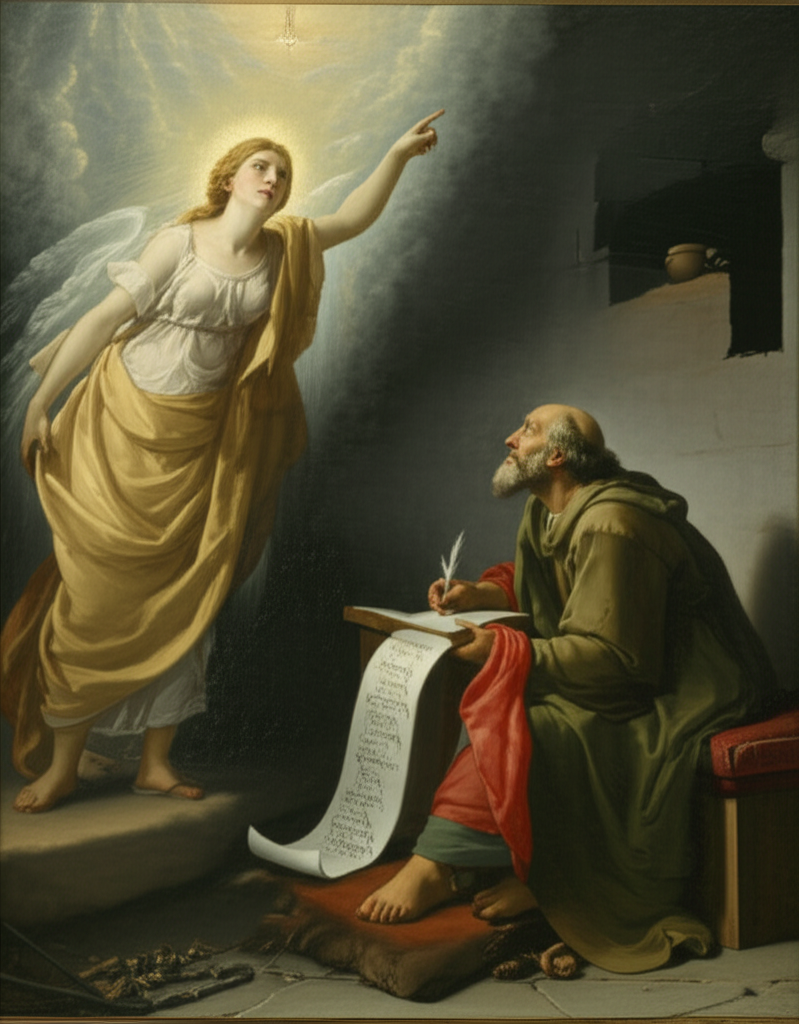
The Philosophical Journey Through Time and Eternity
The Idea of Eternity and its relationship to God and Time has been a central thread weaving through centuries of philosophical inquiry.
Ancient Greek Insights
The seeds of this distinction were sown in ancient Greece. Plato, in his theory of Forms, posited an unchanging, eternal realm of perfect Ideas that exist independently of the fleeting, temporal world of sensory experience. The Forms themselves are eternal, offering a glimpse into a reality beyond Time. Aristotle's Prime Mover, though not necessarily timeless in the same way as later Christian thought, is an eternal, unchanging cause of motion, existing in a state of pure actuality.
Medieval Syntheses
The medieval period, heavily influenced by the Great Books of both classical antiquity and early Christian thought, saw a profound synthesis.
| Philosopher | Key Contribution to Eternity/Divine | Source Material |
|---|---|---|
| Plato | Eternal Forms as archetypes, outside of changing Time. | Republic, Timaeus |
| Boethius | Defined eternity as the "whole, simultaneous and perfect possession of unending life." | The Consolation of Philosophy |
| Augustine | God created Time with creation; God is therefore outside and above Time. | Confessions, City of God |
| Aquinas | Integrated Boethius's definition into a comprehensive theological framework; God's eternity as pure act. | Summa Theologica |
These thinkers meticulously explored how a timeless God could interact with a temporal creation, providing intricate arguments for divine providence and the coherence of a universe created by an eternal being.
Modern Reinterpretations
Even as philosophy moved into the modern era, the Idea of Eternity continued to fascinate. While some thinkers challenged traditional theological frameworks, the concept of a reality transcending Time persisted. Kant, for instance, explored Time as a fundamental intuition, a condition of human experience, indirectly highlighting the difficulty of conceiving a reality truly outside it. Spinoza's God or Substance, existing sub specie aeternitatis (under the aspect of Eternity), is another powerful reinterpretation of a timeless, all-encompassing reality.
The Idea of Eternity: Its Enduring Appeal and Challenges
The Idea of Eternity holds a powerful allure, offering a vision of permanence, ultimate truth, and a refuge from the fleeting nature of human existence. It provides a foundational understanding for divine attributes like omnipotence, omniscience, and omnipresence, making God truly other-worldly and transcendent.
However, the concept also presents significant philosophical challenges:
- Human Comprehension: Our minds are inescapably temporal. How can we truly grasp a state of timelessness? It often requires negative definitions – what Eternity is not (not a sequence, not duration).
- Interaction with Time: If God is timeless, how can God act in Time? How can prayers from within Time be heard by a timeless God? Philosophers have posited God's eternal decree encompassing all Time or God's presence to every moment simultaneously.
- Free Will vs. Divine Foreknowledge: This classic dilemma is directly tied to God's eternal nature. If God sees all moments at once, does that negate genuine human choice? The Boethian and Augustinian solution rests on the distinction between God's eternal knowledge and human temporal causality.
Conclusion: Glimpsing the Timeless
The Idea of Eternity remains one of the most profound and challenging concepts in philosophy, central to our understanding of the divine. Far from being mere endless Time, Eternity is a radical departure from temporal experience, a state of complete and simultaneous possession of all life. This timeless Eternity is the very fabric of God's being, influencing our conceptions of divine attributes, knowledge, and interaction with the temporal world. Through the enduring wisdom of the Great Books of the Western World, we continue to wrestle with this sublime Idea, seeking to glimpse the timeless truth that lies beyond the relentless march of Time.
**## 📹 Related Video: What is Philosophy?
Video by: The School of Life
💡 Want different videos? Search YouTube for: ""Boethius Consolation of Philosophy Explained""**
**## 📹 Related Video: PLATO ON: The Allegory of the Cave
Video by: The School of Life
💡 Want different videos? Search YouTube for: ""Augustine on Time and Eternity""**