

The Idea of Eternity and the Divine: A Timeless Inquiry
The concept of eternity stands as one of philosophy's most profound and elusive ideas, inextricably linked to our understanding of the divine. Far from being merely an endless stretch of time, true eternity, as explored by the great minds throughout history, represents a state utterly distinct from temporal succession. This article delves into the philosophical journey of conceiving eternity, particularly its intimate connection with the nature of God, drawing insights from the foundational texts of Western thought. We will explore how thinkers have grappled with differentiating eternity from mere temporal longevity, and why this distinction is crucial for comprehending the divine attributes.
Distinguishing Eternity from Endless Time: The A-Temporal Nature
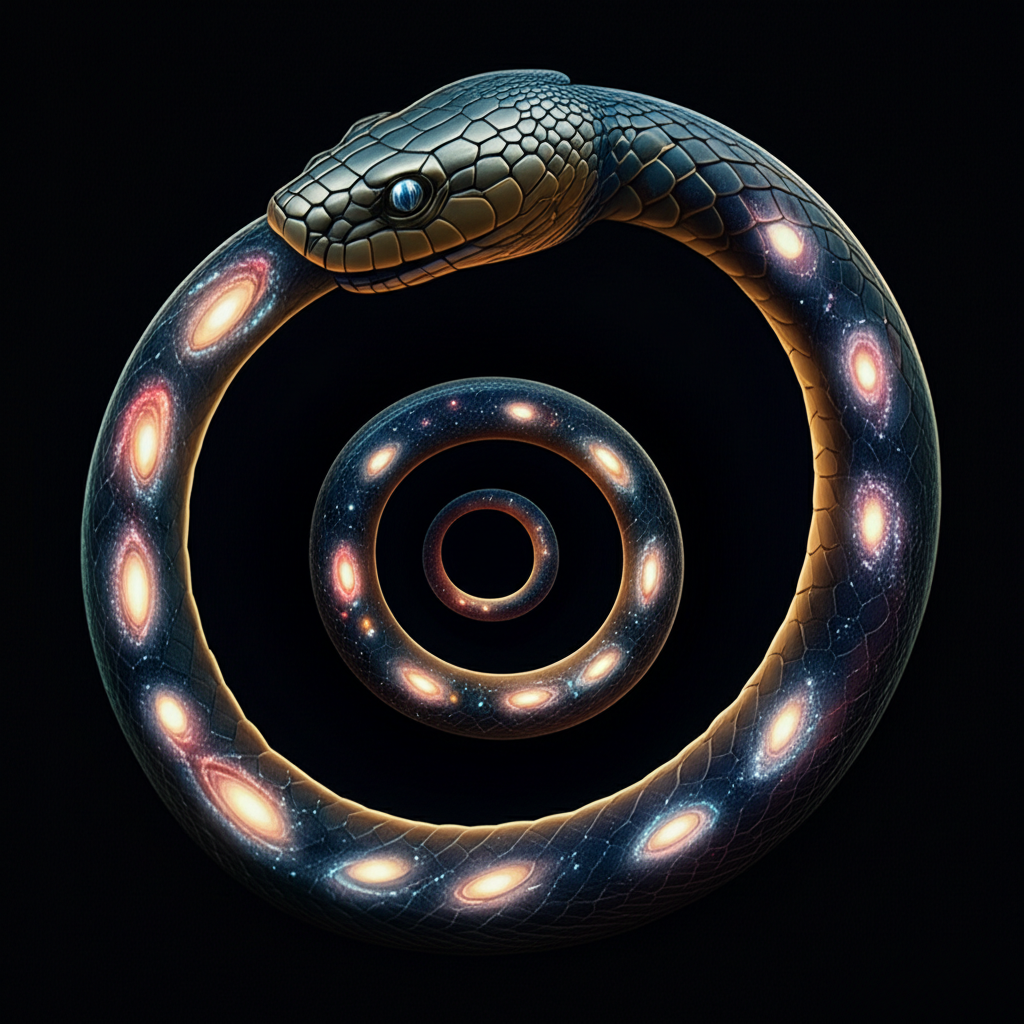
To speak of eternity is often to invoke a sense of endless duration, a never-ending stream of moments. Yet, the most penetrating philosophical inquiries, particularly those within the Great Books of the Western World, reveal a far more nuanced and radical understanding. Eternity, in its truest sense, is not in time at all, but rather outside or above it.
- Boethius's Definition: In The Consolation of Philosophy, Boethius offers a definitive perspective: "Eternity, therefore, is the whole, simultaneous and perfect possession of endless life." This isn't merely time without end; it's a present that encompasses all of time, a state where past, present, and future are simultaneously apprehended. For a being existing in eternity, there is no "before" or "after," no waiting, no remembering.
- Augustine on Creation and Time: Saint Augustine, in his Confessions, grapples with the question of what God was doing "before" creation. His profound insight is that Time itself is a creation. If God existed before creation, then there was no "before" in a temporal sense; God exists in an eternal present, and time began with creation, not before it. This places God fundamentally outside the temporal framework that governs our existence.
The human experience is inherently temporal. We live moment by moment, bound by the inexorable flow of time. To conceive of an existence where all moments are simultaneous, where there is no change or becoming, is to stretch the very limits of our imagination and conceptual framework. Yet, this is precisely the idea that philosophers have posited for the divine.
God as the Embodiment of Eternity: The Immutable and the Unchanging
The attribute of eternity is perhaps the most fundamental characteristic ascribed to God across various philosophical and theological traditions. If God is perfect, complete, and the ultimate ground of being, then God cannot be subject to the limitations and changes of time.
- Plato's Forms and the Eternal: While not directly addressing a personal God, Plato's Idea of the Forms, particularly the Good, posits an eternal, unchanging realm of perfect essences that exist independently of the fleeting, temporal world of appearances. These Forms are not subject to generation or decay, mirroring the timelessness later attributed to the divine.
- Aristotle's Unmoved Mover: Aristotle, in his Metaphysics, posits a Prime Mover, a pure actuality that causes all motion in the cosmos but is itself unmoved. This Mover exists eternally, not because it endures through endless time, but because it is pure being, without potentiality or change, and thus outside the temporal process.
- Aquinas and Divine Simplicity: Thomas Aquinas, building on Augustine and Aristotle, argues for God's absolute simplicity and immutability. If God were to change, God would move from potentiality to actuality, implying imperfection. Therefore, God must be pure act, unchanging, and thus eternal in the Boethian sense – possessing all of existence simultaneously, without temporal succession.
This eternal nature underpins other divine attributes: God's omniscience (knowing all things at once, not sequentially), omnipotence (power not limited by temporal constraints), and omnipresence (being everywhere, always). The idea of an eternal God is a necessary consequence of conceiving a perfect and ultimate reality.
The Human Mind Grappling with the Idea: A Glimpse Beyond Our Temporal Shackles
How can a temporal being, confined to a linear progression of moments, truly grasp the idea of eternity? This question highlights the profound challenge of philosophical inquiry into the divine. Our language, structured around tenses and temporal markers, struggles to articulate an a-temporal reality.
- Spinoza's Sub Specie Aeternitatis: Baruch Spinoza, in his Ethics, encourages us to view things "under the aspect of eternity" (sub specie aeternitatis). This is not to imply that we can become eternal, but that by understanding the necessary, unchanging laws that govern existence (which for Spinoza, are attributes of God or Nature), we can achieve a kind of intellectual love of God that transcends our momentary perceptions. It's a way of apprehending the timeless order of reality, even if we remain temporal beings.
- Kant and the Limits of Reason: Immanuel Kant, in his Critique of Pure Reason, suggests that while we can conceive of God and eternity as necessary ideas for understanding morality and the world, these concepts transcend the limits of our empirical experience and theoretical reason. We cannot know them in the same way we know phenomena within time and space, but they remain powerful and indispensable regulative principles for thought.
The struggle to comprehend eternity is a testament to the vast chasm between human and divine modes of existence. Yet, the persistent human drive to conceive of such a state suggests an innate yearning for something beyond the fleeting nature of time.
Philosophical Perspectives on Eternity and the Divine
The idea of eternity has been a cornerstone of philosophical and theological discourse for millennia. Below is a brief overview of how prominent thinkers, many found within the Great Books, have approached this profound concept:
| Philosopher | Key Contribution to Eternity/Divine to the conclusion.
Conclusion: The Enduring Mystery of the Eternal
The idea of eternity, particularly in its distinction from mere endless time, remains one of philosophy's most compelling and challenging concepts. It forces us to confront the limitations of our temporal existence and to stretch our minds toward a conception of reality that transcends our everyday experience. From Augustine's theological insights to Boethius's precise definition, and from Aristotle's Prime Mover to Spinoza's call to view things sub specie aeternitatis, the pursuit of understanding eternity has consistently led thinkers to the very heart of the divine.
To conceive of God as eternal is not simply to imagine an unending duration, but to posit a being whose existence is a complete, unchanging, and simultaneous present, the ultimate ground of all being and the source of time itself. This profound idea continues to inspire awe and inquiry, reminding us that the most significant philosophical questions often lie just beyond the horizon of our immediate temporal perception.
📹 Related Video: What is Philosophy?
Video by: The School of Life
💡 Want different videos? Search YouTube for: ""Boethius Eternity Time God Philosophy Explained""
📹 Related Video: What is Philosophy?
Video by: The School of Life
💡 Want different videos? Search YouTube for: ""Augustine on Time and Creation - Great Books Philosophy""