

The Enduring Pursuit: Unpacking the Idea of a Just State
The quest for a just state is perhaps the oldest and most persistent philosophical endeavor, a grand narrative woven through the very fabric of Western thought. It is the fundamental idea that a society can be structured not merely for order or survival, but for the flourishing of its citizens, grounded in principles of fairness, equality, and moral rectitude. This pillar page delves into the multifaceted concept of justice as it applies to the state, exploring how philosophers across millennia have grappled with its definition, its practical implementation, and its enduring relevance to our lives. From ancient Greece to contemporary political philosophy, the vision of a truly just society remains a powerful, often elusive, ideal that continues to shape our political discourse and collective aspirations.
Foundational Visions: Philosophers on Justice and the State
The "Great Books of the Western World" offer an unparalleled journey through the minds that first articulated the idea of a just state. These thinkers laid the groundwork for all subsequent discussions, establishing enduring questions and proposing revolutionary answers.
Plato's Ideal Republic: Justice as Harmony
In his seminal work, The Republic, Plato embarks on an ambitious project to define justice not just in the individual soul, but in the polis – the city-state. For Plato, a just state is one where each part performs its function harmoniously, without encroaching on the others.
- Tripartite Soul & State: Plato posits a parallel between the three parts of the soul (reason, spirit, appetite) and the three classes of the ideal state:
- Philosopher-Kings (Reason): Rule with wisdom and foresight.
- Guardians (Spirit): Protect the state with courage.
- Producers (Appetite): Provide for the material needs of the state.
- Justice Defined: Justice, in this view, is the principle that ensures each class fulfills its specific role, leading to a balanced and virtuous society. It is less about individual rights and more about collective well-being and moral order.
Aristotle's Practical Politics: Justice as Proportionate Equality
Aristotle, Plato's student, offered a more pragmatic and empirical approach to the idea of a just state in his Politics and Nicomachean Ethics. He distinguished between different forms of justice and their application within various constitutional frameworks.
- Distributive Justice: Concerns the fair allocation of honors, wealth, and goods according to merit or contribution. Not everyone gets the same, but everyone gets what they are due based on some relevant criterion.
- Corrective Justice: Aims to restore equality when it has been disturbed, such as in cases of crime or civil disputes, ensuring that wrongs are righted and penalties are proportionate.
- The Rule of Law: Aristotle emphasized that the best states are those governed by laws, not by men, as laws embody a form of impartial reason. He analyzed various constitutional forms (monarchy, aristocracy, polity, and their corruptions) in search of the most stable and just.
The Social Contract Theorists: Justice from Consent
With the Enlightenment, the focus shifted from an inherent, natural order to the idea that the state derives its legitimacy from the consent of the governed. Thinkers like Hobbes, Locke, and Rousseau explored the hypothetical "state of nature" and the reasons individuals would agree to form a society.
- Thomas Hobbes (Leviathan): Argued that in a state of nature, life is "solitary, poor, nasty, brutish, and short." To escape this, individuals surrender some freedoms to an absolute sovereign in exchange for security and order. Justice here is adherence to the laws established by this sovereign.
- John Locke (Two Treatises of Government): Posited that individuals possess inherent natural rights (life, liberty, property) even in the state of nature. The state is formed to protect these rights, and its authority is limited by a constitution based on popular consent. A just state upholds these fundamental rights.
- Jean-Jacques Rousseau (The Social Contract): Believed that individuals combine to form a society governed by the "general will," which aims for the common good. True freedom lies in obeying laws that one has, in a sense, prescribed for oneself. A just state is one that embodies and acts upon this general will.
Immanuel Kant: Justice as Moral Imperative
Kant, in works like Groundwork of the Metaphysics of Morals and Perpetual Peace, grounded justice in universal moral principles accessible through reason.
- Categorical Imperative: Act only according to that maxim whereby you can at the same time will that it should become a universal law. This principle extends to the state, suggesting that just laws are those that could be rationally willed by all citizens.
- Moral Autonomy and Rights: A just state respects the autonomy of its citizens and protects their rights, not as a means to an end, but as an end in themselves. The idea of a just state is tied to the moral duty to create a society where rational beings can coexist peacefully under universal law.
John Rawls: Justice as Fairness
In the 20th century, John Rawls revitalized social contract theory with his seminal work, A Theory of Justice. He proposed a thought experiment to determine principles of justice.
- The Original Position and Veil of Ignorance: Imagine individuals choosing the rules of their society from behind a "veil of ignorance," unaware of their own social status, talents, or beliefs. This ensures impartiality.
- Two Principles of Justice: From this position, Rawls argued, rational individuals would choose:
- Equal Basic Liberties: Each person is to have an equal right to the most extensive scheme of equal basic liberties compatible with a similar scheme of liberties for others.
- Difference Principle: Social and economic inequalities are to be arranged so that they are both (a) to the greatest benefit of the least advantaged, and (b) attached to offices and positions open to all under conditions of fair equality of opportunity.
Table 1: Key Philosophical Approaches to the Just State
| Philosopher | Core Idea of Justice | State's Role | Key Concept/Work |
|---|---|---|---|
| Plato | Harmony of functions, each doing its proper part. | To organize society into distinct, functional classes. | The Republic |
| Aristotle | Proportionate equality, treating equals equally. | To ensure fair distribution and correct imbalances. | Politics, Nicomachean Ethics |
| Hobbes | Adherence to sovereign's laws for security. | To impose order and prevent chaos. | Leviathan |
| Locke | Protection of natural rights (life, liberty, property). | To safeguard rights through limited, consensual government. | Two Treatises of Government |
| Rousseau | Obedience to the general will for the common good. | To embody and enact the collective will of the people. | The Social Contract |
| Kant | Universal moral principles, treating persons as ends. | To uphold rational laws and protect individual autonomy. | Perpetual Peace |
| Rawls | Fairness, prioritizing basic liberties and the least advantaged. | To ensure a just distribution of social goods and opportunities. | A Theory of Justice |
A Shifting Landscape: The Evolution of the Just State Ideal
The idea of a just state has never been static. Its evolution reflects changing historical contexts, technological advancements, and deepening understandings of human nature and society. From the ancient polis to the modern nation-state, the scope and nature of justice have expanded.
Initially, in city-states like Athens, the concept of justice often applied primarily to citizens, excluding slaves, women, and foreigners. The Roman Empire introduced the idea of universal law, but its application remained hierarchical. The medieval period saw justice intertwined with divine law and feudal obligations.
The Enlightenment marked a pivotal shift, placing individual rights and popular sovereignty at the forefront. The idea of a constitution emerged as the practical blueprint for a just state, a written document embodying the social contract and limiting governmental power. This era saw the rise of democratic ideals, advocating for representative government and the protection of civil liberties.
In the modern era, the scope of justice has broadened further to include economic justice, social justice, environmental justice, and international justice. The challenge is no longer just how to structure a single state justly, but how to ensure justice in an interconnected globalized world.
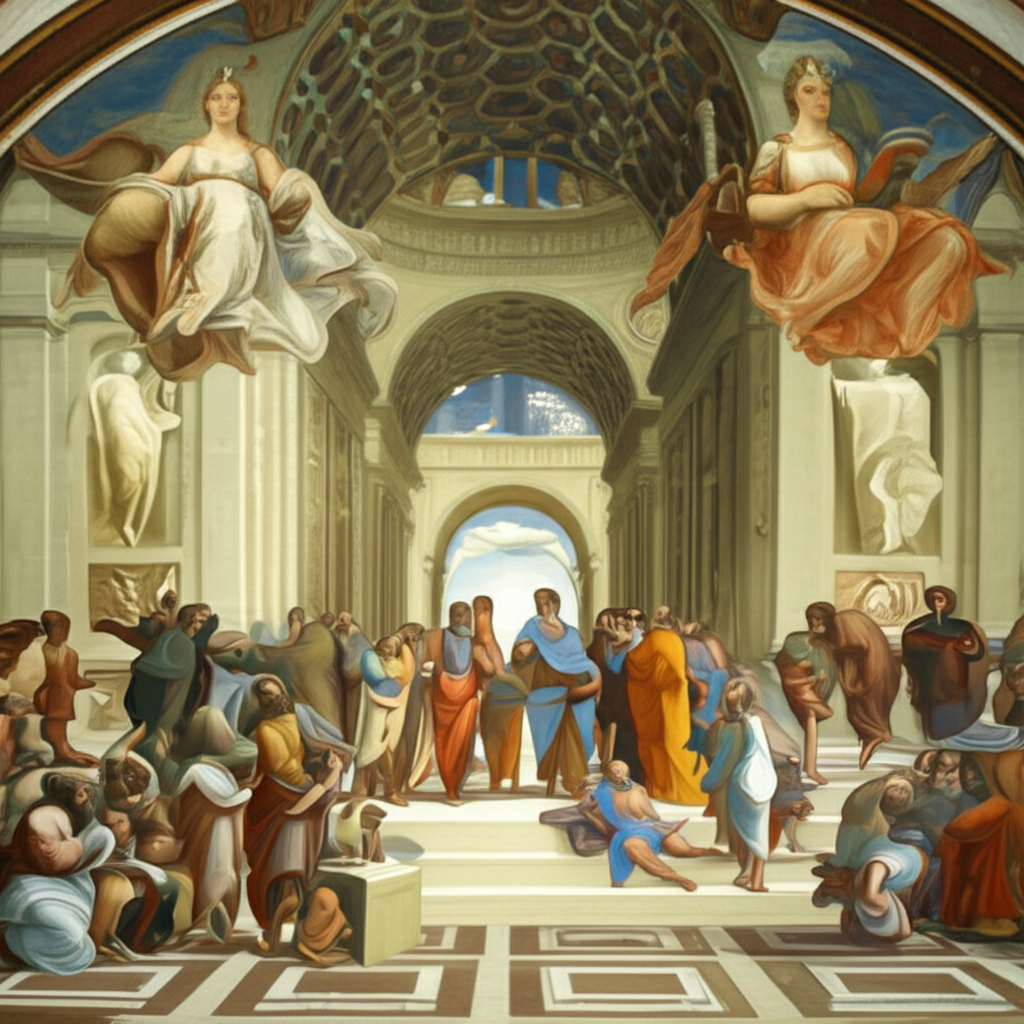
Justice in the Modern Era: Applying Ancient Ideas to Contemporary Challenges
The philosophical groundwork laid centuries ago continues to inform our contemporary debates about the just state. Today, we grapple with complex issues that demand a re-examination of these timeless ideas.
- Human Rights: The universal declaration of human rights can be seen as a direct descendant of Locke's natural rights and Kant's moral imperatives, asserting fundamental entitlements that a just state must protect, regardless of borders.
- Economic Inequality: Rawls's difference principle becomes highly relevant in discussions about wealth distribution, taxation, and social safety nets, challenging states to justify inequalities and ensure they benefit the least advantaged.
- Democratic Governance: The debates about the ideal constitution, electoral reform, and the balance of power echo Aristotle's analysis of political forms and Rousseau's concern for the general will.
- Global Justice: As states become increasingly interdependent, the idea of justice extends beyond national borders, prompting questions about fair trade, humanitarian intervention, and climate change responsibilities.
The core tension remains: how does a state effectively balance individual liberties with collective well-being, efficiency with fairness, and stability with progress?
The Unavoidable Tensions: Critiques and Realities of the Just State
While the idea of a just state is a powerful guiding star, its practical realization is fraught with challenges and critiques.
- Utopianism vs. Realpolitik: Critics argue that highly idealized visions of justice (like Plato's Republic) are impractical or even dangerous, leading to authoritarianism in pursuit of an impossible ideal. Realpolitik, conversely, prioritizes power and national interest over abstract moral principles.
- Cultural Relativism: Is justice a universal concept, or does its definition vary across cultures and historical periods? This challenge questions the very foundation of a universally applicable idea of a just state.
- The Problem of Implementation: Even with a clear constitution and well-intentioned laws, the actual implementation of justice can be hampered by corruption, inefficiency, and the inherent complexities of human society.
- Conflicting Justifications: Different philosophies of justice can lead to conflicting policies. For instance, a utilitarian approach might justify actions that an individual rights-based approach would condemn.
The struggle to reconcile these tensions is an ongoing feature of political life, reminding us that the pursuit of justice is a continuous process, not a destination.
Beyond the Horizon: The Perpetual Quest for a Just State
The idea of a just state remains one of humanity's most profound and persistent aspirations. It is a concept that transcends simple governance, reaching into the deepest questions of ethics, morality, and the very purpose of human society. From the ancient philosophers grappling with the ideal polis to modern thinkers wrestling with global inequality, the conversation continues, evolving with each generation.
The "Great Books" serve not just as historical artifacts, but as living wells of wisdom, offering frameworks for understanding, critique, and inspiration. They remind us that the constitution of a state is not just a legal document, but a philosophical statement about what kind of society we aspire to build. The quest for justice is therefore not merely an academic exercise, but a vital, ongoing commitment to shaping a world where all can thrive.
📹 Related Video: PLATO ON: The Allegory of the Cave
Video by: The School of Life
💡 Want different videos? Search YouTube for: ""Plato's Republic: Crash Course Philosophy #19""
📹 Related Video: PLATO ON: The Allegory of the Cave
Video by: The School of Life
💡 Want different videos? Search YouTube for: ""John Rawls: A Theory of Justice Explained""