

Beyond Vengeance: Unpacking the Idea of a Just Punishment
The concept of just punishment is a cornerstone of any civilized society, yet its philosophical underpinnings are fraught with complexity. This article delves into the historical and contemporary theories that seek to define what constitutes a fair and effective response to wrongdoing, exploring the intricate relationship between justice, punishment, and the law. Drawing from the rich tapestry of the Great Books of the Western World, we examine various perspectives—from retribution and deterrence to rehabilitation—and confront the enduring challenge of reconciling abstract ideals of good and evil with the practical realities of legal systems. Our journey through these profound ideas reveals not a simple answer, but a continuous human endeavor to balance accountability with the pursuit of a more equitable society.
A Foundation of Fairness: What is Just Punishment?
At its core, the idea of a just punishment grapples with fundamental questions: What is the appropriate response when someone breaches societal norms or causes harm? What purpose should this response serve? Is it about evening the score, preventing future transgressions, or perhaps even helping the offender? Philosophers throughout history have wrestled with these dilemmas, recognizing that the way a society administers punishment speaks volumes about its understanding of justice.
From Plato's vision of an ideal state in The Republic, where justice is the harmonious functioning of the soul and the city, to Aristotle's meticulous distinctions in Nicomachean Ethics between distributive (fair allocation of resources) and corrective (rectifying wrongs) justice, the ancient world laid the groundwork. Corrective justice, in particular, aims to restore a balance that has been disrupted by an unjust act, suggesting a form of proportionality inherent in the concept of just punishment.
The Philosophical Lenses: Theories of Punishment
Over centuries, various theories have emerged, each offering a distinct rationale for why and how punishment should be applied. These theories often reflect differing views on human nature, the purpose of law, and the ultimate goals of a just society.
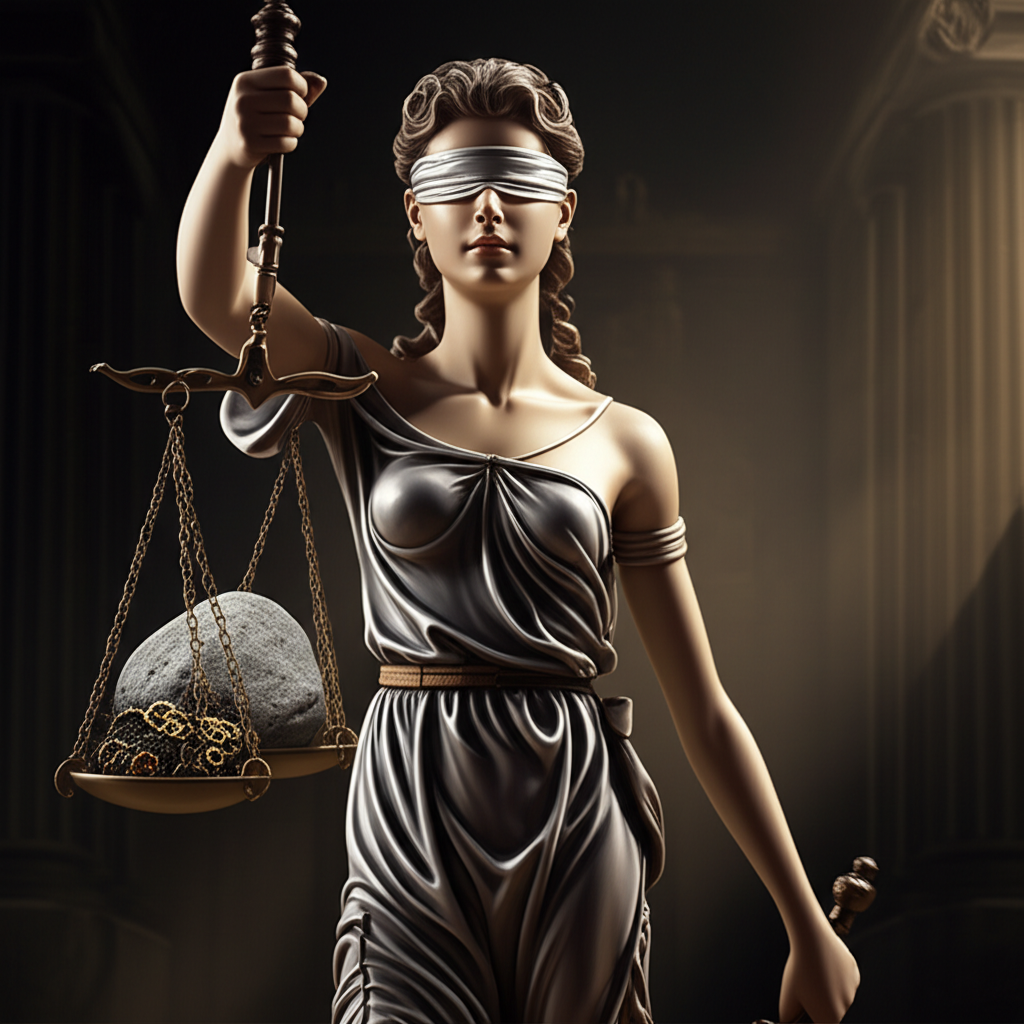
Retribution: The Scales of Justice
Retributive justice, often summarized by the ancient maxim "an eye for an eye," is perhaps the most intuitive and emotionally resonant theory. It posits that punishment should be directly proportional to the harm caused by the crime. The focus here is on the past act; the offender deserves to suffer in proportion to the suffering they inflicted. Immanuel Kant, a towering figure in the Great Books, argued in works like The Metaphysics of Morals that punishment is a categorical imperative – a moral necessity, not merely a means to an end. For Kant, the criminal has, through their act, implicitly willed a universal law that justifies their own punishment. It's about moral desert, not utility.
Deterrence: A Warning for the Future
In contrast, deterrence theory looks forward, aiming to prevent future crimes. This approach can be divided into two main types:
- General Deterrence: Punishing an offender serves as a public warning to others, discouraging potential wrongdoers from committing similar acts.
- Specific Deterrence: Punishing an offender discourages that individual from re-offending.
Cesare Beccaria, whose On Crimes and Punishments is a foundational text in criminal justice reform, argued passionately against cruel and disproportionate punishment. He believed that punishment should be certain, swift, and severe enough to deter, but not so brutal as to be counterproductive or inhumane. His utilitarian perspective, echoed by thinkers like Jeremy Bentham, prioritizes the greatest good for the greatest number, making the prevention of future harm the primary goal of punishment.
Rehabilitation and Restoration: Towards a Better Self
While retribution and deterrence focus on what an offender deserves or what society gains from their punishment, rehabilitation and restorative justice theories emphasize the offender's potential for change and the repair of harm.
- Rehabilitation: This theory aims to reform the offender, addressing the underlying causes of their criminal behavior (e.g., lack of education, addiction, mental health issues) with the goal of reintegrating them as productive members of society. It views punishment as an opportunity for moral and personal growth, rather than just retribution or deterrence.
- Restorative Justice: A more contemporary approach, though with ancient roots in indigenous practices, restorative justice focuses on repairing the harm caused by the crime, involving victims, offenders, and the community in a collaborative process. Instead of simply punishing the offender, it seeks to address the needs of the victim, hold the offender accountable for their actions, and rebuild relationships. It shifts the focus from "what law was broken?" to "who was harmed and what needs to be done to repair that harm?"
Law's Embrace: Codifying Justice
The law serves as the practical instrument through which society attempts to implement its vision of just punishment. It translates abstract philosophical ideals into concrete statutes, procedures, and penalties. John Locke, in his Two Treatises of Government, argues that individuals surrender their natural right to punish wrongs to the state, which then exercises this power on behalf of the community, guided by established laws.
However, the journey from philosophical ideal to legal reality is fraught with challenges. The law must navigate the complexities of evidence, intent, and individual circumstances, often struggling to perfectly embody theoretical justice. Discrepancies in sentencing, the impact of socio-economic factors, and the fallibility of human judgment all highlight the gap between the idea of a just punishment and its imperfect execution.
The Moral Compass: Good, Evil, and Culpability
Central to any discussion of just punishment is the understanding of good and evil. What makes an act punishable? Is it merely a transgression of law, or does it stem from a deeper moral failing? Philosophers have long debated the nature of moral responsibility and culpability. Are people inherently evil, or do circumstances lead them astray?
If an act is deemed evil, does punishment serve to purge that evil from the individual or society, or merely to contain its effects? The very notion of culpability – the degree to which someone is responsible for their actions – directly impacts the perceived justice of any punishment. This is where the Great Books offer profound insights, from Augustine's exploration of sin and free will in Confessions to the nuanced psychological portrayals of moral conflict in Shakespeare's tragedies. Understanding the human capacity for both good and evil is essential for crafting a system of punishment that is not only effective but also truly just.
The Unending Quest for Balance
The idea of a just punishment remains an evolving concept, continuously debated and refined. No single theory provides a perfect solution, and societies often blend elements of retribution, deterrence, rehabilitation, and restoration in their legal systems. The quest for justice in punishment is a testament to humanity's ongoing struggle to create a fair and ordered world, where the law reflects a collective understanding of good and evil, and where responses to wrongdoing are both firm and humane. As we continue to grapple with these profound questions, the wisdom gleaned from the Great Books of the Western World serves as an indispensable guide, reminding us that the pursuit of justice is a journey without end.
📹 Related Video: What is Philosophy?
Video by: The School of Life
💡 Want different videos? Search YouTube for: ""Theories of Punishment Philosophy Explained""
📹 Related Video: KANT ON: What is Enlightenment?
Video by: The School of Life
💡 Want different videos? Search YouTube for: ""Kant's Retributive Justice vs Utilitarianism""