

The Idea of a Just Punishment: Navigating Morality, Law, and Human Nature
The concept of a just punishment stands as one of the most enduring and complex challenges in philosophy, law, and societal organization. It compels us to confront fundamental questions about human nature, the purpose of justice, and the very definition of good and evil. At its core, a just punishment seeks to impose consequences for wrongdoing in a manner that is fair, proportionate, and serves a legitimate societal purpose, without descending into vengeance or arbitrary cruelty. This article delves into the philosophical underpinnings of just punishment, exploring the various theories, historical perspectives from the Great Books of the Western World, and the persistent dilemmas that continue to shape our understanding.
The Enduring Question of Justice in Punishment
For millennia, thinkers have wrestled with the notion of how a society should respond to those who transgress its norms. From the ancient Greek philosophers to the Enlightenment thinkers, the debate has centered on what constitutes a morally defensible and practically effective system of punishment. Is it merely about retribution, ensuring that a wrongdoer "pays" for their actions? Or should punishment aim to deter others, rehabilitate the offender, or simply protect society by removing dangerous individuals?
Plato, in his Laws and Republic, grappled with the ideal state's approach to crime, suggesting that punishment should aim at moral improvement and the good of the state, rather than mere vengeance. Aristotle, in his Nicomachean Ethics, distinguished between distributive justice (fair allocation of goods) and corrective justice (rectifying wrongs), providing a framework for understanding how law might restore balance after an injustice. These foundational texts from the Great Books of the Western World highlight that the quest for just punishment is not merely a legal technicality, but a profound ethical inquiry.
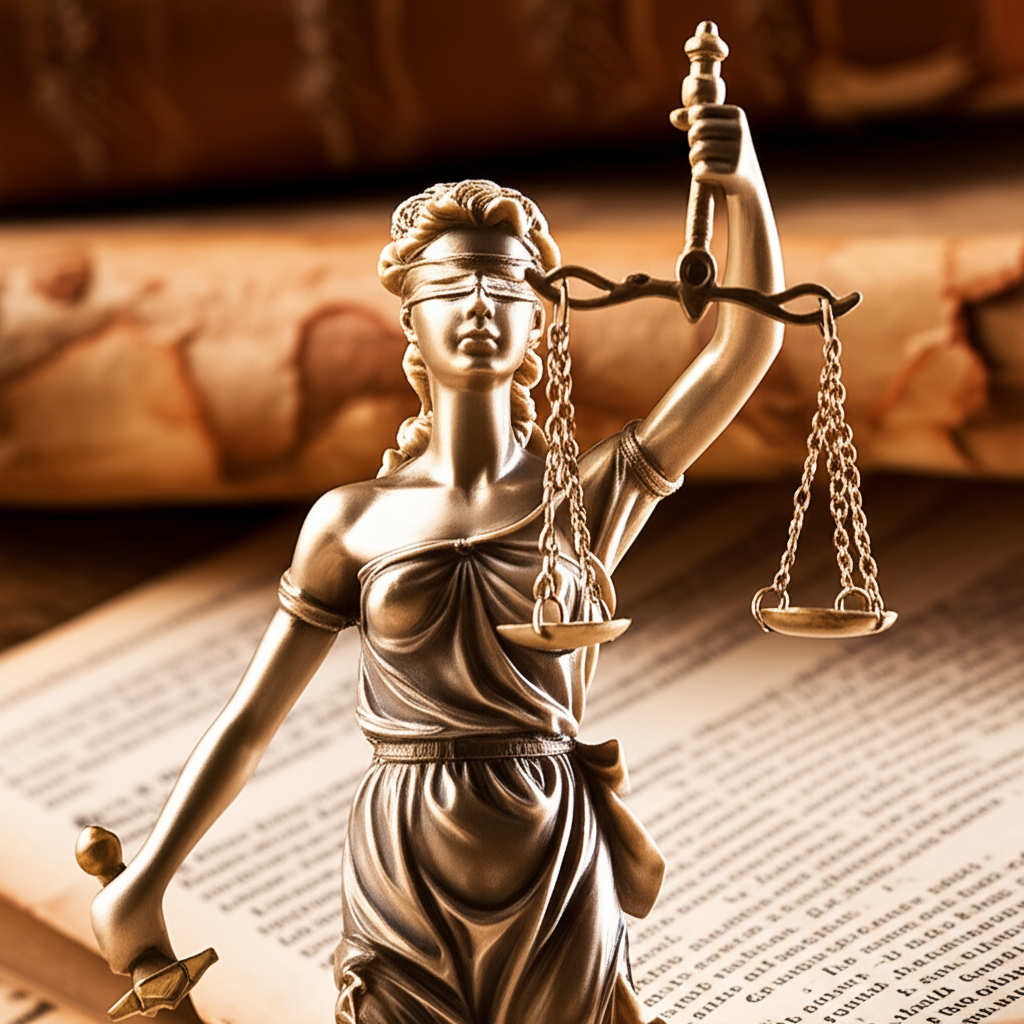
Defining Justice: A Philosophical Quagmire
Before we can speak of just punishment, we must first attempt to define justice itself, a task that has occupied philosophers for centuries. The challenge lies in the multifaceted nature of justice, which can be viewed through several lenses:
- Retributive Justice: This perspective, often summarized by the maxim "an eye for an eye," posits that punishment should be proportional to the harm caused. Immanuel Kant, a prominent proponent, argued that punishment is a categorical imperative, a moral duty owed to the criminal as a rational being, not merely a means to an end. It affirms the moral order by restoring balance after a violation.
- Distributive Justice: While primarily concerned with the fair allocation of resources and opportunities, principles of distributive justice can influence our perception of whether a punishment system is fair, especially when considering socio-economic factors that might lead to crime.
- Procedural Justice: This aspect focuses on the fairness of the processes by which punishment is determined and administered. It emphasizes due process, equal application of the law, and unbiased decision-making, ensuring that the journey to punishment is as fair as the punishment itself.
The tension between these conceptions of justice often complicates the implementation of what we intuitively feel is a "just" outcome.
The Purpose of Punishment: Beyond Simple Retribution
The philosophical discourse on punishment is rich with theories about its ultimate aims. A just punishment is often considered one that effectively serves one or more of these purposes:
- Deterrence: The idea that punishment should discourage both the offender (specific deterrence) and others (general deterrence) from committing similar crimes in the future. This utilitarian approach, explored by thinkers like Jeremy Bentham, focuses on the societal benefits of preventing harm.
- Rehabilitation: This theory suggests that punishment should aim to reform the offender, transforming them into a productive member of society. It emphasizes education, therapy, and skill-building, viewing crime as a treatable condition rather than solely a moral failing.
- Incapacitation: Sometimes referred to as protection, this purpose involves removing offenders from society to prevent them from causing further harm. Imprisonment serves as the primary mechanism for incapacitation.
- Retribution: As discussed, this is the belief that offenders deserve to suffer for their wrongs, and punishment is society's way of delivering that desert. It is backward-looking, focusing on the crime committed rather than future outcomes.
| Purpose of Punishment | Primary Focus | Philosophical Underpinnings | Key Challenge |
|---|---|---|---|
| Deterrence | Future Crime Prevention | Utilitarianism, Consequentialism | Proportionality, Efficacy |
| Rehabilitation | Offender Reform | Humanism, Social Justice | Resources, Recidivism |
| Incapacitation | Societal Protection | Pragmatism, Safety | Liberty, Cost |
| Retribution | Just Deserts | Deontology, Moral Order | Vengeance, Mercy |
A truly just punishment system often attempts to balance these competing objectives, recognizing that an overemphasis on one at the expense of others can lead to undesirable outcomes.
The Role of Law and the Concept of Good and Evil
The law acts as the primary mechanism through which society codifies its understanding of good and evil and enforces its vision of justice. Legal systems define what constitutes a crime, thereby drawing lines between acceptable and unacceptable behavior. However, the connection between law and morality is not always straightforward.
Thinkers like Thomas Aquinas, drawing from Aristotelian philosophy, articulated the concept of natural law, arguing that there are universal moral principles inherent in nature, discoverable by reason, which positive human law should reflect. When human law deviates from natural law, its legitimacy can be called into question. John Locke, in his Two Treatises of Government, also emphasized a natural law that grants individuals rights and limits the legitimate exercise of power, including the power to punish.
The very act of defining crime forces us to confront our collective understanding of good and evil. Is a particular act inherently evil, or is it merely a violation of social convention? How do we account for intent, circumstance, and the varying degrees of moral culpability? A just punishment system must navigate these complex moral landscapes, striving to apply principles of justice even when the lines between good and evil appear blurred.
Challenges to Just Punishment in Practice
Even with robust philosophical frameworks, achieving just punishment in practice remains an immense challenge. Issues such as:
- Proportionality: How do we accurately calibrate punishment to fit the crime, avoiding both excessive harshness and insufficient consequences?
- Disparities: Systemic biases, socio-economic inequalities, and racial prejudices can lead to vastly different outcomes for similar offenses, undermining the principle of equal justice under the law.
- Mercy vs. Strict Justice: When, if ever, should mercy temper the demands of strict justice? The tension between adhering rigidly to the law and acknowledging individual circumstances is a perennial debate.
- The Problem of Good and Evil in Action: How do we judge the good and evil in the heart of an individual, especially when mental health, addiction, or extreme circumstances play a role?
These practical dilemmas underscore that the idea of a just punishment is not a static ideal, but a dynamic and ongoing pursuit, requiring constant re-evaluation, ethical reflection, and a commitment to human dignity.
Conclusion
The idea of a just punishment is a cornerstone of any civilized society, reflecting its deepest values regarding justice, law, good and evil, and the treatment of its members. From the ancient insights of Plato and Aristotle to the rigorous moral philosophy of Kant, the Great Books of the Western World provide an indispensable foundation for understanding this complex topic. There is no single, universally accepted formula for just punishment, but rather a continuous philosophical endeavor to balance retribution with rehabilitation, deterrence with compassion, and the demands of the law with the nuances of human experience. In striving for just punishment, we are not merely imposing consequences; we are defining what it means to be a fair, ethical, and humane society.
YouTube:
- "Justice: What's The Right Thing To Do? Episode 08: 'WHATS A FAIR START?'" (Michael Sandel's Harvard course)
- "The Philosophy of Punishment" (Search for animated philosophy videos or college lecture series)
📹 Related Video: What is Philosophy?
Video by: The School of Life
💡 Want different videos? Search YouTube for: "The Idea of a Just Punishment philosophy"