

The Enduring Pursuit: Unpacking the Idea of a Just Constitution
Summary
The idea of a just Constitution has captivated thinkers for millennia, serving as the bedrock upon which societies aspire to build order, fairness, and liberty. More than a mere legal document, it represents a profound philosophical endeavor to define and codify the principles by which a community can thrive equitably. This article explores the historical and philosophical dimensions of this pursuit, examining how various traditions, particularly those found within the Great Books of the Western World, have grappled with what constitutes a truly just framework of law and governance, and why this ideal remains an enduring aspiration.
Introduction: The Philosophical Bedrock of Governance
The very notion of a constitution evokes images of foundational documents, supreme law, and the intricate machinery of governance. Yet, beneath the parchment and legal clauses lies a far more profound and ancient quest: the search for a just society. For millennia, philosophers, statesmen, and citizens alike have pondered the idea of a just Constitution—a framework not merely of rules, but of principles designed to foster human flourishing, uphold fairness, and safeguard liberty. This isn't just a political problem; it's a deeply philosophical one, rooted in questions of human nature, societal purpose, and the very meaning of justice itself.
Defining "Just": Ancient Wisdom and Modern Insights
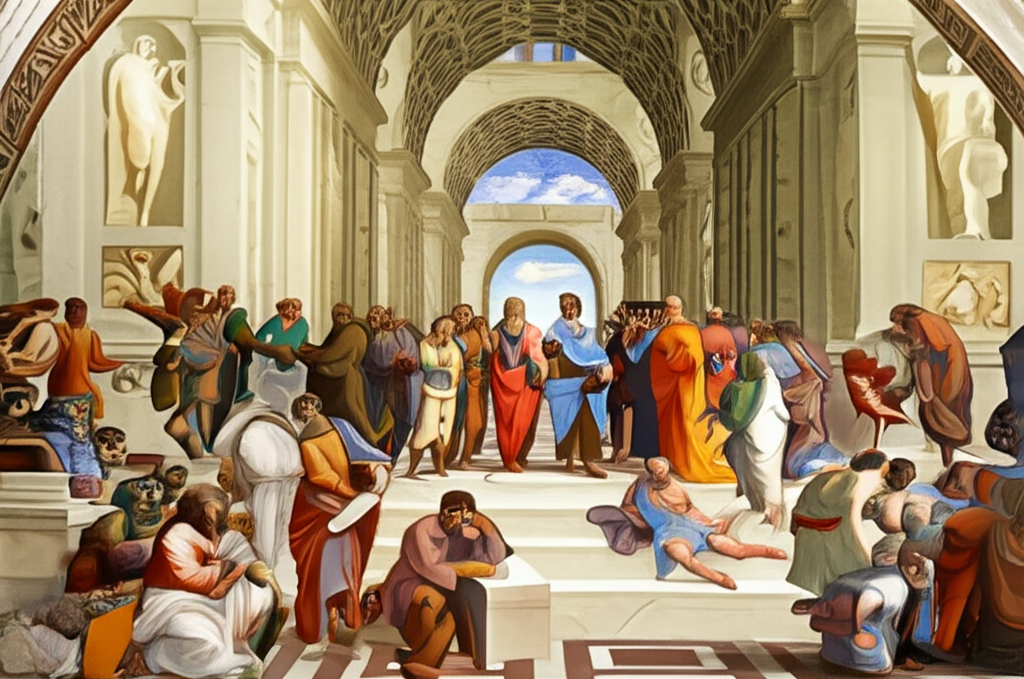
What, precisely, makes a constitution "just"? This question lies at the heart of political philosophy, from the dialogues of Plato to the treatises of Locke and Rousseau, all canonical texts in the Great Books of the Western World. The concept of justice itself has evolved, yet certain core principles persist:
- Platonic Justice: For Plato, in his Republic, justice in the state mirrors justice in the soul: each part performing its proper function. A just Constitution would therefore structure society so that each class (rulers, auxiliaries, producers) fulfills its role harmoniously, guided by wisdom.
- Aristotelian Justice: Aristotle, in his Politics, linked justice to proportionality and the common good. A just Constitution (or politeia) would aim at the good life for all citizens, distributing offices and honors according to merit and ensuring stability through a mixed government that balances different interests.
- Modern Justice: Enlightenment thinkers shifted the focus to individual rights, consent of the governed, and the rule of law. A just Constitution in this view protects fundamental liberties and establishes mechanisms for popular sovereignty, ensuring that the law applies equally to all.
The common thread is the pursuit of a societal arrangement that is fair, equitable, and conducive to the well-being of its members. It's an idea that transcends mere legality, touching upon ethics and morality.
The Idea of a Constitution Beyond Mere Rules
To conceive of a just Constitution is to look beyond its mechanical function as a set of rules. It is to grasp its idea as a living blueprint for a shared life.
- A Statement of Values: A constitution articulates a society's highest values and aspirations. Is it liberty, equality, order, or a blend of these? The Preamble of the United States Constitution, for instance, speaks of "establishing Justice, insuring domestic Tranquility, providing for the common defence, promoting the general Welfare, and securing the Blessings of Liberty." These are not just legal mandates but moral imperatives.
- A Framework for Power: Crucially, a just Constitution defines and limits power. It establishes who governs, how they govern, and, perhaps most importantly, the boundaries beyond which they cannot tread. The concept of the "rule of law," where even rulers are subject to the law, is a cornerstone of this idea.
- An Enduring Covenant: It represents a generational agreement, a covenant between the past, present, and future citizens, binding them to a shared vision of justice and order.
The Indispensable Role of Law
The idea of a just Constitution finds its practical expression and enforcement in law. Without law, the most noble constitutional principles remain mere abstractions.
- Law as Embodiment: Constitutional law translates abstract principles of justice into actionable rules and procedures. It defines rights, allocates responsibilities, and establishes judicial processes to resolve disputes fairly.
- Law as Guardian: A just system of law acts as a guardian against arbitrary power, ensuring that governance operates within defined limits and that individuals are protected from oppression. The principle of habeas corpus, for example, is a fundamental legal protection against unlawful detention, rooted in the constitutional idea of individual liberty.
- Law as Educator: Beyond enforcement, law also plays an educative role, shaping societal norms and reinforcing the values embedded within the constitution. When law is perceived as just, it fosters civic virtue and respect for the collective good.
Historical Trajectories from the Great Books
The Great Books of the Western World provide a rich tapestry of approaches to the just Constitution:
- Ancient Models:
- Athenian Democracy: Emphasized direct participation and citizen assembly as the basis of law and governance, though limited to a specific segment of the population.
- Roman Republic: Sought balance through a mixed constitution of consuls (monarchical), Senate (aristocratic), and assemblies (democratic), aiming for stability and imperial expansion under a complex system of law.
- Medieval Conceptions:
- Magna Carta: While not a constitution in the modern sense, it was a pivotal document limiting monarchical power and asserting certain legal rights, laying groundwork for constitutionalism.
- Aquinas: Integrated Aristotelian thought with Christian theology, positing that human law must align with natural law and eternal law to be truly just.
- Enlightenment Blueprints:
- Locke's Social Contract: Argued for government by consent to protect natural rights (life, liberty, property), forming a just Constitution based on the people's will.
- Montesquieu's Separation of Powers: Advocated for dividing governmental authority (legislative, executive, judicial) to prevent tyranny and ensure liberty, a cornerstone of many modern constitutions.
These diverse perspectives highlight the ongoing evolution and debate surrounding the idea of a just Constitution, each contributing to our understanding of this complex ideal.
Challenges and the Enduring Aspiration
The pursuit of a perfectly just Constitution is, perhaps, an unending journey. No document, however brilliantly conceived, can fully encapsulate the dynamic complexities of human society or perfectly anticipate future challenges.
- Interpretation and Adaptation: Constitutions require interpretation and adaptation through amendments and judicial review to remain relevant and just across generations.
- Balancing Competing Goods: Justice often involves balancing competing goods—individual liberty versus collective security, equality versus meritocracy. A just Constitution seeks to navigate these tensions thoughtfully.
- The Human Element: Ultimately, the justice of a constitution depends not only on its written words but also on the character and integrity of the people who live under it, interpret its law, and uphold its spirit.
Conclusion: The Unfinished Work of Justice
The idea of a just Constitution is more than a legal artifact; it is a profound philosophical aspiration, a testament to humanity's perennial quest for order, fairness, and the good life. From the ancient polis to modern republics, the struggle to articulate and implement a framework of law that embodies justice continues. While perfect justice may remain an elusive horizon, the ongoing pursuit of a just Constitution—informed by the wisdom of the ages and adapted to contemporary challenges—remains one of the noblest endeavors of political thought, shaping the very fabric of our societies.
Further Exploration
📹 Related Video: PLATO ON: The Allegory of the Cave
Video by: The School of Life
💡 Want different videos? Search YouTube for: ""John Rawls A Theory of Justice Explained""
📹 Related Video: PLATO ON: The Allegory of the Cave
Video by: The School of Life
💡 Want different videos? Search YouTube for: ""Plato's Republic Justice and the Ideal State""