

The Hypothesis of Animal Consciousness: Peering into the Non-Human Mind
The question of whether animals possess consciousness, a subjective inner life akin to our own, stands as one of philosophy's most enduring and ethically charged inquiries. This article delves into the hypothesis of animal consciousness, exploring its historical roots, the challenges of its definition, and the evolving scientific and philosophical efforts to understand the non-human mind. We will navigate the intricate landscape where ancient wisdom meets modern empirical science, seeking to illuminate what it might mean to truly share this planet with other conscious beings.
The Philosophical Roots of the Animal Mind
The notion of an animal mind is not a modern invention; its contemplation stretches back through the annals of philosophy, deeply embedded in works like the Great Books of the Western World. Ancient thinkers, such as Aristotle, in his De Anima, meticulously categorized living beings, attributing different 'souls' or animating principles. While he granted animals sensation and even a form of imagination, the rational soul, capable of abstract thought, was reserved for humans. This hierarchical view profoundly shaped subsequent Western thought.
Centuries later, René Descartes, a pivotal figure whose works are also found in the Great Books, presented a more radical distinction. For Descartes, animals were complex automata, intricate machines lacking a soul, thought, or consciousness. Their cries of pain were merely mechanical reactions, not expressions of subjective suffering. This Cartesian perspective, while influential, presented a stark challenge to the hypothesis of animal sentience, effectively sidelining the animal mind from serious philosophical consideration for centuries.
Defining Consciousness: A Human-Centric Predicament?
Before we can attribute consciousness to animals, we must first grapple with its elusive definition. What exactly are we hypothesizing they possess? Is it merely sentience (the ability to feel sensations like pain and pleasure), or something more akin to self-awareness, metacognition, or the capacity for complex emotions? Human consciousness itself remains a profound mystery, often described as the "hard problem" of philosophy.
When we extend this inquiry to animals, the problem intensifies. Our understanding is inherently anthropocentric, filtered through our own subjective experience. How do we objectively measure or infer an animal's internal qualitative experience – their qualia? This is where the hypothesis truly comes into play: we infer, based on behavior and biological similarities, that there might be something "it is like" to be a bat, a dog, or even an octopus.
Key Facets of Consciousness under Consideration:
- Sentience: The capacity to feel, perceive, or experience subjectively.
- Awareness: Knowledge or perception of a situation or fact.
- Self-Awareness: Recognition of oneself as an individual, separate from the environment.
- Intentionality: The power of minds to be about, to represent, or to stand for, things, properties, or states of affairs.
- Phenomenal Consciousness: The subjective, experiential aspect of mind – what it feels like.
The Scientific Lens: Evidence and Inquiry
Modern science has taken up the mantle of investigating the hypothesis of animal consciousness, moving beyond purely philosophical speculation to gather empirical evidence. This interdisciplinary effort draws from ethology, neuroscience, cognitive psychology, and evolutionary biology.
Behavioral Observations
Ethologists meticulously observe animal behavior, looking for indicators of complex cognitive processes that might suggest consciousness. Examples include:
- Tool Use: Crows fashioning tools, chimpanzees using sticks to extract termites.
- Problem Solving: Dogs learning complex commands, elephants remembering routes to water sources.
- Self-Recognition: The "mirror test," where some animals (e.g., great apes, dolphins, elephants, magpies) recognize themselves in a mirror, suggesting a form of self-awareness.
- Empathy and Altruism: Observations of animals comforting distressed conspecifics or helping individuals from different species.
- Play Behavior: Complex and seemingly purposeless play, which often indicates sophisticated cognitive flexibility and enjoyment.
Neuroscience and Comparative Anatomy
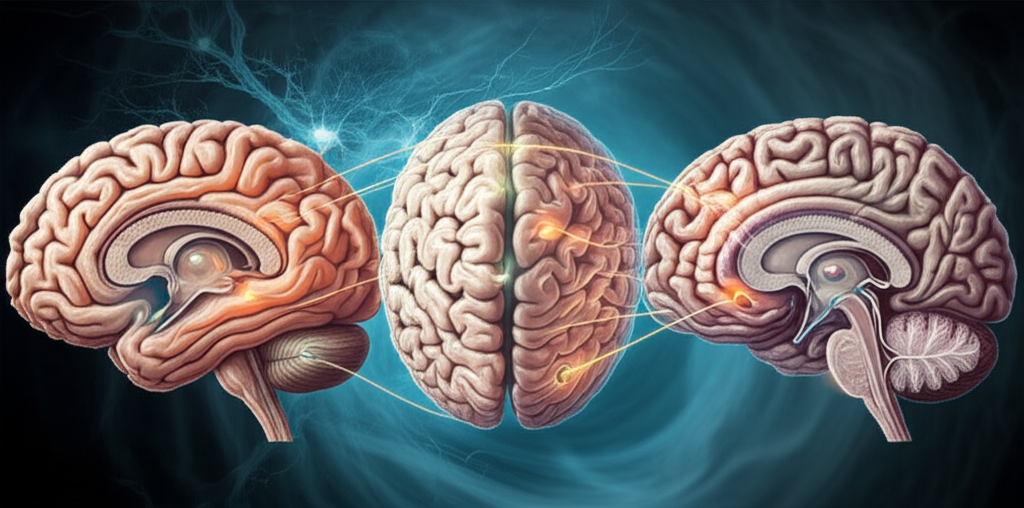
Advances in neuroscience provide increasingly compelling evidence. Comparative brain studies reveal remarkable similarities between human and animal brains, particularly in structures associated with emotion, memory, and decision-making.
- Brain Structures: Many animals possess homologous brain regions to humans, including limbic systems (associated with emotion and memory) and cortical structures.
- Neural Correlates of Consciousness (NCCs): Researchers are identifying neural activity patterns in animals that correspond to those observed in conscious humans.
- Pain Pathways: The presence of nociceptors and pain pathways in a vast array of animals strongly suggests they experience pain, not just a mechanical reaction.
- Pharmacology: Anesthetics and analgesics have similar effects on both humans and animals, indicating shared physiological mechanisms for pain perception and unconsciousness.
In 2012, a group of prominent neuroscientists signed the Cambridge Declaration on Consciousness, stating that "convergent evidence indicates that non-human animals have the neuroanatomical, neurochemical, and neurophysiological substrates of conscious states along with the capacity to exhibit intentional behaviors." This declaration, while not a definitive proof, underscores the scientific community's growing acceptance of the hypothesis.
Challenges and Implications of the Hypothesis
Despite mounting evidence, the hypothesis of animal consciousness faces significant challenges and carries profound implications.
The Problem of Other Minds
The "problem of other minds" is a classic philosophical dilemma: how can we truly know that anyone else (human or animal) has a subjective inner experience, rather than just behaving as if they do? We only have direct access to our own consciousness. When applied to animals, this problem is exacerbated by communication barriers and vast differences in sensory apparatus and life experiences. We rely on inference, analogy, and scientific correlation, but absolute certainty remains elusive.
Ethical Considerations
If the hypothesis holds true, and animals are indeed conscious, sentient beings, the ethical implications are monumental. Our treatment of animals in agriculture, research, entertainment, and even as pets would demand radical re-evaluation.
- Animal Welfare: Stronger arguments for preventing suffering and promoting well-being.
- Moral Status: The question of whether animals possess moral rights, and if so, what those rights entail.
- Human-Animal Relationship: A fundamental shift in how humanity perceives its place within the broader tapestry of life on Earth.
Conclusion: An Evolving Understanding
The hypothesis of animal consciousness is no longer merely a philosophical thought experiment; it is a vibrant field of interdisciplinary inquiry. Drawing from the deep well of philosophical tradition found in the Great Books and propelled by the rigorous methods of modern science, our understanding of the animal mind continues to evolve. While definitive proof of subjective experience may forever elude us due to the inherent "problem of other minds," the weight of evidence increasingly suggests that consciousness, in its myriad forms, is not an exclusively human domain. Embracing this hypothesis compels us to look at the world, and our fellow inhabitants, with renewed curiosity, humility, and a profound sense of ethical responsibility.
📹 Related Video: What is Philosophy?
Video by: The School of Life
💡 Want different videos? Search YouTube for: ""philosophy of animal consciousness" "animal cognition scientific evidence""
📹 Related Video: What is Philosophy?
Video by: The School of Life
💡 Want different videos? Search YouTube for: ""Descartes animals automata" "Great Books Western World philosophy""