

The Hypothesis of Animal Consciousness: Peering into Other Minds
Summary
The question of whether animals possess consciousness, a "mind" akin to our own, is one of philosophy's most enduring and ethically charged inquiries. This article explores "The Hypothesis of Animal Consciousness," examining its historical roots, philosophical implications, and the burgeoning role of modern "Science" in understanding the inner lives of non-human beings. We delve into how this "Hypothesis" challenges traditional anthropocentric views, particularly those stemming from classical Western thought, and why its acceptance fundamentally reshapes our ethical obligations and our understanding of consciousness itself.
Introduction: Beyond the Human Gaze
For centuries, Western philosophy, as chronicled in the Great Books of the Western World, largely positioned humanity at the apex of cognitive and moral significance. Animals, while acknowledged for their biological complexity, were often relegated to the realm of instinct, lacking the rational "mind" or conscious experience attributed solely to humans. Yet, the persistent glimmer in an animal's eye, the evident joy of a dog, or the intricate problem-solving of a raven, compel us to reconsider. The Hypothesis of Animal Consciousness is precisely this reconsideration: an intellectual framework that posits non-human animals possess subjective experiences, feelings, and perhaps even forms of self-awareness. It's a journey from philosophical speculation to scientific investigation, seeking to bridge the perceived chasm between our inner worlds and theirs.
The Historical Divide: From Mechanistic Views to Empathy
Historically, the philosophical landscape regarding animal "mind" has been starkly divided. Early Greek thinkers like Aristotle, while recognizing a "vegetative" and "sensitive" soul in animals, still placed humans higher due to their "rational" soul. However, it was perhaps René Descartes, whose work is foundational to the Great Books, who most profoundly influenced the Western view with his mechanistic perspective.
Descartes and the Automaton
Descartes famously argued that animals were complex automata, mere machines without thought, feeling, or consciousness. Their cries of pain were, to him, no more indicative of suffering than the creaking of a poorly oiled machine. This view, born from a desire to establish a clear distinction between mind and body, and between humans and the natural world, profoundly shaped scientific and philosophical inquiry for centuries. It provided a convenient justification for the exploitation of animals, as it denied them any inner life worthy of moral consideration.
However, even within the Great Books tradition, dissenting voices and nuanced perspectives existed. Figures like Montaigne expressed a more empathetic view, questioning human arrogance and suggesting a continuity between human and animal experience. The "Hypothesis" of animal consciousness, then, is not entirely new but rather a resurgence and re-evaluation of these long-standing questions, now bolstered by new methodologies and ethical imperatives.
Formulating the Hypothesis: What is Animal Consciousness?
At its core, "The Hypothesis of Animal Consciousness" suggests that animals are not merely reactive biological entities but possess an internal, subjective experience of the world. This can range from basic sentience—the capacity to feel pain and pleasure—to more complex forms of awareness, including emotions, memory, and even rudimentary forms of self-recognition or future planning. The challenge lies in defining and detecting these states in beings that cannot articulate them in human language.
The Spectrum of Mind
Consciousness itself is not a monolithic concept. We can consider it along a spectrum:
- Sentience: The ability to feel, perceive, or be conscious of sensations like pain and pleasure. This is often the baseline for ethical consideration.
- Affective Consciousness: The experience of emotions, moods, and feelings.
- Perceptual Consciousness: The awareness of sensory inputs and the formation of coherent perceptions of the world.
- Cognitive Consciousness: Involving higher-order processes like attention, memory, learning, and problem-solving.
- Self-Awareness: The capacity to recognize oneself as an individual, distinct from others and the environment.
The "Hypothesis" posits that many animals, to varying degrees, inhabit these different levels of "Mind." The task of "Science" is to find empirical markers for these internal states.
The Role of Science: Unveiling the Inner Lives
Modern "Science" has become an indispensable tool in exploring "The Hypothesis of Animal Consciousness." Disciplines like ethology, cognitive neuroscience, and comparative psychology provide empirical data that challenge the Cartesian view. Through meticulous observation and experimentation, researchers are uncovering astonishing evidence of animal intelligence, emotion, and social complexity.
Empirical Windows into the Animal Mind
Consider the following scientific observations:
- Tool Use: Chimpanzees using sticks to fish for termites, crows crafting hooks from wire, otters cracking shells with stones. This demonstrates problem-solving and foresight.
- Self-Recognition: The mirror test, passed by great apes, dolphins, elephants, and some birds (magpies), suggests a form of self-awareness.
- Emotional Contagion and Empathy: Studies showing rats will forgo chocolate to help a trapped companion, or elephants mourning their dead, point towards complex emotional lives and social bonds.
- Communication: The intricate dances of bees, the alarm calls of vervet monkeys, or the complex songs of whales, indicate sophisticated communication systems that convey more than just basic needs.
- Neuroscience: Brain imaging and comparative neuroanatomy reveal that many animals possess brain structures analogous to those associated with consciousness and emotion in humans. The Declaration on Animal Consciousness (Cambridge, 2012) affirmed that "nonhuman animals, including all mammals and birds, and many other creatures, possess the neurological substrates of consciousness."
These scientific findings provide compelling, albeit indirect, evidence that supports "The Hypothesis of Animal Consciousness," moving it from mere speculation to a robust field of interdisciplinary inquiry.
Philosophical Implications: Ethics and Our Place
Accepting "The Hypothesis of Animal Consciousness" carries profound philosophical and ethical implications. If animals possess a "Mind" that experiences pleasure and pain, joy and sorrow, then our moral obligations towards them shift dramatically.
- Re-evaluating Animal Welfare: The focus moves beyond mere physical health to include psychological well-being. Practices in agriculture, research, and entertainment come under intense scrutiny.
- Challenging Anthropocentrism: The traditional human-centric view of the world is undermined, fostering a more inclusive understanding of life and consciousness on Earth.
- Redefining Consciousness: By studying animal "Mind," we gain new perspectives on the nature of consciousness itself, perhaps revealing universal principles that transcend species.
- Environmental Ethics: Acknowledging the intrinsic value of animal lives strengthens arguments for conservation and environmental protection, as we recognize the suffering caused by habitat destruction.
The "Hypothesis" compels us to ask not just can animals think and feel, but should we treat them as if they do? The answer, increasingly, seems to be a resounding yes.
Conclusion: A Continuing Inquiry
"The Hypothesis of Animal Consciousness" represents a pivotal shift in how we perceive and interact with the non-human world. Drawing from the enduring questions posed in the Great Books of the Western World and illuminated by the rigorous methods of modern "Science," this "Hypothesis" invites us to expand our circle of moral consideration. The journey to understand the "Mind" of an "Animal" is far from complete, but each new discovery reinforces the profound interconnectedness of all conscious life. It's a continuous philosophical and scientific inquiry that challenges our assumptions, broadens our empathy, and ultimately redefines our place in the grand tapestry of existence.
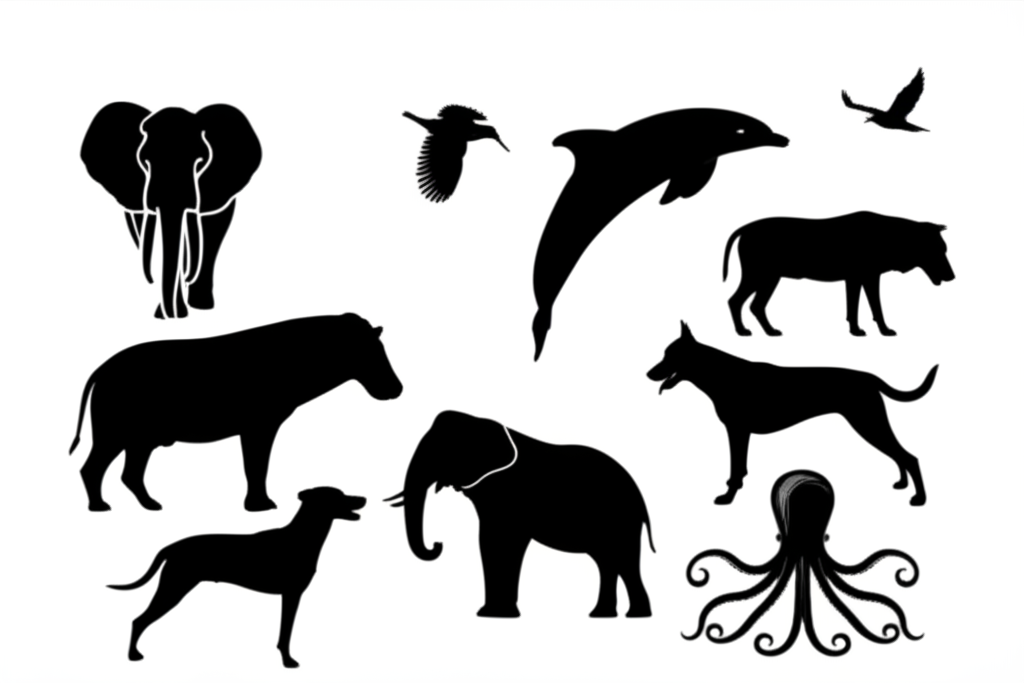 with subtle, glowing brain-like patterns or neural networks faintly visible within their heads, symbolizing their individual consciousness. The background is a soft, abstract blend of philosophical symbols and scientific diagrams, suggesting the interdisciplinary nature of the inquiry.)
📹 Related Video: What is Philosophy?
Video by: The School of Life
💡 Want different videos? Search YouTube for: ""Animal consciousness philosophy debate""
📹 Related Video: PLATO ON: The Allegory of the Cave
Video by: The School of Life
💡 Want different videos? Search YouTube for: ""Scientific evidence for animal sentience""