

The Hypothesis of Animal Consciousness: A Journey into Uncharted Minds
Summary: The question of whether animals possess consciousness—a subjective inner life, a mind capable of experience—is one of philosophy's most enduring and scientifically challenging inquiries. This article explores "The Hypothesis of Animal Consciousness," tracing its philosophical lineage from ancient thought to modern scientific investigation. We delve into historical perspectives that have shaped our understanding, examine contemporary evidence from neuroscience and ethology, and confront the profound implications of acknowledging a spectrum of awareness beyond the human. This journey compels us to reconsider our relationship with the natural world and the very definition of consciousness itself.
Unveiling the Unseen: What is the Hypothesis of Animal Consciousness?
At its core, The Hypothesis of Animal Consciousness posits that non-human animals are not mere biological machines reacting to stimuli, but rather possess a form of subjective experience, an inner world of sensations, emotions, and perhaps even thoughts. This isn't just about simple reflexes or instinctual behaviours; it's about the presence of a mind that feels. For centuries, this idea has oscillated between dismissal and fervent belief, often reflecting humanity's evolving understanding of itself and its place within the broader tapestry of life. It’s a hypothesis that challenges our anthropocentric biases and pushes the boundaries of what we consider knowable through science.
Echoes from the Great Books: Historical Perspectives on the Animal Mind
The question of animal consciousness is hardly new. Our intellectual heritage, particularly from the Great Books of the Western World, reveals a long and often contentious debate:
- Aristotle's De Anima: The Stagirite posited a hierarchy of souls (psyche). Plants had a vegetative soul (nutrition, reproduction), animals an appetitive/sensitive soul (sensation, movement, desire), and humans a rational soul (thought, reason). While animals clearly possessed senses and desires, the extent of their "thinking" was limited compared to humans. They felt, but did not necessarily reason in the same complex manner.
- Descartes' Mechanical Animals: Perhaps the most influential, and controversial, view came from René Descartes in works like Discourse on Method. For Descartes, animals were elaborate automata, complex machines without minds or souls. Their cries of pain were merely mechanical reactions, akin to a clock chiming. This stark dualism (mind/body) fundamentally separated humans from the rest of the animal kingdom, providing a philosophical basis for treating animals as mere objects.
- Enlightenment and Beyond: Figures like John Locke and David Hume, while not fully endorsing animal consciousness in the modern sense, began to chip away at Cartesian certainty. Locke's empiricism suggested that all knowledge comes from experience, and animals clearly experienced the world. Hume, in A Treatise of Human Nature, observed commonalities in instinct and habit between humans and animals, suggesting a continuity rather than an absolute break in mental faculties. Later, Charles Darwin's The Expression of the Emotions in Man and Animals provided compelling evidence for shared emotional expressions, hinting at shared internal states.
These historical perspectives, often rooted in philosophical deduction rather than empirical observation, laid the groundwork for the modern hypothesis and its scientific exploration.
The Modern Inquiry: Science Seeks the Animal Mind
In the contemporary era, the hypothesis of animal consciousness has moved from the purely philosophical realm into the rigorous domain of science. Researchers across disciplines are gathering compelling evidence:
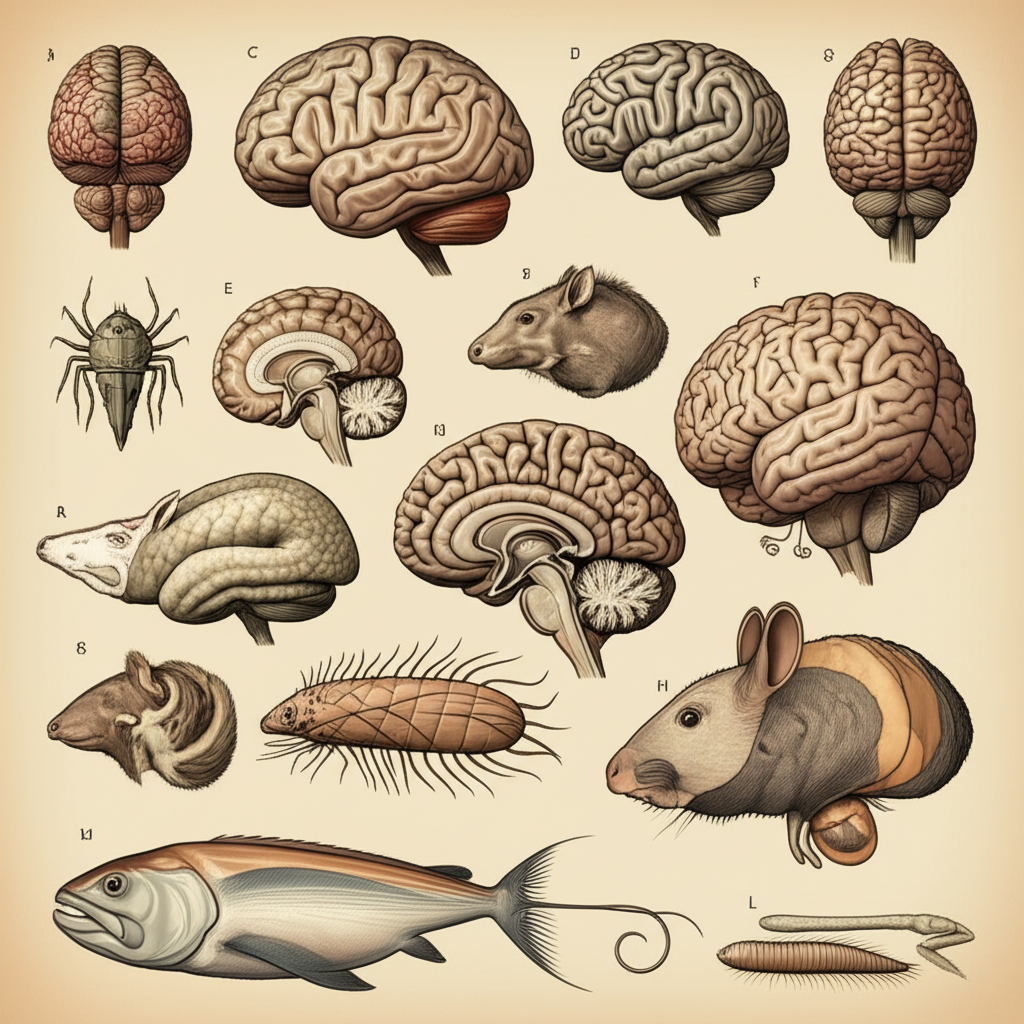
- Neuroscience: Advances in brain imaging and neurobiological studies reveal striking similarities in brain structures and neural processes between humans and many animals, particularly mammals. The presence of homologous brain regions associated with emotion (e.g., amygdala), pain processing, and even forms of decision-making suggests shared mechanisms for subjective experience. The "Cambridge Declaration on Consciousness" (2012), signed by prominent neuroscientists, explicitly stated that "nonhuman animals have the neuroanatomical, neurochemical, and neurophysiological substrates of conscious states along with the capacity to exhibit intentional behaviours."
- Ethology and Cognitive Science: Detailed observations of animal behaviour provide a rich tapestry of evidence. From tool use in crows and chimpanzees to complex social structures in elephants and dolphins, and demonstrated empathy in rats, these behaviours suggest sophisticated cognitive abilities that are difficult to explain without some form of internal awareness.
- Pain and Emotion: The capacity of animals to feel pain is now widely accepted, leading to significant ethical shifts in how we treat them. Studies also point to a range of emotions, from joy and grief to fear and anger, supported by both behavioural and physiological indicators.
The Spectrum of Awareness: Challenges and Implications
While the evidence mounts, definitively proving animal consciousness remains a profound challenge. How do we access another mind?
Challenges in Understanding Animal Consciousness:
- Defining Consciousness: Even for humans, consciousness is notoriously difficult to define. Is it self-awareness, sentience, phenomenal experience, or access consciousness? The lack of a universally agreed-upon definition complicates its identification in other species.
- Anthropomorphism vs. Anthropodenial: We must navigate the twin pitfalls of projecting human thoughts and feelings onto animals (anthropomorphism) and denying any possibility of shared mental states (anthropodenial). Science demands careful, evidence-based interpretation.
- The "Hard Problem": Just as with human consciousness, the "hard problem" of explaining how physical brain processes give rise to subjective experience applies equally, if not more so, to animals.
Implications of the Hypothesis:
If we accept The Hypothesis of Animal Consciousness, even in its nascent stages, the implications are vast and transformative:
- Ethical Obligations: Acknowledging animal minds compels a re-evaluation of our ethical responsibilities. Practices in agriculture, research, and entertainment become subjects of intense moral scrutiny.
- Re-evaluating Intelligence: Our definition of intelligence expands beyond human-centric measures, appreciating diverse forms of cognition and problem-solving in the natural world.
- Understanding Ourselves: By studying other minds, we gain deeper insights into the evolutionary origins and fundamental nature of our own consciousness, solidifying the idea of a continuum of Mind across species.
Conclusion: The Ongoing Exploration of the Animal Mind
The Hypothesis of Animal Consciousness is no longer a fringe idea but a vibrant field of philosophical and scientific inquiry. From Aristotle's early classifications to Descartes' mechanistic views, and now to cutting-edge neuroscience, our understanding of the animal mind continues to evolve. While definitive answers remain elusive, the growing body of evidence urges us to consider the profound possibility that the world is teeming with conscious experience, challenging us to expand our empathy, refine our ethics, and deepen our appreciation for the intricate and mysterious nature of life itself. The journey into these uncharted minds has only just begun.
YouTube Video Suggestions:
-
📹 Related Video: PLATO ON: The Allegory of the Cave
Video by: The School of Life
💡 Want different videos? Search YouTube for: ""The Cambridge Declaration on Consciousness Explained""
2. ## 📹 Related Video: PLATO ON: The Allegory of the Cave
Video by: The School of Life
💡 Want different videos? Search YouTube for: ""Do Animals Have Feelings? Philosophical and Scientific Perspectives""