

The Relentless Ascent: Deconstructing the History of Science and Knowledge
The human journey, an odyssey marked by insatiable curiosity, is perhaps best understood through the lens of its intellectual evolution. This article traces the grand narrative of how humanity has sought to comprehend the universe and itself, examining the intricate history of science and the evolving nature of knowledge. From the earliest speculative inquiries to the complex methodologies of today, we explore the relentless pursuit of understanding, challenging the linear notion of progress and revealing the cyclical dance between discovery and doubt.
Echoes of Antiquity: The Dawn of Systematic Thought
Long before the laboratory coat became a symbol of truth, the seeds of scientific inquiry were sown in the fertile ground of philosophical contemplation. The ancient world, particularly the Hellenic civilizations, initiated the profound shift from mythological explanation to reasoned observation. Thinkers like Thales, Anaximander, and Heraclitus dared to seek natural causes for natural phenomena, laying the groundwork for what would become science.
The towering figures of Plato and Aristotle, whose works form cornerstones of the Great Books of the Western World, codified much of this early knowledge. Plato, with his emphasis on ideal forms and deductive reasoning, inspired centuries of abstract thought. Aristotle, on the other hand, championed empirical observation and systematic classification, creating vast bodies of work in biology, logic, physics, and ethics that would dominate Western intellectual life for over a millennium. His meticulous observations and logical frameworks, though later refined and challenged, represent a monumental leap in the history of systematic inquiry.
Key Intellectual Shifts in Antiquity:
- Mythos to Logos: Transition from supernatural explanations to rational, observable causes.
- Philosophical Foundations: Establishment of logic, metaphysics, and ethics as fields of inquiry.
- Early Empiricism: Aristotle's emphasis on observation and classification, laying groundwork for scientific method.
- Deductive Reasoning: Plato's influence on the pursuit of universal truths through reason.
The Medieval Crucible: Preservation and Preparation
Often mischaracterized as a period of intellectual stagnation, the medieval era was, in fact, a crucial crucible for the preservation and reinterpretation of ancient knowledge. While Europe experienced a relative decline in original scientific output following the Roman Empire's fall, the Islamic Golden Age flourished, translating, commenting upon, and expanding the works of Greek philosophers and scientists. Scholars like Avicenna and Averroes not only kept the flame of inquiry alive but also made significant contributions in medicine, astronomy, mathematics, and optics.
In the West, monastic orders and later medieval universities served as vital conduits, slowly reintroducing classical texts and fostering scholastic inquiry. The meticulous work of figures like Thomas Aquinas, synthesizing Aristotelian philosophy with Christian theology, demonstrated a profound engagement with rational thought, even if its primary aim was theological. This period, while not always marked by radical scientific breakthroughs, was essential for the continuity of knowledge and the intellectual infrastructure that would eventually enable the Scientific Revolution.
The Scientific Revolution: A New Epistemic Dawn
The 16th and 17th centuries witnessed an unprecedented intellectual upheaval that fundamentally reshaped our understanding of the universe and the methods by which we acquire knowledge. This period, now known as the Scientific Revolution, was not merely a series of discoveries but a profound shift in epistemology – how we know what we know.
Figures like Nicolaus Copernicus challenged the geocentric worldview, while Galileo Galilei's telescopic observations provided empirical evidence for a heliocentric model, famously risking the wrath of the Inquisition. Francis Bacon advocated for an inductive, experimental approach, emphasizing observation and the systematic gathering of data, laying the philosophical groundwork for the modern scientific method. René Descartes, with his famous dictum "Cogito, ergo sum," championed rationalism and deductive reasoning, while simultaneously contributing significantly to mathematics and analytical geometry.
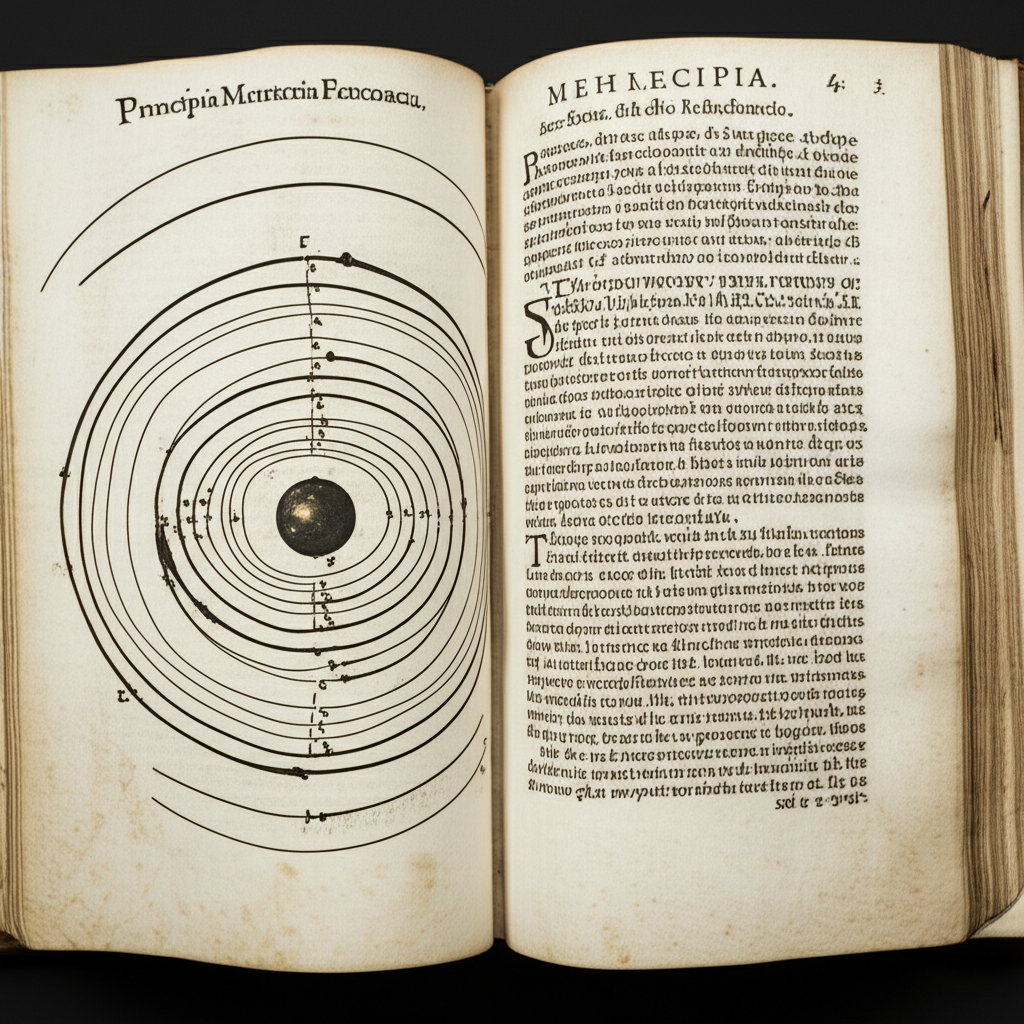
But it was Isaac Newton, whose Principia Mathematica stands as one of the most influential scientific works ever published, who synthesized these divergent threads. His laws of motion and universal gravitation provided a comprehensive, mechanistic explanation of the cosmos, demonstrating the immense power of mathematical reasoning combined with empirical observation. This era firmly established science as a distinct and potent mode of inquiry, promising unprecedented progress in understanding the natural world.
The Enlightenment and Beyond: Consolidating Knowledge, Challenging Progress
The success of the Scientific Revolution fueled the Enlightenment, an intellectual movement that championed reason, individualism, and the systematic application of scientific methods to all aspects of human life. The 18th century saw the proliferation of encyclopedias, a testament to the era's ambition to categorize and disseminate all human knowledge. Thinkers like John Locke and David Hume further explored the nature of human understanding, debating the origins of ideas and the limits of empirical knowledge.
The concept of progress became central, not just in science but in society, politics, and morality. The belief that human reason and scientific discovery could lead to an ever-improving future gained widespread acceptance. The 19th and 20th centuries saw an explosion of scientific fields, from Darwin's theory of evolution to Einstein's relativity and the quantum revolution, each profoundly altering our perception of reality.
However, this relentless march of progress has not been without its philosophical challenges. The 20th century, particularly, forced a re-evaluation of scientific certainty and the very definition of knowledge. Karl Popper's philosophy of falsifiability, Thomas Kuhn's concept of paradigm shifts, and the rise of postmodern thought have all questioned the linear, objective narrative of scientific progress, reminding us that knowledge is often constructed, interpreted, and subject to change.
The Perpetual Quest: Science, Knowledge, and the Future
Today, the history of science and knowledge continues to unfold at an astonishing pace. From the vastness of space to the intricacies of the human genome, our capacity for discovery seems boundless. Yet, the fundamental questions remain: What constitutes true knowledge? How do we balance technological progress with ethical responsibility? And what are the ultimate limits of human understanding?
The journey from ancient myths to quantum mechanics is a testament to humanity's enduring intellectual spirit. It reminds us that science is not merely a collection of facts, but a dynamic process of inquiry, forever pushing the boundaries of what we know and challenging us to reconsider what we thought we understood. The quest for knowledge is, by its very nature, an unfinished symphony, an ongoing dialogue between curiosity and the cosmos.
YouTube Video Suggestions:
-
📹 Related Video: ARISTOTLE ON: The Nicomachean Ethics
Video by: The School of Life
💡 Want different videos? Search YouTube for: ""History of Science Documentary PBS""
-
📹 Related Video: ARISTOTLE ON: The Nicomachean Ethics
Video by: The School of Life
💡 Want different videos? Search YouTube for: ""Great Books of the Western World Explained""