

From Divine Decree to Constitutional Compromise: A Philosophical Journey Through the History of Monarchy
Summary: The history of monarchy is a profound testament to the evolving nature of Government and the relentless force of Change. From its ancient origins rooted in divine authority and absolute power, through the feudal complexities of the Middle Ages, the grand assertions of absolutism, and the transformative critiques of the Enlightenment, monarchy has undergone a remarkable metamorphosis. This article explores the philosophical underpinnings and historical shifts that have shaped this enduring form of rule, examining how its legitimacy, structure, and very definition have been continually redefined by human thought and societal pressures.
The Enduring Throne: A Philosophical Look at Monarchy's Evolution
For millennia, the figure of the monarch has stood as a central pillar of human Government, embodying power, tradition, and often, the very identity of a nation. Yet, the History of Monarchy is far from static; it is a dynamic narrative of profound Change, reflecting humanity's ongoing struggle with questions of authority, legitimacy, and the ideal state. From the earliest chieftains to today's constitutional heads of state, the institution has been continuously redefined by philosophical discourse, societal pressures, and revolutionary upheaval, drawing deeply from the intellectual currents found within the Great Books of the Western World.
I. Origins in Antiquity: The Divine and the Absolute
The earliest forms of monarchy emerged from a blend of military leadership, religious authority, and tribal cohesion. In ancient civilizations, the king was often seen not merely as a ruler but as a direct link to the divine, an intermediary between gods and mortals. This concept of divine right provided an unassailable foundation for absolute power, where the monarch's will was law, accountable only to a higher power.
- Plato's Ideal King: While often critical of existing monarchies, Plato, in works like The Statesman, explored the concept of a philosopher-king, a wise ruler governing according to true knowledge, suggesting an ideal form of singular, benevolent authority focused on the common good.
- Aristotle's Classification: Aristotle, in his Politics, categorized monarchy as one of the "true" forms of Government when exercised for the common good, contrasting it with its corrupt form, tyranny. He recognized its potential for stability and efficiency but also its inherent dangers when unchecked.
This period established the initial philosophical framework for understanding a singular ruler, often imbued with a mystical or inherited authority that transcended mere human election.
II. Medieval Monarchy: Feudal Fragmentation and Emerging Limits
The fall of the Roman Empire ushered in a new era for monarchy in the West. Medieval Europe saw the rise of feudalism, a system where the monarch's power, though theoretically supreme, was often fragmented and distributed among powerful nobles who pledged fealty in exchange for land and autonomy.
- The King as Primus Inter Pares: In many instances, the monarch became a "first among equals," constantly negotiating power with barons, the Church, and burgeoning towns. This introduced early, albeit often unwritten, limitations on royal prerogative.
- Magna Carta (1215): A pivotal moment in English History, this document, forced upon King John by rebellious barons, legally established that even the king was subject to the law, laying foundational groundwork for future constitutionalism and checks on absolute power.
- Thomas Aquinas's Synthesis: In Summa Theologica, Aquinas grappled with the nature of law and governance, suggesting that while monarchy could be the best form of rule, it must be guided by divine and natural law, implicitly placing constraints on arbitrary power and advocating for a just ruler.
This era represents a significant Change from pure absolutism, introducing the idea that even divinely appointed rulers had obligations to their subjects and to a higher legal or moral order.
III. The Age of Absolutism: Consolidating Power and Philosophical Justification
The early modern period, particularly from the 16th to 18th centuries, witnessed a resurgence and consolidation of absolute monarchical power across Europe. Monarchs like Louis XIV of France epitomized this era, famously declaring "L'état, c'est moi" (I am the state).
- The Rise of the Nation-State: As national identities solidified, monarchs sought to centralize power, diminish the influence of nobles, and create unified legal and administrative systems, leading to more powerful and centralized Government.
- Thomas Hobbes's Leviathan (1651): In response to the chaos of the English Civil War, Hobbes argued for an absolute sovereign as the only means to prevent society from descending into a "war of all against all." For Hobbes, the social contract involved surrendering individual liberties to an all-powerful ruler in exchange for peace and order. This provided a powerful secular justification for absolute Monarchy.
This period marked a peak in the philosophical defense of unchecked royal authority, often framed as a necessary evil for societal stability.
IV. The Enlightenment and Revolutionary Change: Challenging the Throne
The 18th century brought radical intellectual Change with the Enlightenment, which fundamentally questioned traditional authority, including that of absolute monarchs. Philosophers began to articulate new theories of Government based on reason, individual rights, and popular sovereignty, drawing heavily from classical ideas but applying them in revolutionary ways.
| Philosopher | Key Idea Regarding Monarchy/Government | Impact on Monarchy |
|---|---|---|
| John Locke | Two Treatises of Government: Government by consent, natural rights, right to revolution if government fails to protect rights. | Undermined divine right; provided basis for constitutional limits on power. |
| Jean-Jacques Rousseau | The Social Contract: General will, popular sovereignty, direct democracy. | Challenged the very idea of inherited rule; inspired republicanism and revolution. |
| Montesquieu | The Spirit of the Laws: Separation of powers (legislative, executive, judicial). | Advocated for checks and balances, directly limiting monarchical authority. |
These ideas fueled revolutionary movements, most notably the American Revolution (1776) and the French Revolution (1789), which saw the overthrow of monarchical rule and the establishment of republics. This was the most significant Change in the History of Government up to that point, demonstrating the power of philosophical thought to reshape political reality.
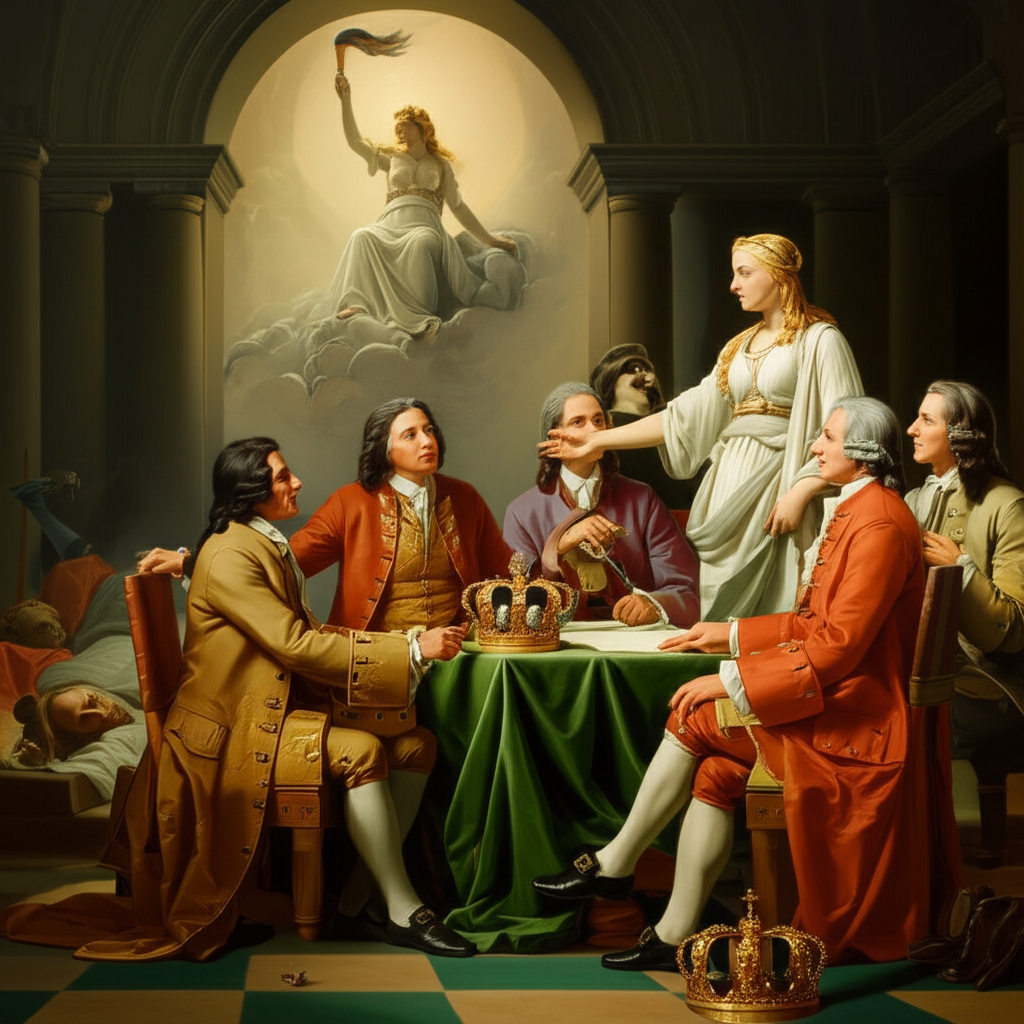
V. The Rise of Constitutional Monarchy: Adapting to Modernity
In the wake of revolutionary fervor and the persistent demands for greater political participation, many monarchies adapted by transforming into constitutional monarchies. This form of Government retains a monarch as head of state, but their powers are strictly limited by a constitution and often exercised on the advice of an elected government.
- Symbolic Head of State: In contemporary constitutional monarchies (e.g., the United Kingdom, Sweden, Japan), the monarch primarily serves as a symbolic figurehead, representing national identity and continuity, while political power rests with elected parliaments and prime ministers.
- Evolution, Not Abolition: This represents a profound Change where the institution of monarchy survived by relinquishing its absolute political authority, demonstrating its capacity for adaptation rather than outright extinction.
This modern iteration of monarchy stands as a testament to its enduring cultural and historical significance, even as its practical role in Government has dramatically diminished.
Conclusion: Monarchy as a Mirror of Human Governance
The History of Monarchy is a compelling narrative of power, legitimacy, and constant Change. From the sacrosanct thrones of antiquity to the ceremonial roles of today, it reflects humanity's continuous quest for effective Government and the evolving understanding of who should rule and why. The philosophical debates that have accompanied its journey, from Plato's ideal king to Locke's social contract, reveal the deep intellectual underpinnings of political transformation. Monarchy, in its various forms, offers a unique lens through which to examine the enduring questions of authority, freedom, and the very structure of society.
YouTube Video Suggestions:
-
📹 Related Video: What is Philosophy?
Video by: The School of Life
💡 Want different videos? Search YouTube for: ""History of Monarchy explained philosophy and political thought""
2. ## 📹 Related Video: KANT ON: What is Enlightenment?
Video by: The School of Life
💡 Want different videos? Search YouTube for: ""Enlightenment thinkers and their impact on modern government""