

The Enduring Crown: A Philosophical Journey Through the History of Monarchy
The History of Monarchy is not merely a chronicle of kings and queens, but a profound testament to humanity's evolving understanding of Government, power, and legitimacy. From its ancient roots in divine right to its modern, largely ceremonial forms, monarchy has been a constant, yet ever-changing, fixture in the political landscape. This article explores the dramatic transformations of this enduring system, tracing its philosophical underpinnings and the forces of Change that have reshaped its very essence across millennia. We shall observe how the concept of a single, hereditary ruler has been justified, challenged, and ultimately redefined, reflecting the deep intellectual currents that have shaped Western civilization.
The Genesis of Rule: Monarchy's Ancient Origins
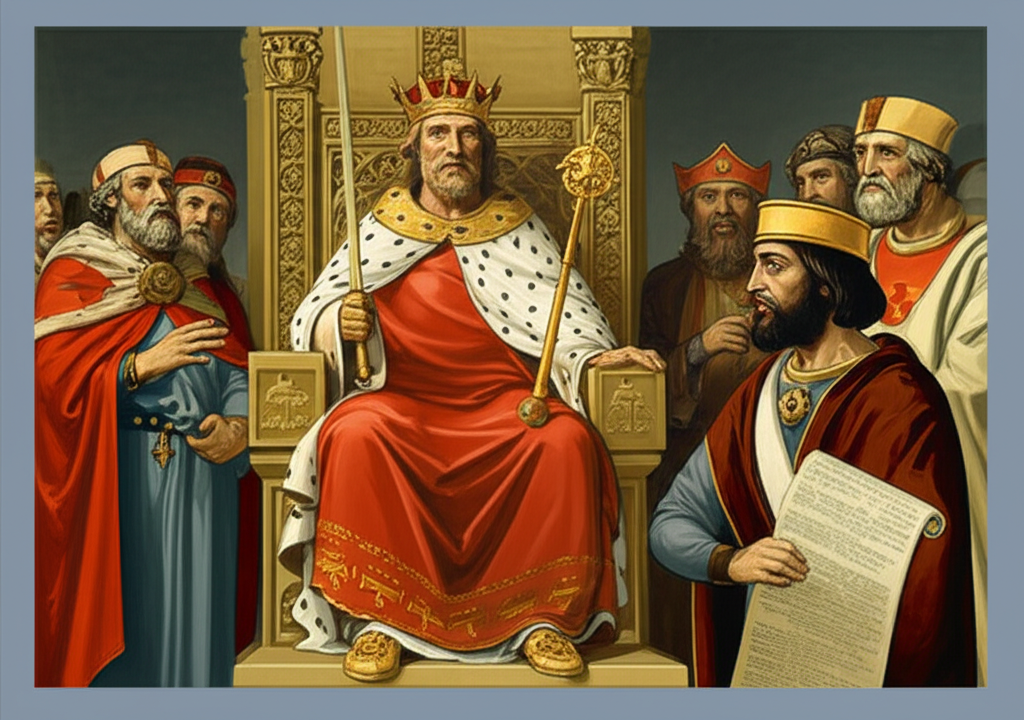
Before the advent of complex political theories, the idea of a single, supreme ruler emerged as a fundamental structure for nascent societies. In ancient civilizations, the monarch was often seen as a divine representative or even a god incarnate, possessing a sacred mandate to govern. This early form of Government was characterized by absolute authority, where the king's word was law, and his legitimacy was unquestioned, derived from a higher power.
- Ancient Egypt: Pharaohs were considered living gods, central to the cosmic order.
- Mesopotamia: Kings like Hammurabi received their laws directly from deities, emphasizing a divine connection to their rule.
- Early Greece: While often remembered for democracy, early Greek city-states were ruled by kings, a form of government Aristotle later categorized and analyzed in his Politics, distinguishing between legitimate kingship and tyrannical rule.
This period laid the groundwork for the enduring concept of inherited power, shaping the very definition of political authority for centuries to come.
The Medieval Crucible: Divine Right and Feudal Constraints
As empires rose and fell, particularly in the European context, monarchy adapted. The medieval period saw the consolidation of monarchical power, often buttressed by the burgeoning influence of the Christian Church. The doctrine of divine right of kings became a cornerstone, asserting that monarchs were chosen by God and accountable only to Him. This provided an unassailable justification for their rule, making rebellion not just treasonous, but sacrilegious.
However, this era also introduced significant Change and challenges to absolute power:
- Feudalism: While the king was supreme, his power was distributed through a network of vassals, who held significant local authority. This created a complex web of loyalties and obligations that often limited the monarch's direct control.
- The Magna Carta (1215): A pivotal moment in the History of English Government, this document famously constrained the power of King John, establishing that even the monarch was subject to the law. It marked an early, albeit often overlooked, philosophical shift towards limited Government.
The tension between absolute divine right and practical limitations would define much of the subsequent evolution of monarchy.
The Zenith of Power: The Age of Absolutism
The 16th and 17th centuries witnessed the peak of monarchical power in Europe, known as the Age of Absolutism. Monarchs like Louis XIV of France epitomized this era, famously declaring "L'état, c'est moi" (I am the state). This period saw the centralization of state power, the creation of national armies, and the suppression of feudal lords, solidifying the monarch's authority over all aspects of Government.
Philosophers grappled with the implications of such concentrated power:
- Thomas Hobbes's Leviathan (1651): Argued for an absolute sovereign as the only means to escape the "state of nature" – a war of all against all. For Hobbes, the security and order provided by an absolute monarch justified the surrender of individual liberties.
- Niccolò Machiavelli's The Prince (1532): While not explicitly advocating for divine right, Machiavelli offered a pragmatic guide for rulers to acquire and maintain power, often through ruthless means, reflecting the realities of monarchical ambition.
This era represented a high point for the idea of the monarch as the ultimate authority, a single point of control for the entire body politic.
The Winds of Change: Revolutions and Constitutionalism
The philosophical currents of the Enlightenment brought about radical Change to the very concept of legitimate Government. Thinkers like John Locke and Jean-Jacques Rousseau challenged the divine right of kings, positing that legitimate authority derived not from God, but from the consent of the governed.
- John Locke's Two Treatises of Government (1689): Argued for natural rights (life, liberty, property) and a social contract where Government exists to protect these rights. If a monarch violates this contract, the people have the right to revolution.
- Jean-Jacques Rousseau's The Social Contract (1762): Advocated for popular sovereignty, where the "general will" of the people should guide the state, effectively undermining the basis for hereditary rule.
These ideas fueled revolutionary movements:
- The American Revolution (1775-1783): A direct rejection of monarchical rule and a foundational moment for republican Government.
- The French Revolution (1789): A dramatic upheaval that saw the execution of a king and the attempt to establish a new, popular form of Government, irrevocably altering the course of European History.
These revolutions ushered in an era where absolute monarchies were increasingly replaced by republics or, more commonly, by constitutional monarchies, where the monarch's power was severely limited by a constitution and often shared with elected parliaments.
The Modern Crown: Symbolism and Enduring Relevance
Today, monarchy largely exists in a constitutional capacity, particularly in Europe. The monarch serves as a head of state, a symbol of national identity and continuity, but wields little to no political power. This represents the most profound Change in the History of Monarchy, transforming it from an active form of Government into a largely ceremonial role.
Yet, the philosophical debate continues:
- The question of inherited privilege: In an increasingly meritocratic world, the concept of a hereditary head of state remains a point of contention for some.
- The role of tradition: For others, the monarchy provides a vital link to the past, offering stability and a non-partisan figurehead above the fray of day-to-day politics.
From the divine rulers of ancient lands to the symbolic figures of today, the History of Monarchy is a rich tapestry of power, philosophy, and continuous adaptation. It reflects humanity's ongoing quest to define legitimate authority and the best form of Government, a journey marked by both enduring traditions and radical Change.
📹 Related Video: KANT ON: What is Enlightenment?
Video by: The School of Life
💡 Want different videos? Search YouTube for: ""The Evolution of Political Systems: Monarchy to Democracy""
📹 Related Video: ARISTOTLE ON: The Nicomachean Ethics
Video by: The School of Life
💡 Want different videos? Search YouTube for: ""Great Books of the Western World: Hobbes, Locke, Rousseau on Government""