

The Enduring Framework: A Philosophical History of Constitutional Law
Constitutional law, the bedrock upon which modern governance is built, represents humanity's persistent quest for order, justice, and the containment of power. Far from being a static collection of rules, its history is a dynamic narrative, stretching from ancient philosophical inquiries into ideal government to the complex legal instruments that define nations today. This pillar page delves into the evolution of constitutional law, tracing its philosophical underpinnings and practical manifestations through the ages, revealing how the very idea of a constitution has shaped the human experience of collective living. From the earliest covenants to sophisticated modern charters, we explore how societies have sought to establish fundamental law to govern those who govern, ensuring a delicate balance between authority and liberty.
The Unseen Hand of Order: An Introduction to Constitutional History
Every society, from the simplest tribal structure to the most complex global federation, operates under a set of foundational principles that dictate how power is exercised, how decisions are made, and how individuals relate to the collective. This, in essence, is the domain of constitutional law. It is the unseen hand that shapes the visible architecture of government, defining its scope, limiting its reach, and enumerating the rights and responsibilities of its citizens.
To understand contemporary political systems, one must first grasp the long and often arduous history of how these fundamental frameworks came to be. It is a story not merely of dates and documents, but of profound philosophical debates concerning human nature, sovereignty, justice, and the very purpose of political association. The journey through the history of constitutional law is, therefore, a journey through the evolution of human thought on governance itself.
From Covenants to Codes: Early Seeds of Constitutionalism
The idea that even rulers should be bound by higher principles is as old as civilization itself. While not "constitutions" in the modern sense, ancient societies laid crucial groundwork.
The Athenian Experiment: Democracy and its Limits
Ancient Greece, particularly Athens, offered early, albeit imperfect, models of structured government where the law held significant sway. Philosophers like Plato and Aristotle grappled with the nature of ideal governance, classifying various forms of government and assessing their merits and flaws.
- Plato's Republic: Though advocating for rule by philosopher-kings, Plato’s work nonetheless explores the structure of a just society and the principles that should guide its governance, emphasizing the importance of a well-ordered state for human flourishing.
- Aristotle's Politics: Aristotle meticulously analyzed existing city-states, distinguishing between "good" and "deviant" forms of government based on whether they served the common good or the interests of the rulers. He introduced the idea of a "mixed constitution," blending elements of monarchy, aristocracy, and democracy, a concept that would profoundly influence later constitutional thinkers. He also stressed the rule of law (nomos) over arbitrary rule.
Roman Jurisprudence: The Birth of Lex and Jus
The Roman Republic developed a sophisticated legal system and a complex government structure often described as a "mixed constitution" by thinkers like Polybius.
- The Twelve Tables (c. 450 BCE): While rudimentary, these codified laws represented an early attempt to make law public and accessible, laying the foundation for a system where citizens could know their rights and duties.
- Cicero's De Re Publica: Drawing heavily on Greek philosophy, Cicero articulated a vision of the ideal commonwealth founded on natural law and justice, emphasizing the moral basis of legitimate government and the importance of a mixed constitution to ensure stability and liberty. Roman jurisprudence distinguished between lex (statute law) and jus (broader legal principles, including natural law), a distinction that would resonate through legal history.
Medieval Echoes: Charters and Customary Law
The medieval period, often seen as an age of feudalism and monarchy, nonetheless witnessed crucial developments in limiting power and establishing rights through custom and specific charters.
- Magna Carta (1215): This landmark English document, forced upon King John by his barons, established the principle that even the monarch was subject to the law. It contained clauses guaranteeing due process, limiting arbitrary taxation, and protecting certain liberties, serving as a foundational text for later constitutional movements.
- Thomas Aquinas's Summa Theologica: Aquinas integrated Aristotelian philosophy with Christian theology, developing a hierarchical system of law: eternal, natural, divine, and human. He argued that human law must conform to natural law to be just and legitimate, providing a powerful philosophical justification for resisting tyrannical rule that violated fundamental principles.
The Dawn of Modern Constitutions: Reason, Rights, and Revolution
The Enlightenment marked a profound shift, as philosophers began to articulate theories of government based on reason, individual rights, and popular sovereignty, directly inspiring the creation of written constitutions.
Foundations in Political Philosophy
The 17th and 18th centuries saw an explosion of political thought that would directly shape the modern understanding of constitutional law.
- Thomas Hobbes's Leviathan (1651): Though advocating for an absolute sovereign to prevent a return to the "state of nature," Hobbes's work implicitly recognized the need for a foundational agreement or "social contract" that establishes the constitution of a state, even if that constitution grants immense power to a single ruler.
- John Locke's Two Treatises of Government (1689): A towering figure, Locke posited that individuals possess inherent natural rights (life, liberty, property) that government is created to protect. He argued for government based on the consent of the governed, with limited powers and a right of the people to resist tyranny. Locke’s ideas profoundly influenced the American and French Revolutions, providing a robust philosophical basis for written constitutions that enumerate rights and limit government authority.
- Jean-Jacques Rousseau's The Social Contract (1762): Rousseau introduced the concept of the "general will" and popular sovereignty, arguing that legitimate government derives its authority from the collective will of the people. While his ideas could be interpreted in various ways, they contributed to the notion that the people themselves are the ultimate source of constitutional law.
Early Modern Constitutional Documents
These philosophical ideas soon found their way into revolutionary documents and new forms of government.
-
English Bill of Rights (1689): Following the Glorious Revolution, this document further cemented parliamentary supremacy, established a list of individual liberties, and limited the powers of the monarch, serving as a precursor to fully codified constitutions.
-
The American Experiment: A crucible of Enlightenment ideals.
- Declaration of Independence (1776): While not a constitution, it articulated the philosophical justification for self-government based on natural rights and the right to alter or abolish destructive government.
- Articles of Confederation (1781): The first attempt at a national government for the newly independent states, it proved too weak, highlighting the need for a stronger, more unified constitutional framework.
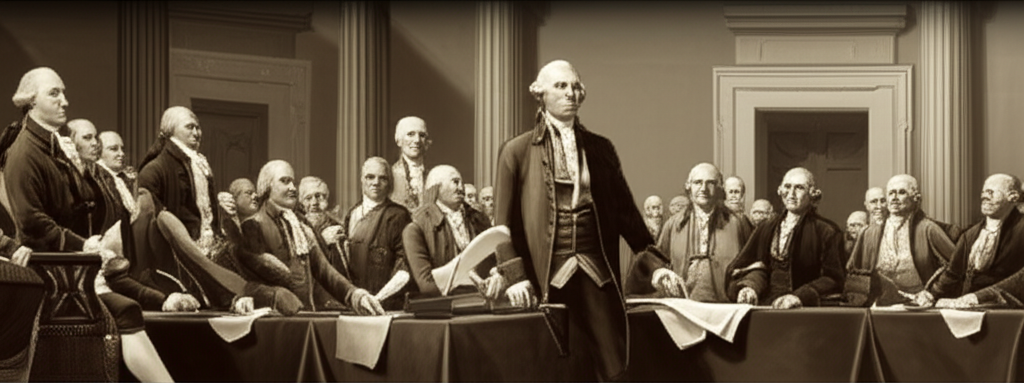
- The United States Constitution (1787): A seminal achievement in constitutional law. This document established a federal system, separation of powers (legislative, executive, judicial), and a system of checks and balances designed to prevent the concentration of power. It is the supreme Law of the land, demonstrating the practical application of Enlightenment principles.
- The Federalist Papers (1787-1788): Written by Alexander Hamilton, James Madison, and John Jay, these essays defended and explained the proposed U.S. Constitution, offering deep insights into its philosophical underpinnings and practical design, particularly concerning factions, federalism, and judicial review.
Global Spread and Deepening Principles: Constitutionalism in a Modern World
The success of the American Constitution and the ideals of the French Revolution spurred a global movement toward written constitutions and the codification of rights.
The French Revolution and European Codification
The French Revolution, though turbulent, produced influential constitutional ideas and frameworks.
- Declaration of the Rights of Man and of the Citizen (1789): This document articulated universal human rights, popular sovereignty, and the principle that all citizens are equal before the law. It became a powerful model for rights declarations worldwide.
- Napoleonic Code (1804): While primarily a civil law code, its systematic organization and emphasis on legal equality influenced constitutional and legal reforms across Europe and beyond, cementing the idea of codified law.
Rights, Amendments, and Judicial Review
The 19th and 20th centuries saw constitutions evolve to address new social realities and expand the scope of rights.
- Expansion of Suffrage and Abolition of Slavery: Through amendments and legal reforms, constitutional law in many nations, including the United States (e.g., 13th, 14th, 15th Amendments), grappled with issues of equality and broadened political participation.
- Rise of Judicial Review: The power of courts to interpret the constitution and strike down laws that violate it (e.g., Marbury v. Madison in the US, 1803) became a cornerstone of modern constitutional law, establishing the judiciary as a guardian of the constitutional framework.
- Development of Fundamental Rights Catalogues: Post-World War II, many constitutions explicitly included extensive lists of fundamental human rights, reflecting a global consensus on the need to protect individuals from state overreach.
Post-War Constitutions and International Law
The horrors of the World Wars led to a renewed emphasis on constitutional safeguards against tyranny and the emergence of international human rights law.
- Constitutions Designed to Prevent Tyranny: Documents like the German Basic Law (1949) were explicitly crafted to embed democratic values, protect fundamental rights, and prevent the rise of authoritarianism, often including "eternity clauses" to protect core constitutional principles from amendment.
- Influence of International Human Rights Law: The Universal Declaration of Human Rights (1948) and subsequent international treaties began to exert a significant influence on national constitutions, pushing for the recognition and enforcement of globally recognized human rights.
The Living Constitution: Adapting to New Realities
Today, constitutional law continues to evolve, facing new challenges posed by globalization, technology, and persistent philosophical debates.
Global Constitutionalism and Supranational Law
The rise of international bodies and supranational legal systems presents novel questions for national constitutions.
- European Union Law: The EU's unique legal order, where EU law can take precedence over national law in certain areas, challenges traditional notions of national sovereignty and the supremacy of national constitutions, prompting ongoing debates about multi-level governance.
- International Courts: The increasing role of international criminal courts and human rights tribunals further complicates the relationship between national constitutional law and global legal norms.
Technology, Privacy, and Digital Rights
The rapid advancement of technology forces constitutional law to adapt to unforeseen circumstances.
- Freedom of Speech vs. Online Regulation: How do constitutional guarantees of free expression apply to online platforms, and what are the limits of government regulation in the digital sphere?
- Privacy in the Digital Age: The right to privacy, often enshrined in constitutions, faces unprecedented challenges from mass surveillance, data collection, and artificial intelligence, requiring new interpretations and legal frameworks.
The Enduring Philosophical Debates
Fundamental disagreements about the nature and interpretation of constitutions persist.
- Originalism vs. Living Constitutionalism: This debate centers on whether constitutional provisions should be interpreted according to their original meaning or as a "living" document that evolves with societal values.
- The Role of the Judiciary: The extent of judicial power in interpreting constitutions and shaping public policy remains a contentious issue.
- The Balance Between Security and Liberty: In an age of global threats, societies continually grapple with how to balance government powers aimed at security with the protection of individual liberties enshrined in their constitutions.
The Ongoing Dialogue: A Conclusion
The history of constitutional law is a testament to humanity's ongoing dialogue about how best to live together, to organize power, and to secure justice. From the philosophical inquiries of ancient Greece to the complex challenges of the digital age, the constitution has served as both a practical blueprint for government and a profound statement of a society's highest aspirations. It is not merely a collection of rules, but a living testament to the enduring human quest for a just and ordered society, constantly reinterpreted and reshaped by each generation. The conversation continues, for the work of building and upholding a truly just constitutional order is never truly finished.
Key Influential Texts and Thinkers in Constitutional History:
- Ancient & Medieval Foundations:
- Plato: The Republic (ideas of justice, ideal state structure)
- Aristotle: Politics (classification of governments, mixed constitution, rule of law)
- Cicero: De Re Publica (natural law, ideal commonwealth)
- Magna Carta: (limitation of monarchical power, due process)
- Thomas Aquinas: Summa Theologica (hierarchy of laws, natural law)
- Enlightenment & Modern Constitutions:
- Thomas Hobbes: Leviathan (social contract, need for sovereign power)
- John Locke: Two Treatises of Government (natural rights, consent, limited government)
- Jean-Jacques Rousseau: The Social Contract (popular sovereignty, general will)
- English Bill of Rights: (parliamentary supremacy, individual liberties)
- The Federalist Papers: (defense of US Constitution, federalism, separation of powers)
YouTube Video Suggestions:
-
📹 Related Video: KANT ON: What is Enlightenment?
Video by: The School of Life
💡 Want different videos? Search YouTube for: ""The Enlightenment: Crash Course Philosophy #18"" - This would provide a broad overview of the philosophical context that directly led to modern constitutional thought.
2. ## 📹 Related Video: ARISTOTLE ON: The Nicomachean Ethics
Video by: The School of Life
💡 Want different videos? Search YouTube for: ""The Constitution, the Articles, and Federalism: Crash Course US History #8"" - A concise explanation of the foundational American constitutional documents and principles.