

The Unfolding Tapestry: A Philosophical Journey Through the Historical Progress of Liberty
Summary: From Polis to Pluralism
The concept of liberty, far from being a static ideal, has undergone a profound and complex historical evolution, meticulously documented and debated within the canon of the Great Books of the Western World. This article traces this fascinating history, demonstrating how our understanding of liberty has experienced significant progress, often intertwined with the development of law and political thought. From ancient notions of civic participation to modern distinctions between negative and positive freedoms, liberty emerges not as a given, but as a continuously refined and contested philosophical project, shaped by changing societal structures and intellectual breakthroughs.
I. Ancient Seeds: Liberty in the Polis and Republic
The earliest philosophical inquiries into liberty emerged in the crucible of ancient Greece and Rome. For the Greeks, particularly in Athens, liberty was often conceived as isonomia – equality before the law – and the freedom to participate actively in the polis. As Aristotle observed in his Politics, a free citizen was one who could both rule and be ruled, implying a direct, participatory form of liberty intrinsically tied to civic duty and the collective good. This was not an individualistic freedom in the modern sense, but a freedom within and for the community.
Rome, building upon Greek ideas, introduced the concept of libertas as freedom from arbitrary power, particularly from the tyranny of a monarch. Cicero, in his De Re Publica, championed the notion of a republic where citizens were protected by law and could engage in public life, free from the caprice of a despot. Here, law became the bulwark of liberty, defining its boundaries and ensuring its preservation. The Roman understanding of libertas also encompassed the freedom of the head of a household over his family and property, foreshadowing later Western notions of private rights.
II. Medieval Nuances: Divine Law and Individual Conscience
The medieval period introduced a different dimension to the discourse on liberty, heavily influenced by Christian theology. Thinkers like St. Augustine, in City of God, explored the concept of spiritual liberty – freedom from sin and the pursuit of divine grace – which often overshadowed earthly political freedoms. However, the tension between spiritual and temporal authority also laid groundwork for limitations on absolute power.
Later, St. Thomas Aquinas, integrating Aristotelian thought with Christian doctrine in his Summa Theologica, articulated a sophisticated theory of law, distinguishing between eternal, natural, human, and divine law. Natural law, discoverable by reason, provided a moral framework that even rulers were bound to respect. This implied an inherent dignity and certain rights for individuals, forming a nascent idea of individual liberty under a higher moral code. The Magna Carta (1215), though not a philosophical treatise, stands as a practical testament to the idea that even a king's power could be limited by law, marking a significant, albeit incremental, step in the progress of recognized freedoms.
III. The Enlightenment's Illumination: Reason, Rights, and Revolution
The true acceleration in the progress of liberty arrived with the Enlightenment. This era witnessed a profound epistemological shift, placing human reason and individual rights at the forefront.
- John Locke's Two Treatises of Government famously argued for natural rights to life, liberty, and property, which governments were instituted to protect. For Locke, individuals possessed these rights prior to the formation of society, and any government that infringed upon them could legitimately be resisted. This concept of liberty as an inherent individual possession was revolutionary.
- Jean-Jacques Rousseau, in The Social Contract, explored the paradox of man being "born free, and everywhere he is in chains." He posited that true liberty involved individuals submitting to the "general will," becoming both subjects and authors of the law, thus achieving a higher form of moral and civic freedom.
- Montesquieu, in The Spirit of the Laws, emphasized the separation of powers as crucial for safeguarding political liberty, arguing that unchecked power inevitably leads to its abuse. His ideas profoundly influenced the design of modern constitutional governments.
- Immanuel Kant, in his moral philosophy, linked liberty to autonomy – the capacity of rational beings to govern themselves by universal moral law. This elevated liberty from a mere political condition to a fundamental aspect of human dignity and moral agency.
This period solidified the idea that liberty was not a privilege granted by rulers, but a fundamental right inherent to all individuals, best secured through constitutional law and representative government.
IV. Modern Refinements: Positive Liberty, Negative Liberty, and the State
The 19th and 20th centuries continued the philosophical refinement of liberty, grappling with its practical implications in increasingly complex societies.
One of the most significant distinctions was articulated by Isaiah Berlin (though his work falls slightly outside the traditional Great Books canon, it synthesizes much of its thought), differentiating between:
- Negative Liberty: Freedom from interference. This is the absence of external constraints, championed by thinkers like John Stuart Mill in On Liberty, who argued for extensive individual freedoms in thought, speech, and action, as long as they do not harm others. Mill's harm principle became a cornerstone of liberal thought, establishing a sphere of individual autonomy where the state or society should not intrude.
- Positive Liberty: Freedom to achieve one's potential. This often involves the presence of conditions necessary for self-realization, such as education, healthcare, or economic security. This concept raises questions about the role of the state in actively promoting liberty rather than merely protecting it from infringement.
The ongoing debate about the proper balance between these two forms of liberty continues to shape political philosophy, influencing discussions on welfare states, economic justice, and the limits of state power. The progress of liberty in modern times has thus involved not just expanding its scope, but also deepening our understanding of its multifaceted nature and the conditions required for its meaningful exercise.
V. Key Milestones in the Journey of Liberty
The historical trajectory of liberty can be summarized through a series of conceptual and practical advancements:
| Era | Key Concept/Development | Philosophical Advocate(s) | Impact on Liberty |
|---|---|---|---|
| Ancient | Civic Participation (Isonomia) | Plato, Aristotle | Freedom within the community, collective self-governance. |
| Freedom from Arbitrary Rule (Libertas) | Cicero | Protection by law, republican ideals. | |
| Medieval | Natural Law & Limits on Power | Augustine, Aquinas, Magna Carta | Divine/moral constraints on rulers, nascent individual rights. |
| Early Modern | Natural Rights, Social Contract, Separation of Powers | Locke, Rousseau, Montesquieu | Inherent individual rights, government by consent. |
| Enlightenment | Autonomy, Freedom of Thought, Harm Principle | Kant, Mill | Self-governance, protection of individual expression. |
| Modern | Distinction of Negative/Positive Liberty | (Synthesized by Berlin from earlier works) | Nuanced understanding of freedom from vs. freedom to. |
VI. The Indivisible Link: Liberty and Law
Throughout this historical panorama, a constant theme emerges: the profound and often complex relationship between liberty and law. True liberty is not license – an unbridled freedom to do whatever one pleases – but rather freedom within a framework of just and equitable laws. As many Great Books authors, from Plato to Locke, have underscored, law serves as both the protector and the definer of liberty. It establishes the boundaries that prevent individuals from infringing upon the liberties of others, thereby creating the conditions for a shared and sustainable freedom. Without law, liberty devolves into chaos and the domination of the strong over the weak. The progress of liberty has therefore been inextricably linked to the progress of just and constitutional law.
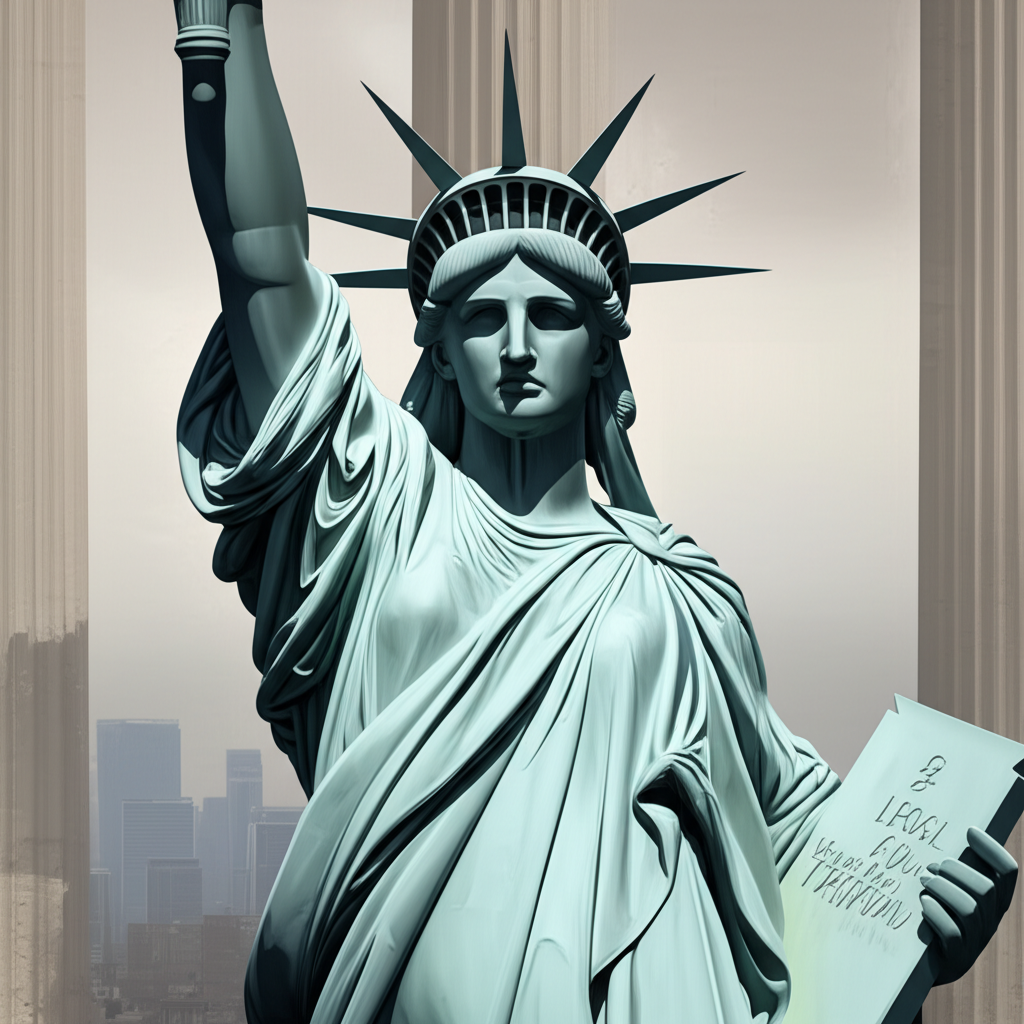
Conclusion: An Ongoing Project
The historical progress of liberty is not a linear march towards a predetermined endpoint, nor is it a finished chapter. It is a dynamic, often contentious, and eternally unfinished philosophical project. From the communal freedoms of ancient city-states to the radical individualism of the Enlightenment and the nuanced distinctions of modern thought, our understanding of liberty has continuously expanded and deepened. The legacy of the Great Books of the Western World lies in its documentation of this profound intellectual journey, reminding us that liberty, always intertwined with law, requires constant vigilance, critical reflection, and active participation to be truly realized and sustained.
📹 Related Video: What is Philosophy?
Video by: The School of Life
💡 Want different videos? Search YouTube for: ""John Locke Natural Rights and Social Contract Philosophy""
📹 Related Video: KANT ON: What is Enlightenment?
Video by: The School of Life
💡 Want different videos? Search YouTube for: ""Isaiah Berlin Two Concepts of Liberty Explained""