

The Unfolding Tapestry of Understanding: The Historical Progress of Human Knowledge
Human knowledge is not a static edifice but a dynamic, ever-evolving landscape, shaped by centuries of inquiry, discovery, and re-evaluation. From the earliest attempts to understand the cosmos to the intricate scientific theories of today, the historical progress of human knowledge is a testament to our insatiable curiosity and our capacity for intellectual evolution. This journey, beautifully chronicled within the pages of the Great Books of the Western World, reveals how each era builds upon the foundations laid by its predecessors, refining, challenging, and expanding our collective understanding of ourselves and the universe. It is a story of continuous advancement, marked by paradigm shifts and profound insights that propel humanity forward in its relentless pursuit of truth.
From Myth to Logos: The Dawn of Inquiry
The earliest stirrings of human knowledge were often intertwined with myth and religion, providing frameworks for understanding phenomena that defied simple explanation. Yet, even within these narratives, one can discern the nascent seeds of philosophical and scientific inquiry. The Great Books begin to capture this transition, as early thinkers moved from purely theological explanations to more rationalistic approaches.
- Early Explanations:
- Mythological Frameworks: Providing order and meaning to a chaotic world.
- Pre-Socratic Philosophers: Shifting focus from divine intervention to natural principles (e.g., Thales' water, Heraclitus's fire). This marked a critical step in the evolution of thought, seeking underlying causes rather than simply recounting divine acts.
- The Birth of Logic: Initial attempts to structure arguments and deduce conclusions, laying the groundwork for future intellectual progress.
This period represents the crucial initial phase where humanity began to question not just what happened, but why and how, setting the stage for the systematic development of knowledge.
The Classical Flourishing: Reason and Systematization
The ancient Greeks, particularly figures like Plato and Aristotle, represent a monumental leap in the historical progress of knowledge. Their works, cornerstones of the Great Books, introduced systematic methods of inquiry, logic, and ethical reasoning that continue to influence thought today.
Key Contributions to Knowledge Progress:
| Philosopher | Primary Contribution to Knowledge Evolution | Enduring Impact |
|---|---|---|
| Plato | Theory of Forms, Socratic Method, Dialectic | Idealism, political philosophy, educational theory |
| Aristotle | Formal Logic, Empiricism (observation), Metaphysics, Ethics, Physics, Biology | Foundation of Western science, classification, deductive reasoning |
Aristotle's meticulous observations and classifications, his development of formal logic, and his comprehensive treatises on nearly every subject imaginable provided an encyclopedic foundation for centuries of scholarship. This was a period of intense intellectual progress, where the pursuit of knowledge became a disciplined, systematic endeavor.
The Medieval Bridge: Preservation and Scholasticism
Following the decline of the Roman Empire, much of the classical knowledge was preserved and transmitted through the Islamic world and later, within the monasteries and emerging universities of medieval Europe. This era, often mischaracterized as a "dark age," was in fact a crucial period for the evolution of knowledge. Scholasticism, exemplified by thinkers like Thomas Aquinas, sought to reconcile faith with reason, leading to sophisticated philosophical debates and the development of rigorous argumentative techniques. The Great Books include these syntheses, showing how ancient ideas were reinterpreted and integrated into new intellectual frameworks. This period was vital for the history of knowledge as it ensured the continuity of learning and prepared the ground for future intellectual explosions.
The Renaissance and Scientific Revolution: A New Dawn
The Renaissance marked a resurgence of interest in classical learning, coupled with a burgeoning spirit of humanism and empirical inquiry. This paved the way for the Scientific Revolution, a period of unprecedented progress in understanding the natural world. Figures like Copernicus, Galileo, and Newton, whose works are central to the Great Books, challenged long-held dogmas and introduced new methodologies based on observation, experimentation, and mathematical reasoning.
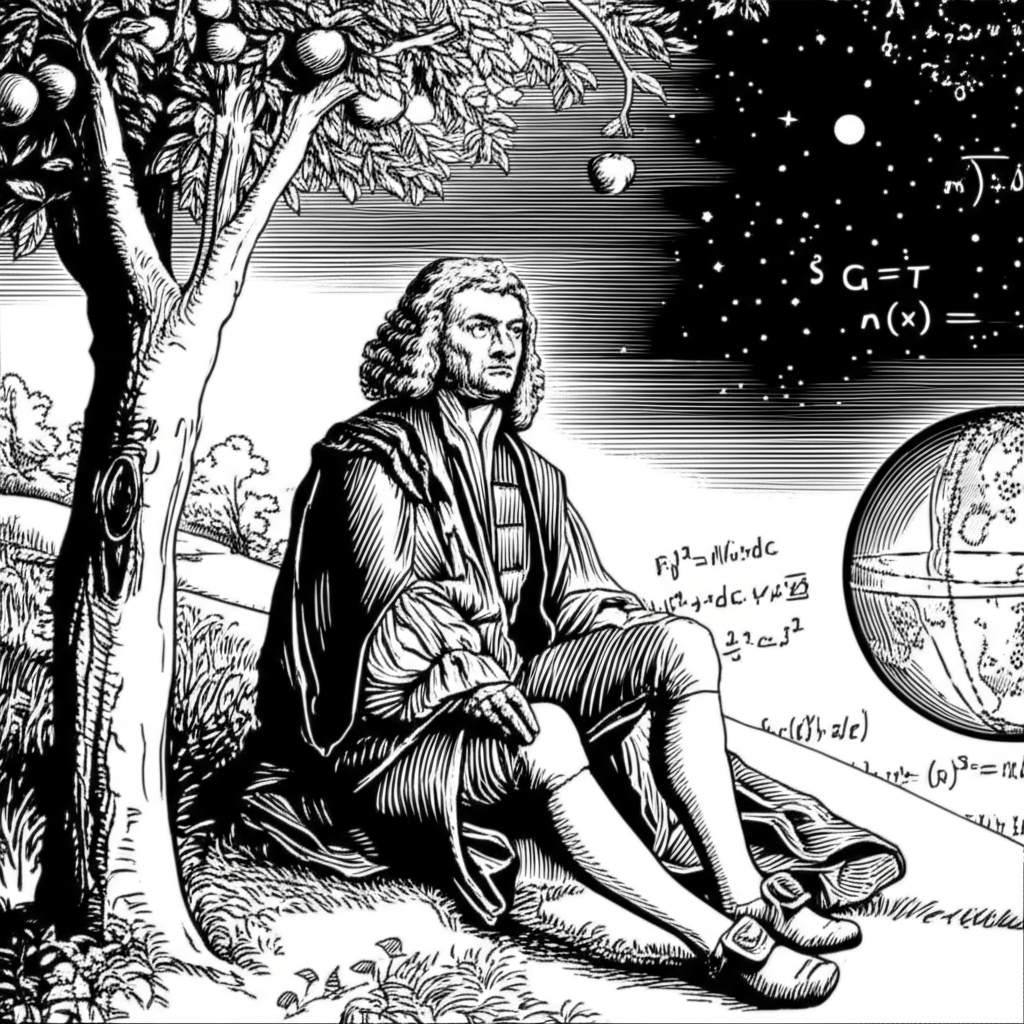
This era dramatically reshaped the history of knowledge, shifting from speculative philosophy to empirical science, demonstrating a profound evolution in how we acquire and validate understanding. The emphasis on verifiable evidence and repeatable experiments became the new standard for intellectual progress.
The Enlightenment and Modernity: Systematizing Progress
The Enlightenment built upon the foundations of the Scientific Revolution, extending the principles of reason and empiricism to human society, politics, and ethics. Thinkers like Locke, Rousseau, Kant, and Hume, all prominently featured in the Great Books, explored the nature of knowledge itself (epistemology), the foundations of morality, and the ideal structure of government. This period saw the systematization of the idea of progress – the belief that humanity could, through reason, improve its condition and continuously advance. The evolution of political thought, the development of economic theories, and the burgeoning of critical philosophy all contributed to a broader, more self-aware understanding of human knowledge.
Contemporary Perspectives: Ongoing Evolution and Challenges
In the 20th and 21st centuries, the progress of knowledge has accelerated exponentially, driven by technological advancements, globalization, and interdisciplinary approaches. While the Great Books often conclude before this period, their enduring relevance lies in the philosophical frameworks they provide for understanding our current challenges. We grapple with the implications of artificial intelligence, quantum mechanics, complex ethical dilemmas arising from biotechnology, and the vast expansion of our understanding of the universe. The evolution of knowledge is no longer a linear path but a complex web of interconnected disciplines, constantly pushing the boundaries of what we know and how we know it.
Conclusion: The Endless Pursuit
The historical progress of human knowledge is an inspiring saga of intellectual daring, persistent questioning, and collective effort. From the ancient Greeks' logical leaps to the scientific revolutions that transformed our world, each stage has contributed to a richer, more nuanced understanding. The Great Books of the Western World serve as an invaluable guide through this journey, illustrating the continuous evolution of thought and the enduring human drive to comprehend the mysteries of existence. As Emily Fletcher, I find immense satisfaction in tracing these intellectual lineages, recognizing that the pursuit of knowledge is not merely an academic exercise, but a fundamental aspect of what it means to be human—an ongoing, dynamic process of discovery that shows no signs of abating.
📹 Related Video: What is Philosophy?
Video by: The School of Life
💡 Want different videos? Search YouTube for: ""History of Philosophy: Ancient to Modern Thought""
📹 Related Video: PLATO ON: The Allegory of the Cave
Video by: The School of Life
💡 Want different videos? Search YouTube for: ""The Scientific Revolution Explained""