

The history of human knowledge is a profound testament to our species' relentless curiosity and capacity for understanding. Far from a simple accumulation of facts, it is a dynamic narrative of progress, marked by profound shifts in perspective, methodology, and the very definition of what it means to "know." This journey, chronicled beautifully within the Great Books of the Western World, reveals an ongoing evolution of thought, where each era builds upon, challenges, and refines the insights of its predecessors, propelling us ever forward in our collective intellectual pursuit.
The Evolving Tapestry of Human Understanding
Human knowledge is not a static edifice but a continuously expanding and re-structured landscape. From the earliest philosophical inquiries to the complexities of modern science, the trajectory has been one of constant re-evaluation and expansion. We observe a fascinating interplay between the preservation of ancient wisdom and the audacious spirit of innovation, a dialectic that drives intellectual progress. This evolution is not always linear; sometimes it meanders, sometimes it leaps, but it consistently demonstrates humanity’s innate drive to comprehend the cosmos and our place within it.
Foundations in Antiquity: Seeds of Inquiry
The earliest significant strides in systematizing knowledge can be traced back to the ancient world, particularly the Greek philosophers. Thinkers like Plato and Aristotle, whose works form cornerstones of the Great Books, laid the groundwork for Western thought.
- Plato's Ideal Forms: Introduced the concept of universal truths beyond sensory experience, urging philosophical inquiry into the nature of reality, ethics, and governance. His dialogues, through dialectic, sought to uncover fundamental knowledge.
- Aristotle's Empirical Observation: Pioneered systematic observation and classification across a vast array of subjects, from logic and ethics to biology and physics. He emphasized the importance of empirical data, shaping the future methods of scientific investigation and contributing immensely to the evolution of logical reasoning.
These foundational efforts were less about definitive answers and more about establishing robust methods of questioning, categorization, and logical deduction, setting the stage for centuries of intellectual progress.
Medieval Bridges: Preservation and Synthesis
Following the classical era, the medieval period, often mischaracterized as intellectually dormant, played a crucial role in the history of knowledge. Scholars, particularly within monastic traditions and later universities, became the custodians of ancient texts, translating, preserving, and commenting upon them.
Key Contributions of the Medieval Period:
- Preservation of Classical Texts: Without the diligent efforts of scholars like Boethius and later Arab polymaths, much of Greek knowledge would have been lost.
- Synthesis of Faith and Reason: Figures like Augustine and Thomas Aquinas wrestled with integrating classical philosophy (especially Aristotelian thought) with Christian theology, demonstrating a complex intellectual evolution in understanding the relationship between divine revelation and human reason.
- Development of Universities: These institutions became centers for systematic inquiry, fostering debate and the transmission of knowledge across generations, laying the institutional groundwork for future progress.
The Renaissance and Scientific Revolution: A New Dawn for Observation
The Renaissance marked a resurgence of interest in classical learning, coupled with a burgeoning spirit of humanism and empirical inquiry. This period, leading into the Scientific Revolution, fundamentally altered the trajectory of knowledge evolution.
- Rediscovery and Reinterpretation: A renewed engagement with classical texts sparked fresh perspectives on art, politics, and science.
- Empirical Methodologies: Figures like Francis Bacon advocated for inductive reasoning and experimental observation, shifting the focus from purely deductive reasoning to hands-on investigation. This was a monumental leap in the method of acquiring knowledge.
- Revolutionary Discoveries: Copernicus, Galileo, and Newton challenged geocentric views and established universal laws of motion and gravity, demonstrating the immense progress achievable through systematic scientific inquiry. Their work, foundational to modern physics, fundamentally reshaped humanity's understanding of the cosmos.
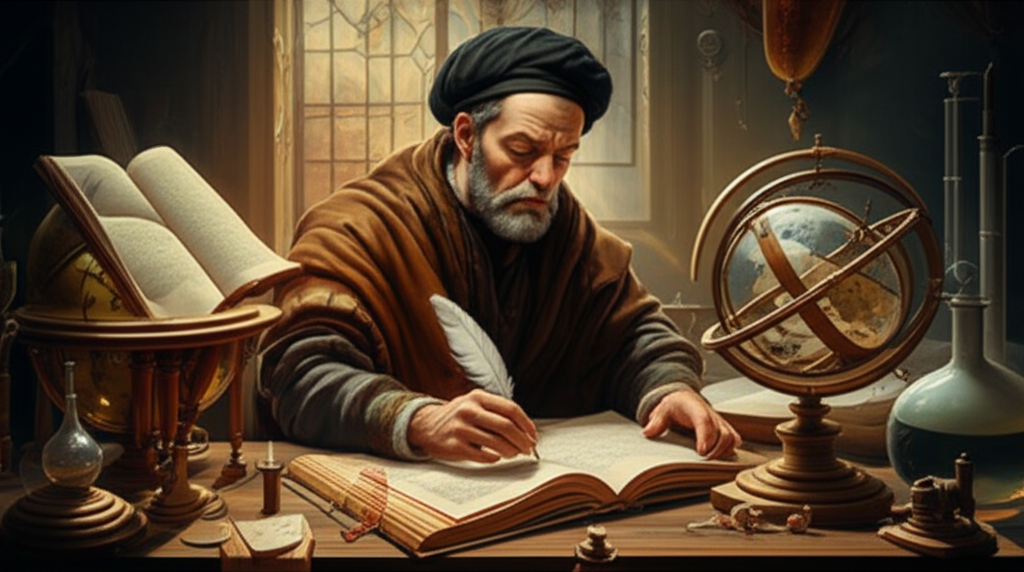
Enlightenment's Flame: Reason and Rights
The Enlightenment built upon the Scientific Revolution's emphasis on reason and systematic inquiry, extending these principles to human society, politics, and ethics. This era saw a profound evolution in our understanding of individual rights, governance, and the pursuit of happiness.
Pillars of Enlightenment Thought:
- Emphasis on Reason: Philosophers like Descartes, Locke, and Kant championed reason as the primary source of authority and legitimacy, challenging traditional hierarchies.
- Social and Political Philosophy: Thinkers such as Locke, Rousseau, and Montesquieu developed theories of natural rights, social contracts, and the separation of powers, directly influencing the progress of democratic governance.
- Critique and Reform: The Enlightenment fostered a spirit of critical inquiry into all aspects of life, leading to calls for reform in law, education, and social structures. This intellectual ferment drove significant societal evolution.
The Modern Age: Unceasing Expansion and Specialization
The 19th, 20th, and 21st centuries have witnessed an unprecedented acceleration in the progress and evolution of knowledge. The sheer volume of information has exploded, leading to increasing specialization across disciplines.
Characteristics of Modern Knowledge Progress:
- Scientific and Technological Revolution: From Darwin's theory of evolution to Einstein's relativity, quantum mechanics, and the digital revolution, scientific and technological advancements have continually reshaped our understanding of the universe and our capabilities within it.
- Interdisciplinary Approaches: While specialization is rife, there's also a growing recognition of the interconnectedness of knowledge, leading to fruitful interdisciplinary research.
- Globalized Knowledge Sharing: The internet and global communication networks have democratized access to information, accelerating the pace of knowledge dissemination and collaborative progress.
The Enduring Quest: Whither Our Knowledge?
The historical progress of human knowledge is a continuous journey, not a destination. Each discovery opens new avenues for inquiry, each answer begets more questions. The Great Books remind us that the fundamental questions posed by the ancients – about truth, justice, beauty, and the good life – remain relevant, even as our tools and understanding evolve. Our collective intellectual history is a testament to the enduring human spirit of inquiry, a spirit that promises further progress in the boundless realm of knowledge.
📹 Related Video: What is Philosophy?
Video by: The School of Life
💡 Want different videos? Search YouTube for: ""The History of Western Philosophy" - a comprehensive overview of key thinkers and movements"
📹 Related Video: What is Philosophy?
Video by: The School of Life
💡 Want different videos? Search YouTube for: ""Epistemology Explained: What is Knowledge?" - exploring the philosophical study of knowledge itself"