

The Unfolding Tapestry: Charting the Historical Progress of Human Knowledge
Human knowledge is not a static monolith but a vibrant, ever-evolving stream that carves new paths through the landscape of understanding. From the earliest whispers of myth to the intricate theories of modern science, the progress of our collective knowledge marks a profound journey through history, characterized by continuous questioning, refinement, and revolutionary breakthroughs. This article explores the remarkable evolution of human understanding, drawing insights from the foundational texts that have shaped our intellectual heritage.
A Journey Through Inquiry: The Genesis of Understanding
Our expedition into the history of knowledge begins not with definitive answers, but with the very act of asking. Before the systematic methods we now cherish, humanity sought to comprehend the world through narrative and spiritual insight. Early civilizations wove intricate myths, providing explanatory frameworks for natural phenomena and human existence. Yet, a pivotal shift occurred, particularly evident in the pages of the Great Books of the Western World, when the human mind began to transition from mythos to logos—from storytelling to rational inquiry.
- The Dawn of Philosophy: Ancient Greece stands as a beacon for this intellectual evolution. Thinkers like Thales, Anaximander, and Heraclitus dared to seek natural explanations for the cosmos, laying the groundwork for scientific thought. Plato, with his exploration of ideal forms, and Aristotle, with his systematic approach to logic, ethics, politics, and natural science, established enduring paradigms for inquiry. Their contributions represent an immense progress in structuring knowledge and understanding the world through reason.
Medieval Bridges: Preserving and Synthesizing Knowledge
Following the classical era, the medieval period, often mischaracterized as a "dark age," played a crucial role in the progress of knowledge. Monasteries and Islamic centers of learning became vital custodians of ancient texts, meticulously copying and translating works that might otherwise have been lost. This era saw a dedicated effort to synthesize classical reason with theological doctrine, demonstrating a unique evolution in how knowledge was perceived and integrated.
- Scholasticism and Systematization: Figures like Thomas Aquinas, deeply influenced by Aristotle, undertook monumental efforts to reconcile faith and reason. Their rigorous logical arguments and encyclopedic works, such as the Summa Theologica, showcased a sophisticated approach to organizing and analyzing knowledge. The establishment of universities across Europe further cemented this progress, creating institutions dedicated to the systematic transmission and expansion of learning.
The Renaissance and Scientific Revolution: A Paradigm Shift
The Renaissance marked a fervent rediscovery of classical learning and an explosion of artistic and intellectual creativity. This period set the stage for one of the most profound leaps in the history of knowledge: the Scientific Revolution. Here, the emphasis shifted dramatically towards observation, experimentation, and mathematical reasoning, fundamentally altering our understanding of the natural world.
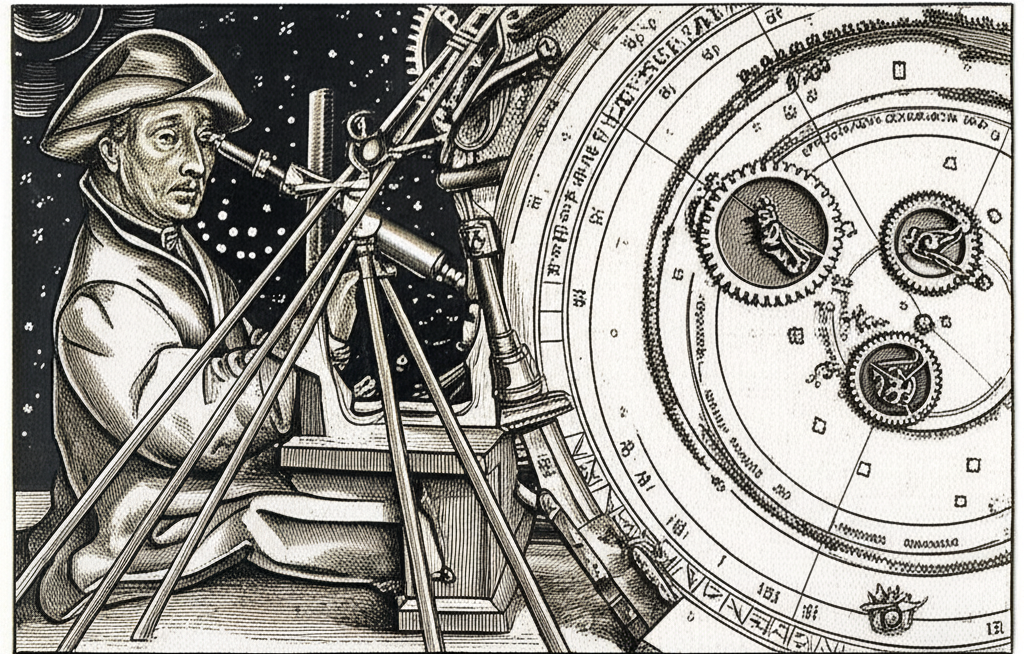
- Empirical Foundations: The works of Copernicus, Galileo, and Newton, among others, exemplify this transformative progress. Copernicus's heliocentric model challenged geocentric dogma, while Galileo's telescopic observations provided empirical evidence that shattered ancient cosmological views. Isaac Newton's laws of motion and universal gravitation provided a comprehensive framework that explained the physical world with unprecedented precision, demonstrating the immense power of systematic inquiry and observation in advancing knowledge. This period unequivocally showcases the exponential evolution of scientific understanding.
Enlightenment and Modernity: Reason, Critique, and Expansion
The Enlightenment championed reason as the primary source of authority and legitimacy, leading to radical progress in political, social, and philosophical knowledge. Thinkers like John Locke, Jean-Jacques Rousseau, and Immanuel Kant profoundly influenced ideas about individual rights, governance, and the nature of human understanding itself.
- Philosophical Deepening: Descartes's call for systematic doubt and the emphasis on a priori reasoning, coupled with the British empiricists' focus on experience, led to a more nuanced understanding of how knowledge is acquired and justified. Kant's critical philosophy sought to synthesize these approaches, exploring the very limits and structures of human cognition. This era's intellectual ferment led to a remarkable evolution of thought, applying rigorous analysis to every facet of human experience and societal organization. The progress wasn't just in accumulating facts, but in understanding the very process of knowing.
The Ongoing Trajectory: Contemporary Knowledge and its Frontiers
The 19th, 20th, and 21st centuries have witnessed an acceleration of knowledge acquisition, characterized by specialization, interdisciplinary approaches, and technological innovation. From Darwin's theory of evolution to Einstein's relativity, quantum mechanics, and the digital revolution, our understanding of the universe, life, and ourselves continues to expand at an astonishing pace.
- Key Areas of Modern Progress:
- Scientific Breakthroughs: Genetics, neuroscience, cosmology, and particle physics continually push the boundaries of what we know about the universe and our place within it.
- Technological Advancements: Information technology, artificial intelligence, and biotechnology are not merely tools but are fundamentally reshaping how knowledge is created, disseminated, and applied.
- Globalized Understanding: The interconnectedness of the modern world fosters a more holistic and cross-cultural evolution of knowledge, challenging ethnocentric biases and promoting diverse perspectives.
The progress of knowledge is not without its challenges—new discoveries often lead to new questions, and the sheer volume of information can be overwhelming. Yet, this ongoing quest defines us, pushing us to constantly refine our understanding and adapt our frameworks. The history of human knowledge is a testament to our enduring curiosity and our remarkable capacity for intellectual evolution.
YouTube: "The History of Philosophy: Crash Course Philosophy"
YouTube: "The Scientific Revolution: Crash Course History of Science"
📹 Related Video: What is Philosophy?
Video by: The School of Life
💡 Want different videos? Search YouTube for: "The Historical Progress of Human Knowledge philosophy"