

The Ever-Unfolding Scroll: A Journey Through the Historical Progress of Human Knowledge
Human knowledge is not a static monolith but a vibrant, ever-expanding universe, perpetually shaped by inquiry, discovery, and reflection. This article traces the remarkable history of how our collective understanding has evolved, marking significant epochs and intellectual shifts that underscore the relentless progress of humanity's quest for truth. From the foundational insights of ancient philosophers to the intricate scientific revolutions of modernity, we witness the dynamic evolution of thought, a testament to our enduring capacity to learn, adapt, and build upon the wisdom of those who came before.
The Ancient Foundations: Seeds of Inquiry
The earliest stirrings of systematic knowledge began with the ancient civilizations, particularly in Greece, where the Great Books of the Western World find some of their most profound origins. Thinkers like Plato and Aristotle laid down the bedrock of Western philosophy, logic, and scientific observation. They sought to understand the cosmos, the nature of being, and the ideal society, not through myth alone, but through reasoned argument and meticulous classification. This period marks the crucial initial progress from purely mythical explanations to rational inquiry, setting the stage for all subsequent intellectual evolution. Their questions, though ancient, remain remarkably pertinent, demonstrating the foundational strength of their contributions to the history of ideas.
Medieval Bridges: Faith, Reason, and Preservation
Following the classical era, the medieval period, often mischaracterized as intellectually stagnant, played a vital role in the history of knowledge. Scholars in both the Islamic world and later in Europe diligently preserved, translated, and commented upon the ancient texts, ensuring their survival and continued study. Figures like Augustine and Aquinas wrestled with the interplay between faith and reason, pushing the boundaries of theological and philosophical understanding. This era saw the evolution of scholasticism, a rigorous method of inquiry that, while often constrained by dogma, honed critical thinking skills and contributed significantly to the progress of dialectical reasoning. The establishment of early universities further institutionalized the pursuit and dissemination of knowledge.
The Renaissance and Scientific Revolution: A Paradigm Shift
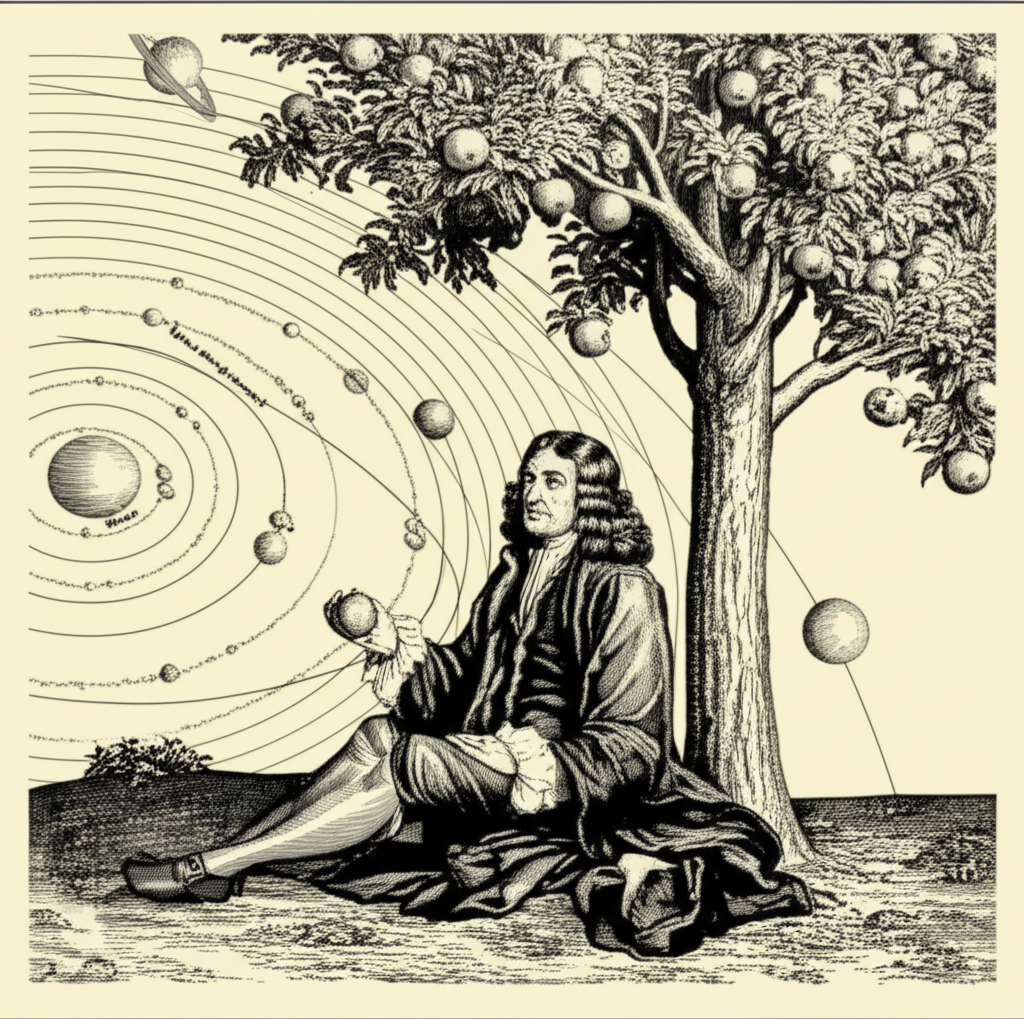
The Renaissance marked a fervent rebirth of classical learning and a renewed emphasis on human potential, paving the way for one of the most significant periods of progress in the history of knowledge: the Scientific Revolution. This era witnessed a fundamental shift from speculative philosophy to empirical observation and experimentation. Thinkers like Copernicus, Galileo, and Newton challenged geocentric views and established universal laws of motion and gravity, fundamentally altering our understanding of the physical world. This was not merely an accumulation of facts but a revolutionary evolution in methodology—the birth of modern science. The emphasis moved from what to how, fostering an unprecedented acceleration in the progress of human understanding.
The Enlightenment and Beyond: Reason's Ascendancy and its Complexities
The Scientific Revolution's success inspired the Enlightenment, where the principles of reason and empirical inquiry were applied to human society, politics, and ethics. Philosophers like Locke, Rousseau, and Kant championed individual rights, democratic governance, and universal moral principles, profoundly influencing the evolution of political knowledge and social structures. This period of intense intellectual progress challenged traditional authority and advocated for freedom of thought. However, the subsequent centuries also brought critiques, revealing the complexities and potential pitfalls of pure reason, leading to further evolution in understanding human nature and societal dynamics, as seen in the Romantic and existentialist movements.
Modernity and the Accelerating Pace of Knowledge
The 19th and 20th centuries witnessed an explosion of specialized knowledge in every field imaginable, from the theory of evolution by Darwin to the quantum mechanics of Planck and Einstein's relativity. The progress became exponential, driven by technological advancements, global communication, and institutionalized research. The history of knowledge in this era is characterized by both profound integration and increasing fragmentation, as disciplines delve deeper into their specific domains while simultaneously seeking interdisciplinary connections. Today, we stand at a precipice of information, constantly navigating the rapid evolution of our understanding of the universe, ourselves, and our place within it.
Key Milestones in the Evolution of Knowledge
The journey of human knowledge is marked by pivotal transformations:
- Ancient Greek Philosophy (c. 600-300 BCE): Shift from mythos to logos, birth of logic and systematic inquiry.
- Hellenistic Period (c. 300 BCE - 300 CE): Advancements in mathematics (Euclid), astronomy (Ptolemy), and medicine (Galen).
- Islamic Golden Age (c. 8th-13th Century CE): Preservation and expansion of classical texts, innovations in algebra, optics, and medicine.
- Scholasticism (c. 11th-15th Century CE): Development of rigorous dialectical methods in European universities.
- The Renaissance (c. 14th-16th Century CE): Rebirth of humanism, art, and classical learning.
- The Scientific Revolution (c. 16th-18th Century CE): Establishment of the empirical method, revolutionary discoveries in physics and astronomy.
- The Enlightenment (c. 18th Century CE): Application of reason to society, politics, and ethics; rise of democratic ideals.
- 19th-20th Century Scientific Expansions: Darwinian evolution, quantum physics, relativity, and the rise of social sciences.
- Information Age (Late 20th Century - Present): Digital revolution, global connectivity, and exponential data growth.
The Nature of Progress: Is it Linear?
While we speak of progress and evolution in knowledge, it's crucial to acknowledge that this history is rarely a straight line. There have been periods of stagnation, loss, and even regression. The fall of empires, the burning of libraries, or the suppression of dissenting ideas remind us that the advancement of knowledge is a fragile endeavor, dependent on social stability, open inquiry, and intellectual freedom. Moreover, the evolution of knowledge often involves paradigm shifts, where old understandings are not merely added to but fundamentally replaced by new ones, challenging our assumptions about what constitutes "truth." The ongoing debate about the nature of progress itself is a testament to the dynamic and complex character of human intellectual development.
The Enduring Quest: Our Role in the Continuum
The historical progress of human knowledge is an epic saga, an ongoing testament to our species' innate curiosity and capacity for understanding. Each generation inherits the accumulated wisdom of its predecessors, contributing its own discoveries and insights to the ever-growing tapestry. Our role, as inheritors and contributors, is to critically engage with this vast legacy, to question, to explore, and to push the boundaries of what is known. The journey of knowledge is far from over; indeed, it is an infinite horizon, continually unfolding before us, inviting us to participate in its magnificent evolution.
YouTube Video Suggestions:
-
📹 Related Video: KANT ON: What is Enlightenment?
Video by: The School of Life
💡 Want different videos? Search YouTube for: ""History of Philosophy from Thales to the Enlightenment""
2. ## 📹 Related Video: PLATO ON: The Allegory of the Cave
Video by: The School of Life
💡 Want different videos? Search YouTube for: ""The Scientific Revolution Explained""