

The relentless march of human understanding across millennia is not a simple linear ascent, but a complex, often circuitous journey marked by profound breakthroughs and illuminating insights. This article explores the historical progress of human knowledge, tracing its evolution from nascent mythologies to sophisticated scientific paradigms, drawing upon the vast intellectual tapestry woven within the Great Books of the Western World. We delve into how humanity has continually refined its methods of inquiry, expanded its conceptual frameworks, and built upon the foundations laid by previous generations, demonstrating an undeniable, if sometimes uneven, evolution of our collective comprehension of the cosmos and ourselves.
The Unfolding Tapestry of Human Understanding
From the earliest cave paintings to the most intricate theories of quantum mechanics, the human spirit has been driven by an insatiable curiosity—a profound yearning to comprehend the world. This quest for knowledge, as chronicled in the Great Books, reveals a remarkable history of intellectual progress. It is a story not just of accumulating facts, but of an evolution in how we question, how we observe, and how we synthesize understanding. We see the very fabric of thought transform, moving from uncritical acceptance to rigorous skepticism, from localized mythologies to universal scientific principles.
Early Glimmers: From Mythos to Logos
The dawn of philosophical inquiry, particularly in ancient Greece, marks a pivotal moment in the history of knowledge. Before this, understanding was largely framed by myth and divine decree, as explored in Homeric epics. However, figures like Thales, Anaximander, and Heraclitus—the Presocratics—began to seek natural explanations for natural phenomena, initiating a fundamental shift from mythos to logos.
Plato, through his Socratic dialogues, introduced rigorous methods of dialectic and emphasized the pursuit of ideal Forms, suggesting a realm of perfect knowledge accessible through reason. His student, Aristotle, took a different path, pioneering empirical observation, systematic classification, and the foundations of logic, ethics, and metaphysics. The contributions of these thinkers, foundational to Western thought, represent a monumental leap in the evolution of systematic inquiry, demonstrating a clear progress in intellectual methodology.
The Medieval Synthesis and Scholastic Refinement
Following the classical era, the medieval period, often mischaracterized as a "dark age," was in fact a crucial era for the preservation, transmission, and further development of knowledge. While deeply intertwined with theological frameworks, thinkers of this era engaged in sophisticated intellectual endeavors. Islamic scholars, building upon Greek and Roman foundations, made immense progress in mathematics, astronomy, and medicine, preserving and expanding much of the classical heritage.
In the West, scholasticism, exemplified by figures like Thomas Aquinas, sought to reconcile faith and reason. Aquinas, drawing heavily on Aristotle, developed a comprehensive philosophical and theological system that demonstrated the power of logical argumentation and systematic analysis. This period saw the evolution of universities as centers of learning, fostering rigorous debate and the meticulous organization of knowledge, laying intellectual groundwork for future developments.
The Renaissance and Scientific Revolution: A New Dawn for Inquiry
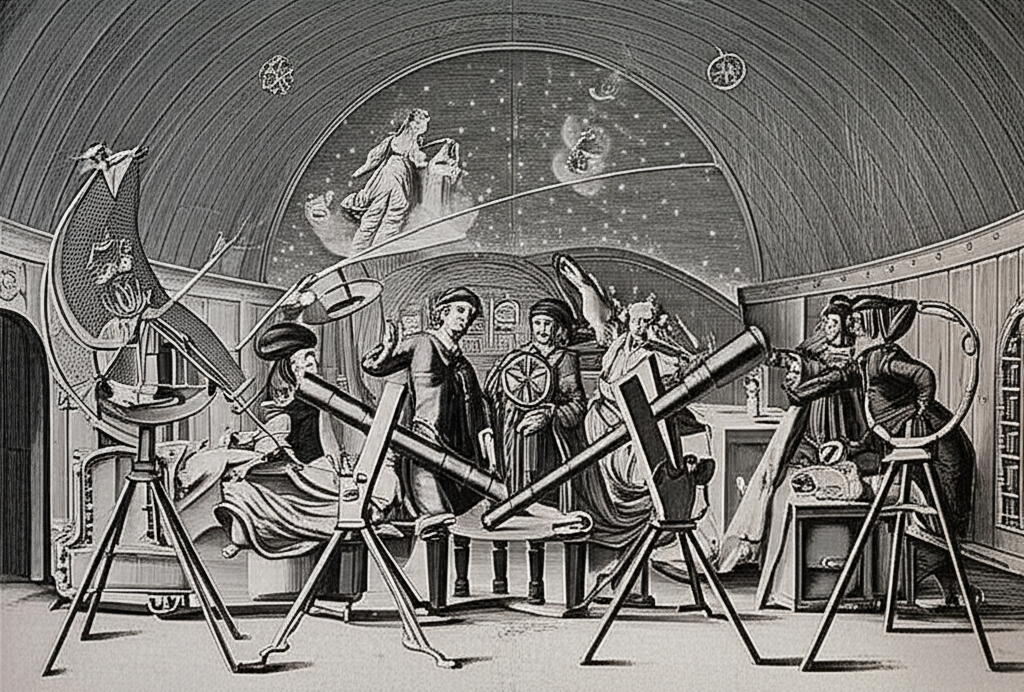
The Renaissance marked a renewed interest in classical learning, coupled with a burgeoning spirit of humanism and empirical observation. This period set the stage for the Scientific Revolution, a transformative era that fundamentally reshaped our understanding of the universe and our methods of acquiring knowledge.
Thinkers like Nicolaus Copernicus, Johannes Kepler, and Galileo Galilei challenged geocentric dogma, establishing a heliocentric model based on observation and mathematical reasoning. Francis Bacon championed inductive reasoning and the experimental method, advocating for knowledge derived from experience rather than pure speculation. René Descartes, with his famous dictum "Cogito, ergo sum," sought to establish knowledge on an unshakeable foundation of reason, ushering in modern philosophy and emphasizing systematic doubt. This period witnessed an undeniable acceleration in the progress of scientific knowledge, shifting humanity's perspective from Earth-centric to cosmos-aware.
The Enlightenment and the Age of Reason: Systematizing Knowledge
The Enlightenment further cemented the emphasis on reason, individual liberty, and systematic inquiry. Philosophers like John Locke, Jean-Jacques Rousseau, and Voltaire championed empirical observation, rational discourse, and human rights. This era saw the ambitious project of the Encyclopédie, a monumental attempt to compile all human knowledge systematically, reflecting a deep belief in the power of education and the progress of human understanding.
Immanuel Kant, a pivotal figure, critically examined the limits and capacities of human reason itself, synthesizing elements of rationalism and empiricism. His work profoundly influenced subsequent philosophical thought, demonstrating that knowledge is not merely received but actively constructed by the mind. The progress of knowledge during this period was characterized by a drive to organize, categorize, and critically evaluate all aspects of human experience.
Modernity and Beyond: Accelerating Evolution and New Frontiers
The 19th and 20th centuries witnessed an unprecedented explosion in the evolution of knowledge. Charles Darwin's theory of evolution revolutionized biology and our understanding of life itself, while figures like Marx and Freud offered new lenses through which to view society and the human psyche. The specialization of scientific disciplines led to rapid progress in physics, chemistry, and medicine, yielding technologies that transformed daily life.
The advent of the information age has further accelerated this evolution, making vast amounts of knowledge accessible globally. While this presents new challenges in terms of discerning truth and managing information overload, it also offers unparalleled opportunities for interdisciplinary collaboration and the rapid dissemination of discoveries. The progress continues, with humanity constantly pushing the boundaries of what is known and knowable.
Markers of Knowledge Progress
While not always linear, the progress of human knowledge can be identified through several key characteristics:
- Increased Predictive Power: Our ability to accurately predict natural phenomena (e.g., eclipses, weather patterns) and the outcomes of experiments has dramatically improved.
- Greater Explanatory Scope: Theories become more comprehensive, explaining a wider range of phenomena with fewer assumptions.
- Enhanced Precision and Detail: Our understanding moves from general concepts to highly detailed, quantifiable models.
- Falsifiability and Self-Correction: The development of methodologies that allow for the testing and refutation of hypotheses, leading to continuous refinement.
- Interconnectedness: Knowledge across different disciplines becomes more integrated, revealing underlying unity in the cosmos.
- Technological Application: The ability to apply theoretical knowledge to solve practical problems and create new tools.
The Enduring Quest
The history of human knowledge is a testament to our species' remarkable capacity for inquiry, adaptation, and intellectual growth. From the earliest philosophical stirrings to the complexities of modern science, the evolution of our understanding has been a journey of trial, error, and profound insight. The Great Books of the Western World stand as a monument to this ongoing quest, a living record of humanity's persistent drive to unravel the mysteries of existence and to build upon the knowledge of those who came before. The pursuit of progress in understanding remains an inherent, defining characteristic of the human condition.
📹 Related Video: What is Philosophy?
Video by: The School of Life
💡 Want different videos? Search YouTube for: ""History of Western Philosophy animated" or "The Scientific Revolution explained""