

The Unfolding Tapestry: A Historical Evolution of Government Forms
The story of humanity is inextricably linked with the development of its political structures. From the earliest communal arrangements to the complex nation-states of today, the form of government has undergone a profound historical evolution, reflecting our changing understanding of power, justice, and community. This journey is not a linear progression but a dynamic interplay of innovation, crisis, and philosophical inquiry, a constant process of change that continues to reshape our collective destiny. Understanding this evolution is crucial for grasping the philosophical underpinnings of our present and the possibilities for our future.
From Kinship to Kingship: Early Forms of Governance
In the nascent stages of human civilization, governance was often rooted in kinship and tribal affiliations. Decision-making might have been communal, guided by elders or charismatic leaders, where custom and tradition held sway. As societies grew in size and complexity, the need for more structured authority emerged, driven by factors like resource management, defense, and the administration of justice.
- Tribal Councils/Chiefdoms: Early forms where authority was often decentralized or vested in a single leader based on merit, age, or spiritual connection.
- Early Monarchies: The consolidation of power, often linked to religious authority or military prowess, leading to hereditary rule. This marked a significant shift from horizontal, egalitarian structures to vertical, hierarchical ones.
The transition from fluid, informal leadership to more rigid, institutionalized power structures laid the groundwork for the diverse forms of government that would follow.
The Classical Crucible: Ancient Greece and Rome
The classical world, particularly Ancient Greece and Rome, provided the intellectual and practical crucible for many foundational government forms and the philosophical debates surrounding them. The thinkers of this era, whose works form the bedrock of the Great Books of the Western World, meticulously analyzed the strengths and weaknesses of different systems.
Aristotle's Classification and Cycles
Aristotle, in his Politics, famously categorized governments based on the number of rulers and their ethical orientation:
| Number of Rulers | Good Form (Rule for the Common Good) | Corrupt Form (Rule for Self-Interest) |
|---|---|---|
| One | Monarchy | Tyranny |
| Few | Aristocracy | Oligarchy |
| Many | Polity (Constitutional Republic) | Democracy (Mob Rule) |
Aristotle also posited a cyclical theory of political change, where one form could naturally decay into its corrupt counterpart, leading to revolt and the emergence of a new system. This idea of cyclical evolution underscores the inherent instability and transformative potential within any given political structure.
The Roman Experiment: Republic to Empire
Rome's journey from a nascent monarchy to a powerful republic, and ultimately to an expansive empire, illustrates a different kind of evolution. The Roman Republic, with its complex system of checks and balances, elected magistrates, and senatorial authority, was an ambitious attempt to balance aristocratic and popular influence. However, internal strife, military expansion, and the rise of powerful individuals eventually led to its transformation into an autocratic empire, demonstrating how even well-designed systems can succumb to the pressures of power and ambition.
Medieval Feudalism and the Rise of Nation-States
Following the collapse of the Roman Empire, Europe entered a period characterized by feudalism. This was not a centralized government but a decentralized system of reciprocal obligations, where land tenure and military service defined social and political relationships. Authority was fragmented among kings, lords, and the Church, with loyalty often being local rather than national.
However, the seeds of future nation-states were sown during this period. The gradual consolidation of royal power, the development of common law, and the emergence of national identities slowly chipped away at feudal fragmentation. The philosophical debates of the era, often influenced by Christian theology and rediscovered classical texts, began to explore the nature of legitimate authority and the relationship between ruler and ruled.
The Enlightenment and the Birth of Modern Governance
The Enlightenment marked a pivotal moment in the historical evolution of government. Philosophers like John Locke, Jean-Jacques Rousseau, and Thomas Hobbes, drawing from the experiences of civil wars and religious conflicts, articulated groundbreaking theories about human rights, social contracts, and the purpose of the state.
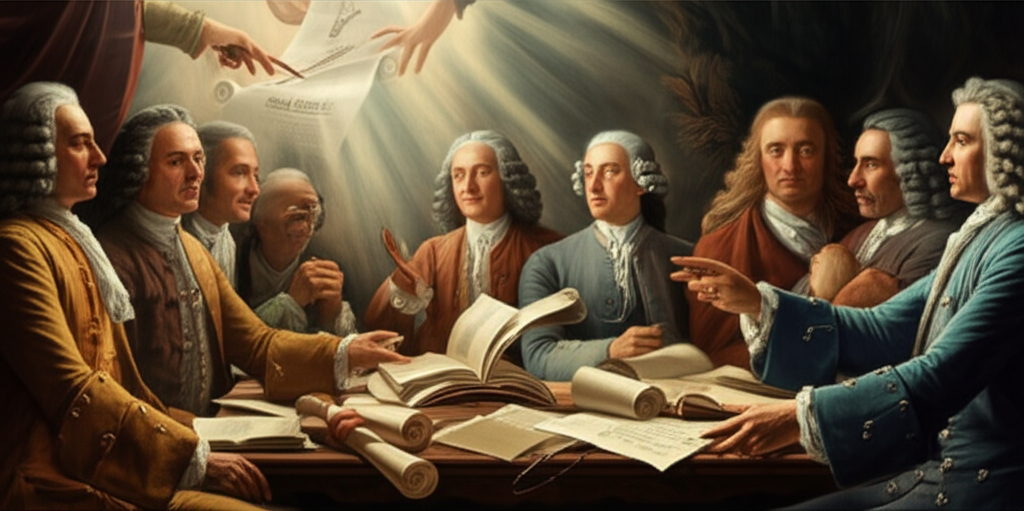
- Social Contract Theory: The idea that government derives its legitimacy from the consent of the governed, rather than divine right or brute force. This was a radical departure from previous justifications for authority.
- Separation of Powers: Montesquieu's advocacy for dividing governmental authority into legislative, executive, and judicial branches to prevent tyranny.
- Popular Sovereignty: The belief that ultimate political authority resides in the people.
These ideas fueled revolutions in America and France, leading to the establishment of constitutional republics and democracies, where citizens had a say in their governance. This period witnessed a significant change in the very definition of who holds power and for what purpose.
The 20th Century and Beyond: Challenges and Adaptations
The 20th century presented an unprecedented array of challenges and further evolution in governmental forms. The rise of totalitarian regimes (fascism, communism) demonstrated the fragility of democratic institutions and the dangers of unchecked state power. World wars, economic depressions, and ideological conflicts forced societies to re-evaluate their political structures.
In response, many nations consolidated democratic practices, expanded human rights, and developed international organizations to address global challenges. The post-colonial era saw the emergence of numerous new states, each grappling with the task of forging stable and legitimate forms of government.
Today, the evolution continues with debates around:
- Global Governance: The need for international cooperation on issues like climate change, pandemics, and economic stability.
- Digital Democracy: The impact of technology on citizen participation and government transparency.
- Identity Politics: The challenge of balancing individual rights with the demands of diverse groups within a pluralistic society.
The history of government forms is a testament to humanity's ongoing quest for order, justice, and freedom. It is a narrative of continuous change, driven by philosophical reflection, societal pressures, and the enduring human desire to shape a better collective future.
Further Philosophical Inquiry:
📹 Related Video: ARISTOTLE ON: The Nicomachean Ethics
Video by: The School of Life
💡 Want different videos? Search YouTube for: "Aristotle Politics Summary"
📹 Related Video: PLATO ON: The Allegory of the Cave
Video by: The School of Life
💡 Want different videos? Search YouTube for: "Social Contract Theory Explained"