

The Unfolding Tapestry: A Historical Evolution of Government Forms
The journey of human societies is inextricably linked to the Evolution of their governance. From the nascent stirrings of communal living to the complex nation-states of today, the form and function of Government have undergone profound and often tumultuous Change throughout History. This article delves into this fascinating progression, tracing the major shifts in political organization as humanity has grappled with the enduring questions of power, justice, and order, drawing insights from the foundational texts compiled in the Great Books of the Western World.
Beginnings: From Kinship to Kingship
In the earliest chapters of human History, Government as we understand it was rudimentary, often indistinguishable from the social fabric of the family or tribe. Leadership emerged organically, based on age, wisdom, strength, or spiritual authority.
- Primitive Communalism: Decisions were often made by consensus among elders or adult members, with leadership being situational and temporary.
- Tribal Chieftainships: As groups grew larger and more settled, the need for more permanent leadership arose. Chieftains or patriarchs, often drawing authority from lineage or demonstrated prowess, began to consolidate power.
The transition from these informal structures to more formalized systems marked a crucial turning point. The concept of a single, powerful ruler, often imbued with divine sanction, began to take root, laying the groundwork for the earliest states.
The Rise and Fall of Ancient Architectures
The ancient world witnessed the birth of sophisticated political theories and diverse Government forms, many of which continue to resonate today.
The Enduring Appeal of Monarchy
One of the most pervasive forms of early Government was monarchy – rule by a single individual, typically hereditary. From the pharaohs of Egypt to the kings of ancient Mesopotamia, monarchs often claimed divine right or a direct connection to the gods, legitimizing their absolute authority. This system offered stability and a clear chain of command, crucial for large-scale projects and defense.
Oligarchy and Aristocracy: Rule by the Few
As societies became more stratified, wealth and lineage often dictated who held power.
- Oligarchy: Rule by a small group of individuals, often the wealthy or a dominant clan. Power was concentrated, leading to potential corruption and suppression of the broader populace.
- Aristocracy: A specific form of oligarchy where power rests with the 'best' – typically a noble class, believed to be inherently superior due to birth, virtue, or military prowess. Plato, in his Republic, explores the ideal of an aristocracy ruled by philosopher-kings.
The Athenian Experiment: Democracy's Dawn
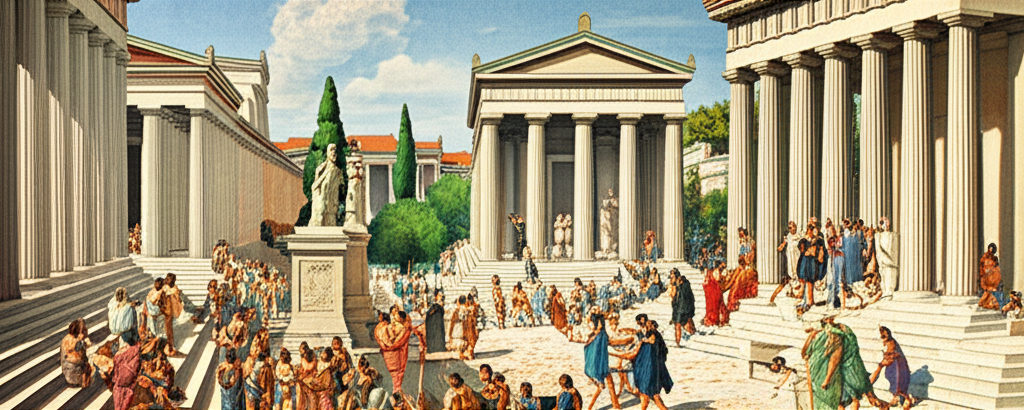
Perhaps the most revolutionary Change in ancient Government came with the Athenian experiment in democracy. Direct democracy, where citizens actively participated in decision-making, was a radical departure. While limited to a segment of the population (excluding women, slaves, and foreigners), it established foundational principles of citizen involvement and accountability.
Key Features of Athenian Democracy:
- Direct Participation: Citizens voted on laws and policies directly.
- Lottery and Election: Officials were chosen by lot or election, promoting broad participation.
- Public Debate: The Agora served as a forum for vigorous public discourse.
The Roman Republic: A Balance of Powers
Rome's contribution to the Evolution of Government was the Republic, a sophisticated system that sought to balance the power of the few with the voice of the many. It featured elected officials, a Senate, and assemblies, creating a system of checks and balances designed to prevent tyranny. The Roman Republic's emphasis on civic virtue, rule of law, and a strong legal framework profoundly influenced later political thought.
Medieval Transitions and Absolute Power
Following the fall of Rome, Europe entered a period dominated by feudalism. Power became highly decentralized, fragmented among lords, vassals, and the Church. This system, while providing local order, lacked centralized Government authority.
- Feudalism: A hierarchical system where land ownership and loyalty formed the basis of political and military power.
- The Church: Wielded immense spiritual and temporal power, often challenging secular rulers.
Over centuries, monarchs gradually reasserted their authority, leading to the age of Absolutism. Kings claimed absolute power, often justified by divine right, centralizing control over vast territories and laying the groundwork for modern nation-states. Louis XIV of France epitomized this form of Government.
The Enlightenment and Modern Revolutions
The intellectual ferment of the Enlightenment sparked a profound Change in political philosophy, challenging the legitimacy of absolute monarchy and divine right. Thinkers like John Locke, Jean-Jacques Rousseau, and Montesquieu articulated new theories of Government based on natural rights, social contracts, and the separation of powers.
This intellectual Evolution fueled revolutions in America and France, leading to the establishment of republics and constitutional monarchies.
Key Principles of Enlightenment-Inspired Government:
- Popular Sovereignty: Government derives its authority from the consent of the governed.
- Constitutionalism: Written constitutions limit the power of Government and protect individual rights.
- Separation of Powers: Dividing governmental authority into legislative, executive, and judicial branches to prevent tyranny.
- Rule of Law: All individuals, including rulers, are subject to the law.
The 20th Century and Beyond: Experimentation and Adaptation
The 20th century witnessed an unprecedented array of governmental experiments and ideological clashes. The rise of communism, fascism, and various forms of authoritarianism challenged liberal democracies, leading to global conflicts and profound societal restructuring.
The post-World War II era saw the proliferation of democratic Government forms, often with variations like parliamentary systems, presidential systems, and federal structures. Decolonization brought new nations into being, each grappling with the task of establishing stable and legitimate Government.
Today, the Evolution of Government continues. Global challenges like climate Change, economic inequality, and technological disruption compel states to adapt and innovate. The ongoing debate between individual liberty and collective security, between centralized authority and decentralized power, remains at the heart of political discourse.
Conclusion: The Enduring Quest for Good Government
The Historical Evolution of Government forms is a testament to humanity's continuous struggle to organize itself, to manage power, and to pursue justice. From the ancient city-states to modern global governance, each Change reflects a response to new social, economic, and philosophical realities. The Great Books of the Western World remind us that these questions are perennial, and the quest for the ideal Government remains a dynamic and ongoing endeavor, forever shaped by the forces of History and the relentless engine of Evolution.
YouTube Video Suggestions:
-
📹 Related Video: PLATO ON: The Allegory of the Cave
Video by: The School of Life
💡 Want different videos? Search YouTube for: ""The History of Political Philosophy - Crash Course Philosophy #1" or "Plato's Republic: Crash Course Philosophy #12""
2. ## 📹 Related Video: PLATO ON: The Allegory of the Cave
Video by: The School of Life
💡 Want different videos? Search YouTube for: ""The Roman Republic: Crash Course World History #10" or "John Locke and the Social Contract Theory""