

The Unfolding Tapestry: A Philosophical Journey Through the Evolution of Government Forms
The history of human civilization is inextricably linked to the evolution of its governing structures. From the earliest tribal councils to the complex democracies and authoritarian regimes of today, the form of government has been in a state of perpetual change, reflecting humanity's ongoing struggle with power, justice, and order. This article embarks on a philosophical journey through the major transformations in political organization, drawing insights from the foundational texts that have shaped our understanding of the state. We will explore how different eras conceived of legitimate rule, the forces that drove these shifts, and the enduring questions that continue to define our political landscape.
Foundations and First Principles: From Tribe to Polis
The earliest forms of human organization were likely clan-based or tribal, governed by elders, chieftains, or religious figures. Authority was often charismatic, customary, and deeply intertwined with kinship. As societies grew in complexity and scale, the need for more formalized structures became apparent, giving rise to early monarchies and oligarchies.
It was in the ancient Greek city-states, the polis, that political philosophy truly began to flourish, giving us the first systematic analyses of government. Thinkers like Plato and Aristotle, whose works are cornerstones of the Great Books of the Western World, meticulously categorized and critiqued the forms of rule they observed.
- Monarchy: Rule by one, often hereditary.
- Aristocracy: Rule by the best, or a noble elite.
- Oligarchy: Rule by a few, typically the wealthy.
- Tyranny: Corrupt rule by one, for self-interest.
- Democracy: Rule by the many, or the people.
- Polity: Aristotle's preferred "mixed" government, blending elements of oligarchy and democracy.
Plato, in his Republic, famously outlined a progression of decline from an ideal aristocracy (or kingship of the wise) to timocracy, oligarchy, democracy, and finally, tyranny, each representing a corruption of the previous form. Aristotle, in his Politics, offered a more empirical analysis, examining the practicalities and virtues of various constitutions. These early inquiries laid the groundwork for millennia of political thought, establishing a vocabulary and a framework for understanding the evolution of government.
Classical Ideals and Imperial Shifts
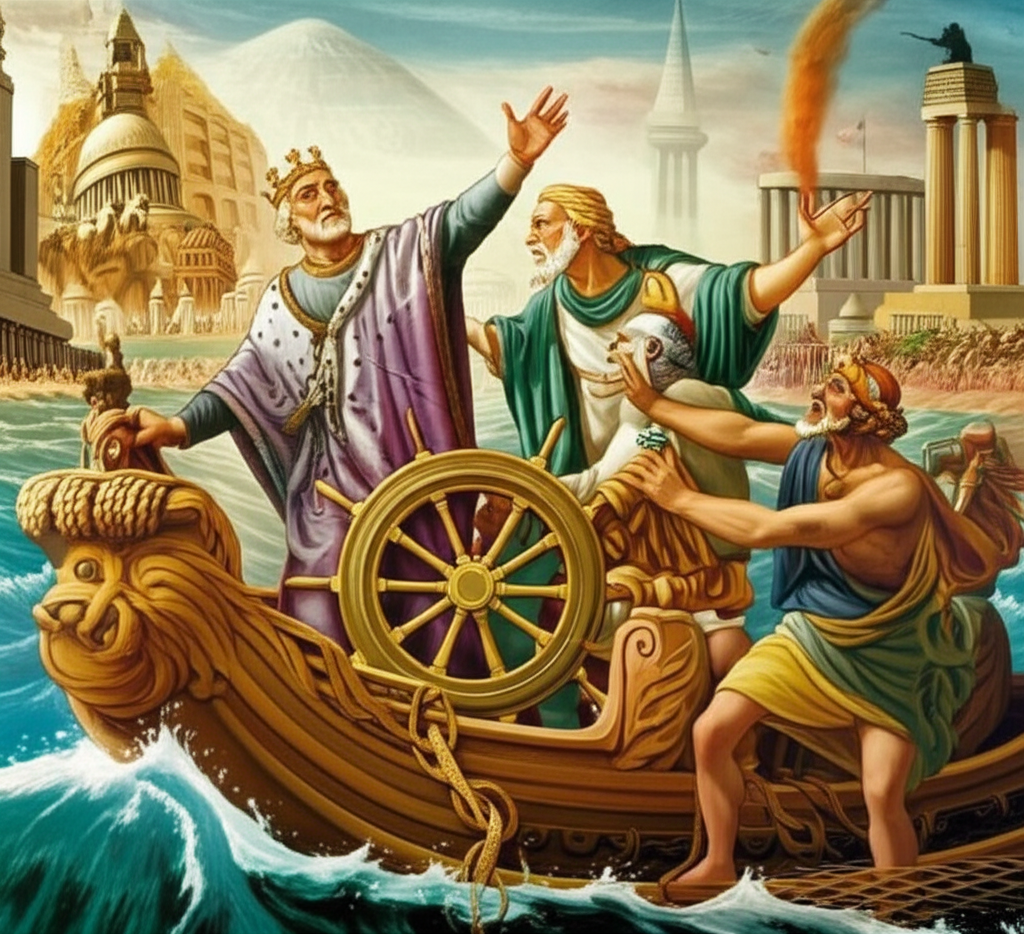
The Roman Republic, drawing inspiration from Greek thought, developed a sophisticated government often described as a "mixed constitution," incorporating elements of monarchy (consuls), aristocracy (Senate), and democracy (popular assemblies). This system, lauded by Polybius, aimed to balance powers and prevent the excesses of any single form. However, the internal stresses of expansion and power struggles ultimately led to its change into the Roman Empire, a form of imperial monarchy that, despite its initial success, eventually succumbed to its own vastness and internal contradictions. This shift from republic to empire is a profound example of how external pressures and internal dynamics drive the evolution of political forms.
The Medieval World: Divine Authority and Feudal Fragmentation
Following the fall of Rome, Europe entered a period characterized by feudalism, where power was decentralized and tied to land ownership and loyalty. Government was fragmented, with kings often holding limited authority over powerful nobles. Simultaneously, the Church emerged as a dominant unifying force, asserting a spiritual authority that often rivaled secular rulers. The concept of the "Divine Right of Kings" became a prevalent justification for monarchical rule, positing that a monarch's authority was granted by God, not by the consent of the governed. This era saw a different kind of evolution, where the government was often a complex interplay between secular and ecclesiastical powers, as explored in the theological and political writings of figures like Augustine and Thomas Aquinas.
The Enlightenment and the Birth of Modern States
The Age of Enlightenment marked a radical change in political thought, shifting the focus from divine right to human reason and individual rights. Philosophers like Thomas Hobbes, John Locke, and Jean-Jacques Rousseau, central to the Great Books, developed the concept of the "social contract," providing new theoretical justifications for government.
- Hobbes (Leviathan): Argued for an absolute sovereign to prevent the chaos of the "state of nature," where life is "solitary, poor, nasty, brutish, and short."
- Locke (Two Treatises of Government): Proposed that government derives its legitimacy from the consent of the governed, primarily to protect natural rights (life, liberty, and property), and can be overthrown if it fails to do so.
- Rousseau (The Social Contract): Advocated for a government based on the "general will" of the people, emphasizing popular sovereignty and direct democracy.
These ideas fueled revolutions and the rise of modern nation-states, leading to the establishment of republics and constitutional monarchies that prioritized individual liberties and representative government. The American and French Revolutions are direct consequences of this intellectual evolution, demonstrating how philosophical ideas can profoundly alter the practical forms of rule.
Contemporary Forms and Future Trajectories
In the 20th and 21st centuries, the evolution of government has continued unabated. We have witnessed the rise of totalitarian regimes (communism, fascism), the widespread adoption of various forms of democracy, and the emergence of hybrid systems. The interconnectedness of the modern world, technological advancements, and global challenges (climate change, pandemics, economic inequality) constantly exert pressure on existing government forms, forcing adaptation and re-evaluation.
The history of government is not a linear progression towards an ideal state, but rather a dynamic cycle of experimentation, adaptation, and occasional regression. The fundamental questions posed by the Great Books – about justice, power, legitimacy, and the best way for humans to live together – remain as relevant today as they were millennia ago. Understanding this long evolution is crucial for navigating the continuous change in our political world and for shaping the government forms of the future.
Further Philosophical Exploration
-
📹 Related Video: PLATO ON: The Allegory of the Cave
Video by: The School of Life
💡 Want different videos? Search YouTube for: "Plato Aristotle Government Forms"
-
📹 Related Video: KANT ON: What is Enlightenment?
Video by: The School of Life
💡 Want different videos? Search YouTube for: "Social Contract Theory Hobbes Locke Rousseau Explained"