

The Enduring Recurrence: Unpacking the Historical Cycles of Revolution
A Perpetual Dance of Power and Discontent
The history of humanity is not a linear progression, but often a cyclical drama, nowhere more evident than in the recurring phenomenon of Revolution. From ancient city-states to modern nations, societies repeatedly find themselves on the precipice of profound upheaval, driven by an intricate web of grievances, ideologies, and the perennial human struggle for justice or dominance. This article delves into the philosophical and historical patterns that underscore these cycles, observing how Change, often violent and disruptive, acts as a relentless engine, reshaping Government and society across the ages. We will explore the insights offered by the Great Books of the Western World, revealing that while the specific triggers and outcomes may vary, the fundamental dynamics of revolutionary History echo through time.
The Anatomy of Upheaval: Recognizing the Stages of Revolution
One might be tempted to view each Revolution as a unique event, born of specific circumstances. However, a deeper look into History reveals a startling consistency in their unfolding, a series of phases that often precede, define, and follow the dramatic overthrow of existing Government structures. This cyclical pattern suggests that human societies, under certain pressures, tend to respond in predictable ways, leading to inevitable periods of intense Change.
Common Phases in the Revolutionary Cycle:
- Pre-revolutionary Discontent: Characterized by widespread dissatisfaction with the existing Government, often fueled by economic hardship, social inequality, or political oppression. Intellectuals articulate grievances, and public trust erodes.
- Initial Uprising: A spark, often a specific event or crisis, ignites open rebellion. The old regime falters, and power shifts rapidly, often violently, to new, often disparate, factions.
- Radical Phase: The initial moderate leaders are often superseded by more extreme elements, who push for more fundamental and sweeping Change. This phase can involve purges, terror, and attempts to completely remake society.
- Thermidorian Reaction: A period of exhaustion and disillusionment sets in, leading to a backlash against the excesses of the radical phase. There is a move towards moderation, order, and often a more authoritarian form of Government emerges to stabilize the nation.
- Consolidation and New Order: The dust settles, and a new political and social order is established. This new order, while different from the old, often contains elements of both the pre-revolutionary and revolutionary ideals, or it may simply be a new iteration of authoritarian rule. The cycle then begins to subtly prepare for its next iteration, as the new Government itself begins to accumulate its own flaws and discontents.
Philosophical Lenses on Governmental Cycles
The idea that forms of Government are not static but subject to an inexorable cycle of Change is a theme deeply embedded in classical philosophy. Thinkers from antiquity observed that the ideal state often degenerated into tyranny, only for a new form to emerge from its ashes.
Great Minds and the Shifting Sands of Power:
| Philosopher | Key Work | Cycle of Government Forms (Simplified) | Core Idea |
|---|---|---|---|
| Plato | The Republic | Aristocracy → Timocracy → Oligarchy → Democracy → Tyranny | Each form degenerates due to its inherent flaws, leading to the rise of the next, with tyranny being the ultimate outcome of unchecked freedom. |
| Aristotle | Politics | Monarchy/Tyranny → Aristocracy/Oligarchy → Polity/Democracy (and back again) | Governments cycle between "correct" forms (rule for the common good) and "deviant" forms (rule for self-interest), with Revolution being a constant threat. |
| Machiavelli | Discourses on Livy | Principality → Tyranny → Aristocracy → Oligarchy → Democracy → Anarchy → Principality (a "fatal circle") | States are subject to a natural, inevitable cycle of growth and decay, driven by human nature and the pursuit of power. Foresaw Change as inherent to political life. |
These philosophical frameworks, drawn from the Great Books of the Western World, suggest that Revolution is not merely an aberration but a predictable, even necessary, component of political evolution. The failure of one form of Government to address the needs and aspirations of its people inevitably sows the seeds for its own overthrow, driving the relentless engine of Change.
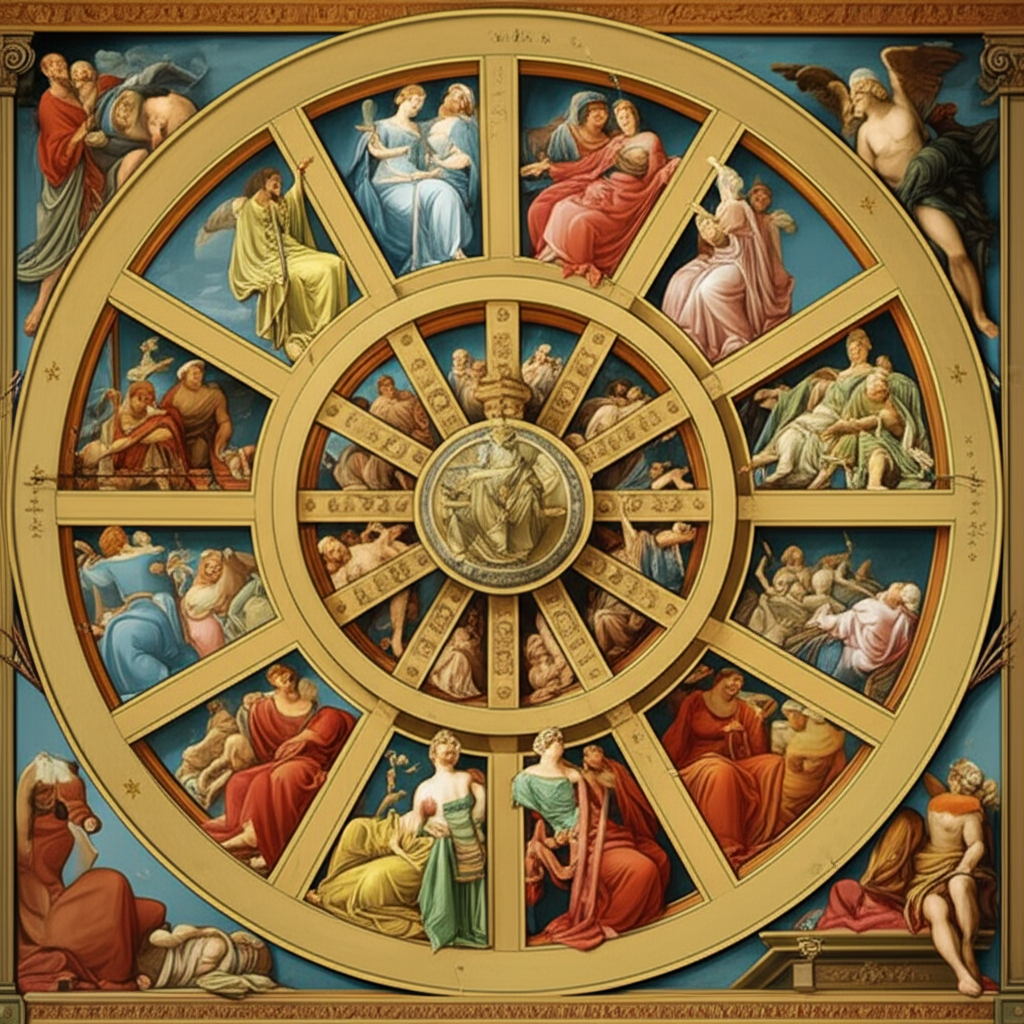
The Irresistible Force of Change and the Human Element
Why do these cycles persist? At their core, they reflect the dynamic tension between the desire for order and the impulse for Change. While Government strives for stability, human societies are never static. Economic shifts, technological advancements, evolving moral sensibilities, and the enduring quest for freedom constantly exert pressure on existing structures. When a Government becomes too rigid, too unresponsive, or too oppressive, the accumulated pressure inevitably leads to an explosion—a Revolution.
Karl Marx, though often seen through a lens of linear progression towards communism, also highlighted the cyclical nature of class struggle as the driving force of History. Each epoch, for Marx, contained the seeds of its own destruction, with the inherent contradictions between ruling and oppressed classes leading to inevitable revolutionary Change. This perspective, too, finds its echo in the broader historical cycles, where new forms of Government emerge from the ashes of the old, only to face their own challenges and eventual transformations.
Understanding these cycles is not merely an academic exercise; it offers profound insights into the present and future. It reminds us that no Government is immune to the forces of Change and that the seeds of future Revolution are often sown in the present-day injustices and imbalances. The History of Revolution is, in essence, the History of humanity's continuous struggle to redefine itself and its relationship with power.
Conclusion: A Continuous Re-evaluation
The Historical Cycles of Revolution demonstrate a profound truth: societies are living entities, constantly evolving, adapting, and, at times, violently remaking themselves. From the ancient Greek polis to the modern nation-state, the patterns of discontent, uprising, radical Change, and eventual re-stabilization echo through the annals of History. The insights gleaned from the philosophers of the Great Books of the Western World remind us that the nature of Government, the inevitability of Change, and the potential for Revolution are not isolated events but interconnected threads in the grand tapestry of human experience. We are, it seems, forever engaged in a dance with these powerful forces, continually re-evaluating the structures that govern us, often through the crucible of revolutionary upheaval.
📹 Related Video: PLATO ON: The Allegory of the Cave
Video by: The School of Life
💡 Want different videos? Search YouTube for: ""Plato's Republic political cycle explained""
📹 Related Video: PLATO ON: The Allegory of the Cave
Video by: The School of Life
💡 Want different videos? Search YouTube for: ""Machiavelli Discourses on Livy governmental cycles""