

The Enduring Tides of Revolution: A Cyclical View of History
The grand tapestry of human history is not a linear march but a swirling, often turbulent, eddy of change. Among its most dramatic manifestations are revolutions – those seismic shifts that reconfigure societies, overthrow established orders, and redefine the very essence of government. From the ancient polis to the modern nation-state, the pattern emerges with striking regularity: periods of stable, albeit sometimes oppressive, rule give way to widespread discontent, culminating in a violent or profound upheaval, only for a new order to eventually solidify, often bearing uncanny resemblances to the old. This article explores these historical cycles of revolution, drawing insights from the vast reservoir of Western thought to understand not just what happens, but why it seems destined to repeat.
Unpacking the Engine of Societal Change
At its core, a revolution is a radical and often sudden transformation of the fundamental structures of power within a society. It is more than mere rebellion; it aims to dismantle and rebuild, driven by a profound dissatisfaction with the existing order. The great thinkers, from Plato and Aristotle observing the rise and fall of Greek city-states to Machiavelli dissecting the mechanics of power, and later Locke, Rousseau, and Marx analyzing the social contract and class struggle, have all grappled with this enduring phenomenon. They understood that change is not an external force but an intrinsic part of the human condition and the political landscape.
- Plato's Republic offered early insights into the degeneration of ideal states, outlining a cycle from aristocracy to timocracy, oligarchy, democracy, and finally tyranny, each a reaction to the excesses and failures of its predecessor.
- Aristotle's Politics meticulously cataloged the causes of sedition and revolution, emphasizing economic inequality, the arrogance of the powerful, and the pursuit of disproportionate gain as key accelerators of unrest.
These ancient observations lay the groundwork for understanding that revolutions are rarely isolated incidents but rather culminations of simmering tensions, economic disparities, and ideological clashes that build over time.
The Anatomy of Upheaval: Common Causes and Stages
While each revolution possesses unique characteristics, a close examination of history reveals recurring catalysts and a broadly discernible progression of events.
Common Causes of Revolution
The seeds of revolution are often sown in fertile ground prepared by systemic failures and deep-seated grievances. These can be categorized broadly:
- Economic Inequality: Stark disparities in wealth and opportunity, leading to widespread poverty amidst opulence, are powerful drivers. The French Revolution's cries of "bread!" or the Bolshevik Revolution's focus on land redistribution are potent examples.
- Political Oppression and Lack of Representation: When a government becomes unresponsive, autocratic, or denies its citizens basic rights and a voice in their own governance, the demand for liberty and self-determination grows irresistible.
- Ideological Ferment: New ideas about justice, rights, and the legitimate basis of government can inspire and mobilize populations. The Enlightenment's emphasis on reason and individual rights fueled revolutions across the Atlantic.
- Social Disintegration: Breakdown of traditional social structures, institutions, and moral norms can create a vacuum ripe for radical change.
- Weak or Ineffective Government: A regime perceived as corrupt, indecisive, or incapable of addressing national crises often loses its legitimacy and capacity to maintain order.
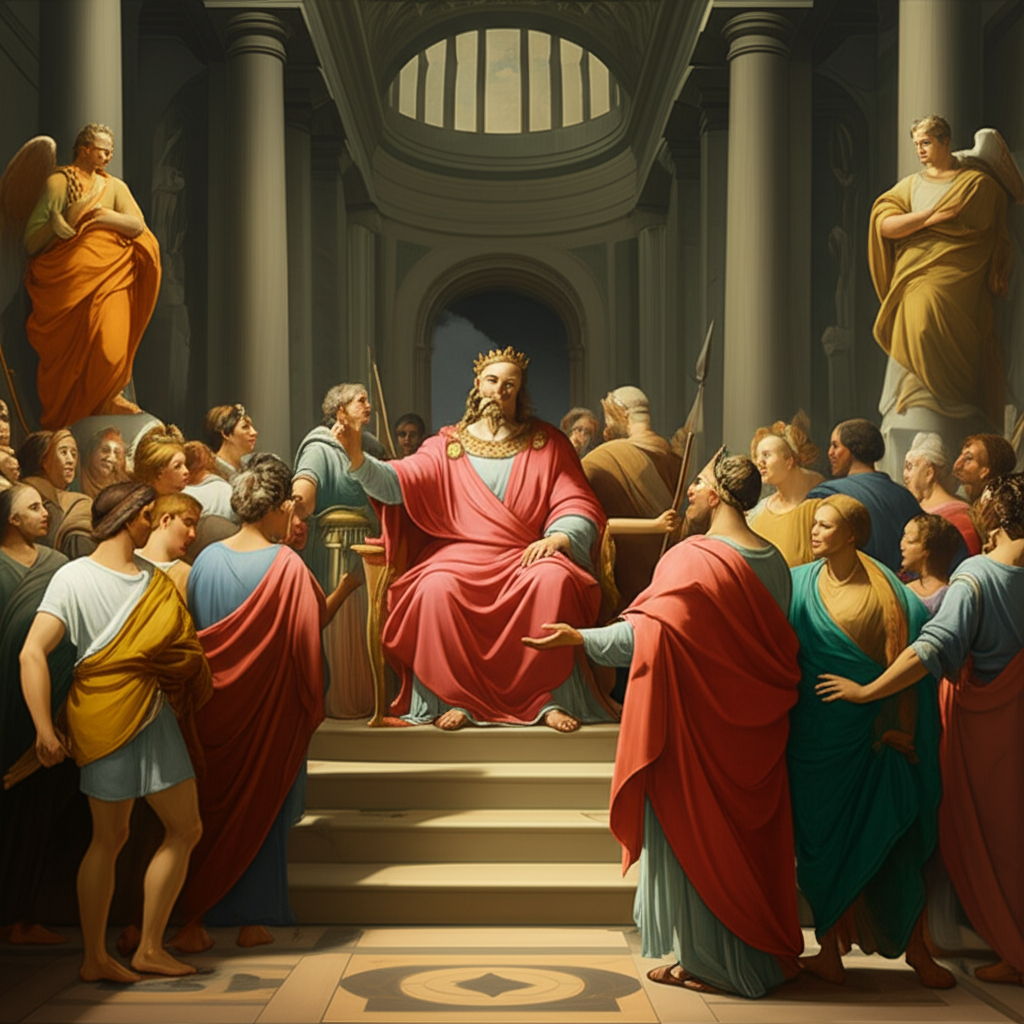 shown in a continuous loop, perhaps with an ancient Greek philosopher observing from the periphery, symbolizing the timeless philosophical analysis of these cycles.)
Stages of Revolutionary Change
Historians and political scientists have often identified a general, though not rigid, progression through which many revolutions unfold:
- Incipient Stage (The Ferment): Characterized by widespread discontent, intellectual critique of the existing order, and growing public agitation, often fueled by economic hardship or political repression.
- Moderate Stage (Initial Uprising & Reform): The initial overthrow of the old regime, often led by moderate reformers aiming for constitutional change rather than radical transformation. Promises of liberty and equality are common.
- Radical Stage (The Reign of Terror/Purification): As moderates struggle to consolidate power or address deeper issues, more extreme factions gain ascendancy. This stage is often marked by violence, purges of perceived enemies, and attempts at fundamental societal restructuring (e.g., the Jacobin phase of the French Revolution).
- Thermidorian Reaction (Consolidation & Reaction): The radical phase exhausts itself, leading to a backlash against its excesses. A more conservative, often authoritarian, government emerges, consolidating power and re-establishing order, though rarely fully returning to the status quo ante. Napoleon's rise after the French Revolution is a classic example.
The Philosophical Underpinnings of Revolutionary Cycles
The cyclical nature of revolution is not merely a historical observation but a profound philosophical insight. Thinkers like Jean-Jacques Rousseau explored the concept of the "general will" and the social contract, suggesting that when government deviates too far from the will of the people, its legitimacy dissolves, paving the way for a revolutionary reassertion of popular sovereignty. John Locke, similarly, posited a "right to revolution" when a government systematically violates the natural rights of its citizens.
Karl Marx, observing the industrial change of his era, theorized that history is a chronicle of class struggle, with each epoch defined by the conflict between oppressors and oppressed. For Marx, revolution was the inevitable engine driving society from one mode of production to the next, culminating in a classless society. While his ultimate prediction remains contested, his analysis highlights economic forces as primary drivers of change and upheaval.
These philosophical lenses help us understand that revolutions are not just random acts of violence but often deeply rooted responses to systemic imbalances, the pursuit of justice, or the inherent human desire for freedom and self-determination. The cycle continues because the fundamental challenges of power, inequality, and governance are perennial.
Conclusion: Learning from History's Echoes
The historical cycles of revolution offer a sober reminder that no government or social order is immutable. Change is the only constant, and the pressures that lead to radical upheaval are ever-present. By studying the patterns, causes, and consequences of past revolutions – from the ancient world's constitutional shifts to the modern era's ideological battles – we gain invaluable insight into the delicate balance required to maintain social cohesion and prevent the destructive forces of uncontrolled change. Understanding these cycles is not about predicting the future with certainty, but about recognizing the echoes of the past and perhaps, just perhaps, steering the ship of state with greater wisdom through the turbulent waters of history.
📹 Related Video: What is Philosophy?
Video by: The School of Life
💡 Want different videos? Search YouTube for: ""The Philosophy of Revolution - Crash Course Philosophy""
📹 Related Video: What is Philosophy?
Video by: The School of Life
💡 Want different videos? Search YouTube for: ""Great Books of the Western World: Political Philosophy""