

The Unfolding Tapestry: Historical Cycles of Revolution
The Enduring Echoes of Change
Revolutions, far from being isolated ruptures in the fabric of society, often follow discernible patterns, echoing through the annals of History. This article explores the cyclical nature of Revolution, examining the recurring conditions, catalysts, and consequences that characterize these profound periods of Change. From ancient polis to modern nation-states, the philosophical inquiry into how and why societies overthrow their Government reveals a fascinating, if sometimes tragic, human drama that continues to unfold. Understanding these cycles offers not a deterministic prophecy, but a profound insight into the perennial challenges of governance and the human yearning for justice and self-determination.
The Genesis of Upheaval: Seeds of Discontent
Every great Revolution is born not from a sudden whim, but from a prolonged gestation of grievances and imbalances. Philosophers from Plato to Marx have grappled with the underlying causes that destabilize a Government and propel a populace towards radical Change. These seeds of discontent are remarkably consistent across millennia.
Economic Strain and Social Stratification
A common precursor to revolutionary fervor is profound economic inequality or widespread material hardship. When a significant portion of the population feels exploited, deprived, or perceives the existing economic system as fundamentally unjust, the social contract begins to fray. Aristotle, in his Politics, meticulously cataloged the ways in which disparities in wealth and status could lead to stasis (civil strife) and the overthrow of various constitutions.
- Growing Wealth Gap: An elite few prosper while the masses struggle.
- Economic Downturns: Famines, depressions, or sustained periods of high unemployment.
- Unjust Taxation: Burdens disproportionately placed on the working classes or peasantry.
Erosion of Authority and Legitimacy
Beyond economic woes, the Government's loss of legitimacy is a critical factor. When the ruling power is perceived as corrupt, incompetent, tyrannical, or simply out of touch with the governed, its authority weakens. Locke's concept of the social contract posits that Government derives its just powers from the consent of the governed; when that consent is withdrawn, the people retain the right to alter or abolish it.
- Political Corruption: Abuse of power for personal gain.
- Authoritarianism: Suppression of dissent, denial of fundamental rights.
- Ineffective Governance: Failure to provide essential services or maintain order.
- Intellectual Ferment: New ideas challenging the existing order, often spread by a burgeoning intellectual class.
The Spark Ignites: The Revolutionary Moment
Once the conditions are ripe, a specific event or series of events often serves as the catalyst, transforming latent discontent into active rebellion. This "spark" can be seemingly minor, but it ignites the accumulated tinder of grievance.
| Common Triggers for Revolution | Description |
|---|---|
| Specific Grievances | A particular act of injustice, a new tax, or a brutal crackdown that galvanizes public opinion. |
| Charismatic Leadership | Figures emerge who can articulate the people's frustrations and offer a vision for a new future. |
| Popular Mobilization | Mass protests, demonstrations, or uprisings that demonstrate the collective will for Change. |
| Military Defeat or Weakness | A Government's inability to defend itself externally or suppress internal dissent signals its fragility. |
The role of ideas cannot be overstated here. The Enlightenment philosophers, whose works form a cornerstone of the Great Books of the Western World, provided the intellectual ammunition for revolutions across the globe, challenging the divine right of kings and advocating for popular sovereignty.
The Whirlwind of Transformation: Phases of Revolution
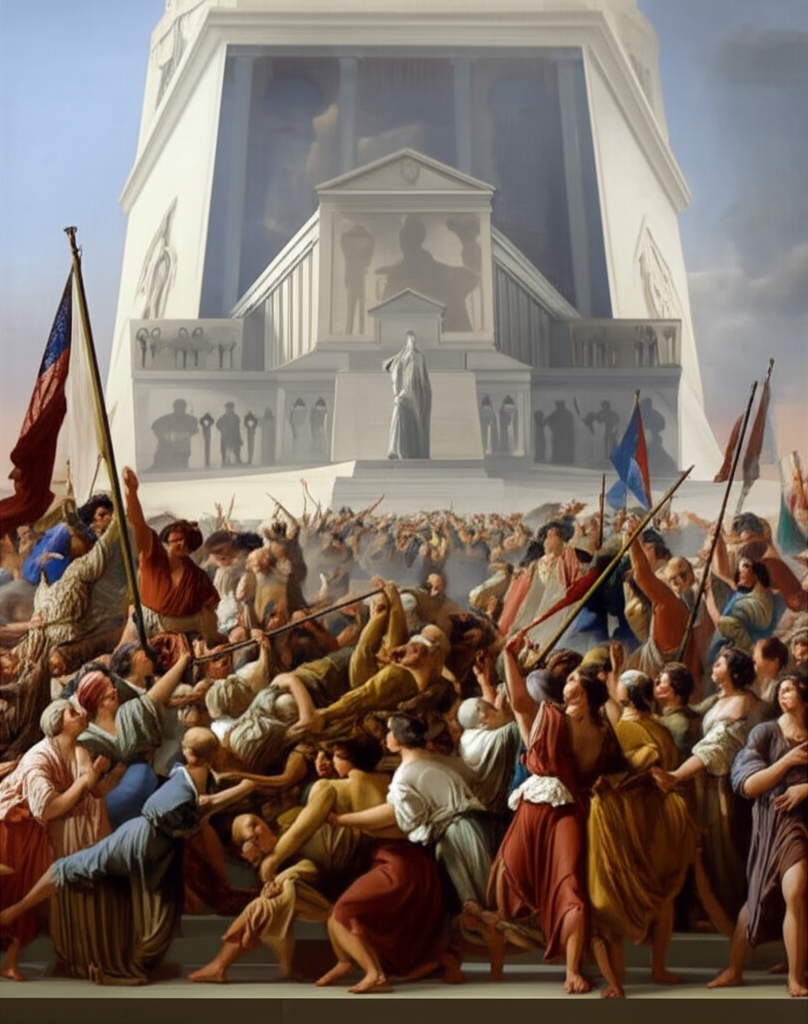
Once a Revolution begins, it often follows a predictable, albeit tumultuous, trajectory, marked by increasing radicalization and the struggle for power. This is where the cyclical nature becomes most apparent, as societies grapple with establishing a new order.
From Idealism to Pragmatism (or Tyranny)
The initial phase of a Revolution is often characterized by widespread idealism, unity, and a shared vision of a better future. However, as the old Government collapses, a power vacuum emerges, leading to intense internal struggles among different factions.
- Initial Euphoria: The overthrow of the old regime, often celebrated with widespread public joy.
- Moderate Phase: Attempts to establish a new, more just Government based on initial revolutionary ideals.
- Radicalization: As external threats or internal divisions grow, more extreme factions gain power, often leading to purges and a "reign of terror" against perceived enemies of the Revolution. Machiavelli's observations on the necessity of ruthlessness in maintaining power are chillingly relevant here.
- Reaction and Consolidation: Exhaustion from continuous upheaval often leads to a desire for stability, paving the way for a strongman or a more authoritarian Government to emerge, consolidating power and often suppressing the very freedoms the Revolution initially championed.
The Aftermath and the Echo: Post-Revolutionary Society
The conclusion of a revolutionary period rarely signifies an end to Change, but rather the establishment of a new equilibrium – often one that carries the echoes of the past and the seeds of future discontent.
The new Government, whether a republic, an empire, or a new form of authoritarianism, must then grapple with the very issues that fueled the Revolution. If the fundamental injustices are not addressed, or if the new power structure merely replicates the oppressive tendencies of the old, the cycle of Change is destined to repeat. History shows us that while the specific actors and ideologies Change, the underlying human desires for freedom, justice, and effective Government remain constant, perpetually driving societies towards transformation.
Key Takeaways from Revolutionary Cycles:
- Inevitability of Change: No Government is immune to the forces of Change.
- The Peril of Unchecked Power: Both old and new regimes can succumb to tyranny.
- The Enduring Power of Ideas: Philosophical and political ideas are potent drivers of transformation.
- The Quest for Legitimacy: Sustainable Government requires the consent and trust of its people.
Further Philosophical Exploration
For those keen to delve deeper into the philosophical underpinnings of these historical cycles, the Great Books of the Western World offer invaluable perspectives. Consider the works of:
- Plato's Republic: For a foundational understanding of the cycles of different forms of Government (timocracy, oligarchy, democracy, tyranny).
- Aristotle's Politics: For a practical and detailed analysis of the causes of Change in constitutions and the nature of revolution.
- Machiavelli's The Prince: For a stark, pragmatic view of acquiring and maintaining power, particularly relevant during revolutionary transitions.
- Locke's Two Treatises of Government and Rousseau's The Social Contract: For the philosophical justification of the right to revolution based on natural rights and popular sovereignty.
These texts, spanning centuries, collectively illuminate the enduring patterns and profound questions surrounding human societies' attempts to govern themselves and the often-violent processes of Change that punctuate their History.
Engage Further:
📹 Related Video: What is Philosophy?
Video by: The School of Life
💡 Want different videos? Search YouTube for: "The Philosophy of Revolution: Great Thinkers"
📹 Related Video: PLATO ON: The Allegory of the Cave
Video by: The School of Life
💡 Want different videos? Search YouTube for: "Historical Cycles of Political Change and Governance"