

The Indispensable Burden: Unpacking the Function of Punishment in Justice
Summary: The function of punishment within the framework of justice is a perennial philosophical quandary, deeply explored throughout the Great Books of the Western World. Far from being a simple act of vengeance, punishment serves a multifaceted duty within society, aiming to uphold law, restore balance, deter future transgressions, and, in some interpretations, even rehabilitate the offender. This article delves into the historical and philosophical underpinnings of punishment's role, examining its evolution from ancient retributive impulses to modern theories of deterrence and rehabilitation, always in tension with the ideal of true justice.
The Enduring Question of Punishment
Since the dawn of organized society, the question of how to respond to wrongdoing has plagued thinkers and lawmakers alike. What is the proper role of punishment? Is it to inflict suffering commensurate with the crime, to prevent future offenses, or to mend the fabric of a broken community? The answers, as we find in the foundational texts of philosophy, are rarely simple, revealing a complex interplay between ethical imperatives, societal needs, and the very definition of justice.
From Plato's dialogues to Kant's critiques, the philosophers grappled with the inherent tension: how can an act of inflicting harm, even sanctioned by law, lead to a more just outcome? The resolution often lies in understanding punishment not merely as a consequence, but as a deliberate social mechanism imbued with distinct functions, each carrying its own moral weight and practical implications.
Historical Lenses: Punishment Through the Ages
The conceptualization of punishment has evolved significantly, reflecting changing societal values and philosophical insights.
-
Ancient Roots: Retribution and Order
In ancient societies, as evidenced in early legal codes and philosophical writings, punishment often served a clear retributive purpose. The principle of lex talionis – "an eye for an eye, a tooth for a tooth" – while seemingly crude, represented an attempt to establish proportionality and prevent escalating cycles of vengeance. For thinkers like Plato, especially in works like Gorgias and Laws, punishment was not merely about inflicting pain but about the moral improvement of the wrongdoer. It was seen as a kind of medicine for the soul, a necessary and often bitter cure to restore the individual to a state of virtue and to reinforce the moral order of the polis. Justice, in this view, demanded that the wicked suffer for their misdeeds, not out of cruelty, but out of a duty to truth and moral health. -
Medieval Thought: Divine Duty and Atonement
With the rise of Christian philosophy, particularly articulated by Thomas Aquinas in his Summa Theologica, punishment acquired an additional layer of meaning. It was understood within a cosmic framework, reflecting divine justice. Human law and its enforcement of punishment were seen as earthly reflections of God's order. Punishment became a means of atonement, a way for the sinner to expiate their wrongs and, ideally, to reconcile with God and the community. The duty to punish was therefore not just a civic obligation but a moral and theological imperative to uphold divine law.
Modern Theories: Diverse Functions of Punishment
The Enlightenment brought new perspectives, challenging purely retributive or religiously-driven views and introducing theories focused on the future rather than solely the past.
Here are the primary modern theories concerning the function of punishment:
-
Retributivism (Backward-Looking): Justice as Deserved Suffering
- Core Idea: Punishment is justified because the offender deserves it. It is a matter of moral desert and restoring a moral balance that was disrupted by the crime.
- Key Proponent: Immanuel Kant, in his Metaphysics of Morals, famously argued that punishment is a categorical imperative – a moral duty owed to the criminal as a rational being, treating them as an end in themselves, not merely a means to an end (like deterrence). To fail to punish a deserving criminal, even if society were to dissolve, would be an injustice. The severity of punishment should be proportional to the gravity of the offense.
- Focus: The crime that has already occurred.
- Keywords: Desert, proportionality, moral balance, duty.
-
Consequentialism (Forward-Looking): Punishment for Future Good
This category encompasses theories that justify punishment based on its beneficial outcomes for society.-
Deterrence:
- Core Idea: Punishment aims to prevent future crimes, either by discouraging the offender (specific deterrence) or by sending a message to others (general deterrence).
- Key Proponent: Jeremy Bentham, a leading utilitarian, argued in An Introduction to the Principles of Morals and Legislation that punishment is an evil, and thus only justifiable if it prevents a greater evil. Its primary function is to maximize overall happiness by reducing crime through fear of consequences.
- Focus: Preventing future crimes.
- Keywords: Prevention, fear, utility, social good.
-
Rehabilitation:
- Core Idea: Punishment should aim to transform the offender into a law-abiding and productive member of society. This might involve education, therapy, or vocational training.
- Focus: Reforming the offender.
- Keywords: Reform, treatment, reintegration, improvement.
-
-
Restorative Justice (Harm-Focused): Repairing the Breach
- Core Idea: A more contemporary approach that focuses on repairing the harm caused by the crime, involving victims, offenders, and the community in a dialogue to address needs and responsibilities. It seeks to restore relationships and community harmony rather than simply inflicting pain.
- Focus: Healing, reconciliation, victim needs, community repair.
- Keywords: Repair, dialogue, reconciliation, community.
The Interplay of Punishment, Law, and Duty
The law serves as the institutionalized framework through which society performs its duty to administer punishment in pursuit of justice. Without a codified law, punishment risks devolving into arbitrary vengeance. The law defines what constitutes a crime, prescribes the range of acceptable penalties, and establishes the procedures for determining guilt and imposing sentences.
Society's duty to uphold justice through punishment is a complex one. It entails:
- A Duty to Protect: To protect its citizens from harm by deterring potential offenders and incapacitating dangerous ones.
- A Duty to Uphold Moral Order: To affirm shared values and condemn actions that violate them.
- A Duty to the Offender: In some philosophical traditions (like Kant's), there is a duty to punish the offender as a rational moral agent, thereby affirming their humanity and holding them accountable.
Conversely, individuals have a duty to obey the law. When this duty is breached, punishment acts as the state's necessary response to restore order and reinforce the social contract.
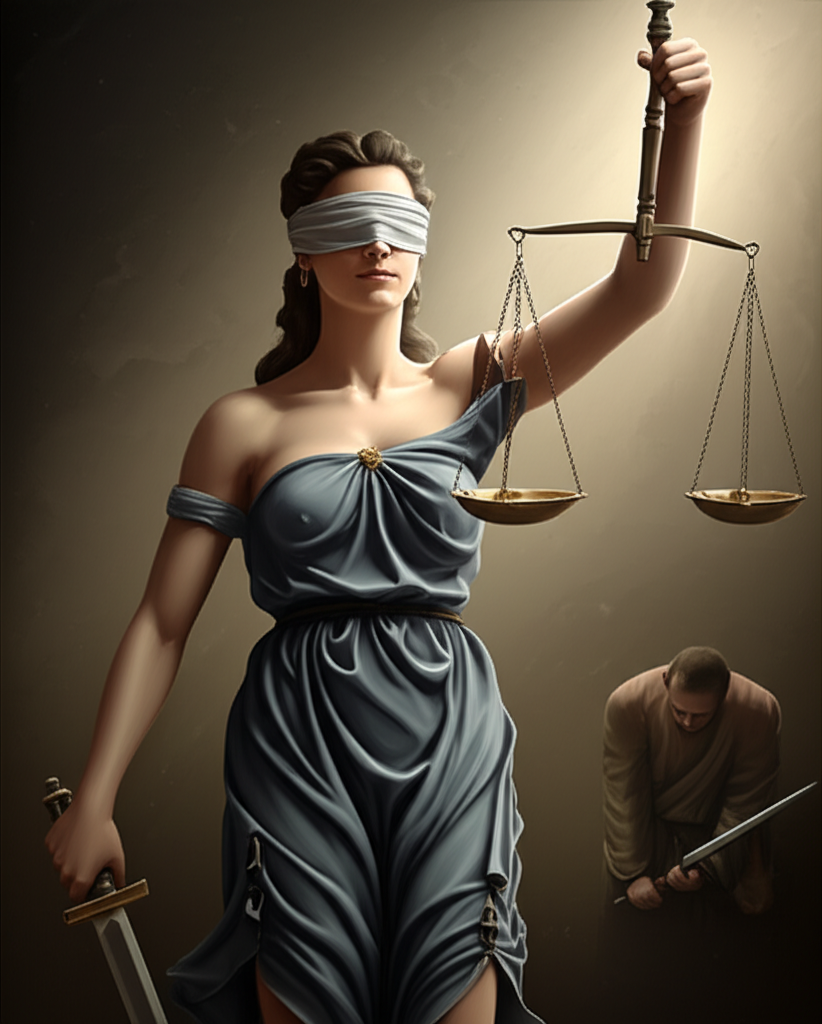
Challenges and Ethical Dilemmas
Despite the various justifications, the implementation of punishment is fraught with challenges:
- Proportionality: How do we accurately determine a punishment that is "just" or "deserved"?
- Effectiveness: Does punishment truly deter? Can it genuinely rehabilitate?
- Unjust Punishment: The risk of wrongful conviction and the irreversible harm of severe penalties.
- Mercy vs. Justice: The tension between the strict application of law and the call for compassion.
Conclusion: An Enduring Philosophical Dilemma
The function of punishment in justice remains one of philosophy's most enduring and practical challenges. As explored in the Great Books, it is not a monolithic concept but a dynamic interplay of retribution, deterrence, rehabilitation, and restoration. Each theory offers a compelling, yet incomplete, account of how society performs its duty to respond to wrongdoing. Ultimately, the quest for justice through punishment is an ongoing negotiation – a delicate balancing act between the past transgression, the present need for order, and the future hope for a more just and peaceful society.
YouTube Video Suggestions:
-
📹 Related Video: ARISTOTLE ON: The Nicomachean Ethics
Video by: The School of Life
💡 Want different videos? Search YouTube for: "Michael Sandel Justice What's The Right Thing To Do Punishment"
-
📹 Related Video: What is Philosophy?
Video by: The School of Life
💡 Want different videos? Search YouTube for: "Crash Course Philosophy Punishment Theories"