

The Profound Duality: Navigating the Experience of Pleasure and Pain
The twin forces of Pleasure and Pain are arguably the most fundamental Experiences that shape human existence. From the first touch of warmth to the sting of a wound, our very being is constantly negotiating this profound duality. This article delves into how these essential sensations, mediated by our Senses and embodied within our Body, have been understood by some of history's greatest thinkers, revealing their complex nature beyond mere physical reactions and exploring their philosophical implications for a life well-lived. We will explore how ancient philosophers wrestled with defining, categorizing, and ultimately, integrating these powerful forces into their visions of human flourishing and ethical conduct.
The Primacy of Sensation: Our First Encounter with Pleasure and Pain
At its core, the Experience of Pleasure and Pain is deeply rooted in our sensory apparatus. Our Body is a remarkable instrument, constantly receiving and interpreting signals from both the external world and its own internal states. It is through our Senses – touch, taste, sight, smell, hearing – that we first encounter the delights and discomforts that define our physical reality. A sweet taste brings immediate pleasure, just as a sharp sound can induce instantaneous pain. This immediate, unmediated Experience forms the bedrock upon which all subsequent philosophical inquiry is built.
- Sensory Input and Existential Output: From the warmth of the sun on our skin to the ache of a tired muscle, these sensations are not merely neutral data points. They are imbued with an immediate evaluative quality, signaling what is beneficial or harmful, desirable or undesirable. This primal Experience guides our most basic behaviors, driving us towards what promises comfort and away from what threatens our well-being. Philosophers, recognizing this fundamental aspect, sought to understand if this immediate sensory judgment held true for all forms of pleasure and pain, or if deeper, more complex interpretations were necessary.
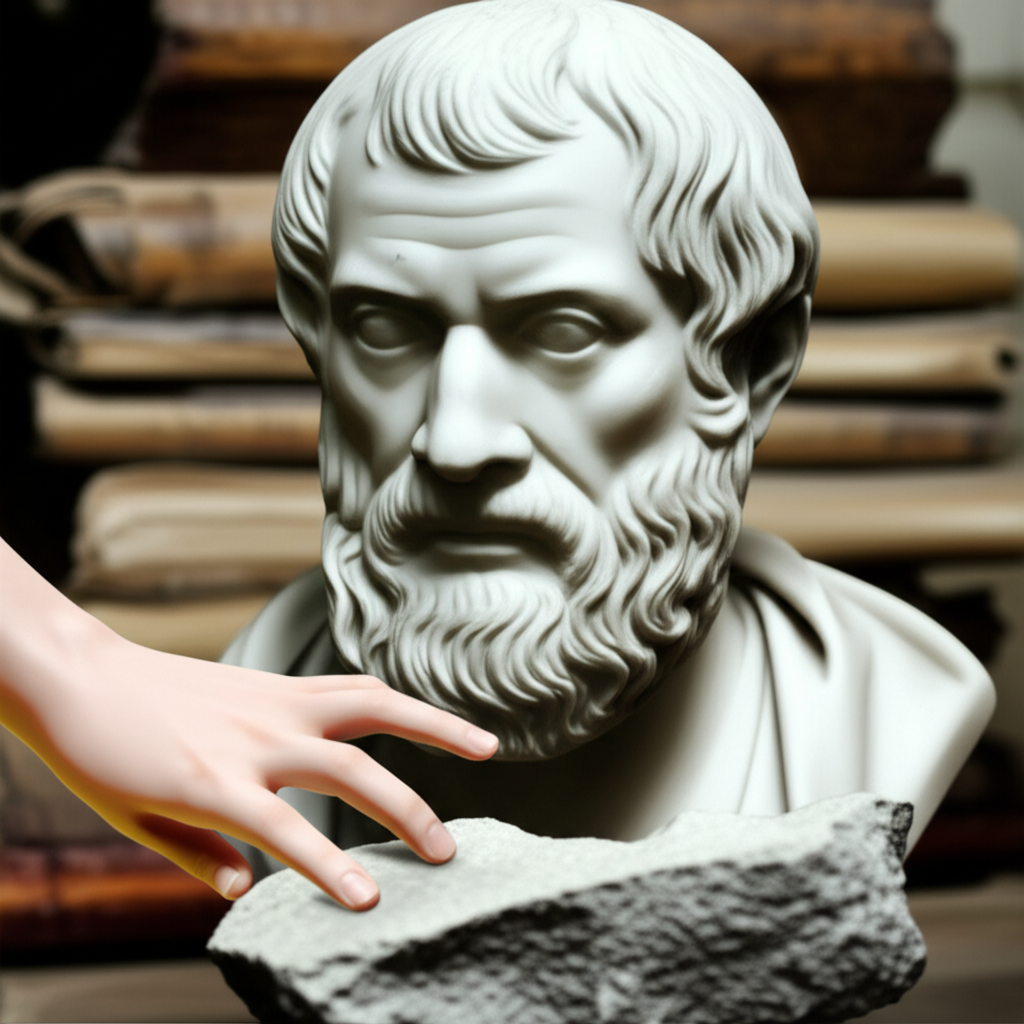
Philosophical Lenses on the Experience
The Great Books of the Western World offer a rich tapestry of thought on Pleasure and Pain, moving beyond mere sensation to explore their ethical, psychological, and existential dimensions.
Plato's Shadows and Realities
For Plato, as explored in dialogues like the Philebus, Pleasure and Pain are often seen in relation to desire and fulfillment. He distinguishes between true and false pleasures, arguing that many pleasures are merely the cessation of pain or the 'filling' of a want, rather than a positive good in themselves. For instance, the pleasure of eating comes from alleviating hunger, a form of pain. True pleasures, for Plato, are those associated with intellectual activity and the contemplation of the Forms, which are pure and unmixed with pain. The Experience of such pleasures is a pursuit of the good, transcending the immediate demands of the Body and its Senses.
Aristotle's Flourishing and Fulfillment
Aristotle, particularly in the Nicomachean Ethics, offers a more nuanced and integrated view. He sees pleasure not as an activity itself, but as a "supervening perfection" of an unimpeded activity. When an activity (like seeing or thinking) is performed well and without hindrance, pleasure naturally accompanies it, completing it. Thus, good activities yield good pleasures, and bad activities yield bad pleasures. For Aristotle, the Experience of pleasure is intimately linked to eudaimonia – human flourishing. The pleasures of the Body are acknowledged, but they are subordinate to the higher, more enduring pleasures of intellectual and virtuous activity. Pain, conversely, is an impediment to such activity.
Epicurus's Tranquil Pursuit
Epicurus, whose philosophy is preserved through fragments and the writings of others like Lucretius in On the Nature of Things, made the pursuit of pleasure the central aim of life, but with a crucial distinction. He defined pleasure not as intense gratification, but as the absence of pain (aponia in the Body) and the absence of mental disturbance (ataraxia in the soul). For Epicurus, the highest Experience of pleasure was a state of tranquility and freedom from suffering. This required a careful calculation of desires, understanding that many intense pleasures lead to greater pain, and that simple, natural pleasures are often the most profound and sustainable. His philosophy emphasizes the role of reason in guiding our Senses and managing the demands of the Body to achieve a balanced and serene existence.
The Interplay: More Than Mere Opposites
While often presented as direct opposites, Pleasure and Pain are deeply interconnected, forming a continuous spectrum of human Experience. Philosophers have long pondered whether one can exist without the other, or if they are two sides of the same coin.
Here are some key distinctions in understanding the Experience of Pleasure and Pain:
- Intensity vs. Duration: Some pleasures are fleeting but intense (e.g., a burst of laughter), while others are subtle but enduring (e.g., the satisfaction of a job well done). The same applies to pain.
- Physical vs. Mental: The Body experiences physical pain and pleasure through its Senses, but the mind also experiences emotional pain (grief, anxiety) and pleasure (joy, contentment).
- Immediate vs. Anticipated/Remembered: Much of our Experience of pleasure and pain is not just in the present moment but also in the anticipation of future events or the recollection of past ones.
- Productive vs. Destructive: Some pains (e.g., the pain of exertion during exercise) can lead to long-term pleasure and benefit, while some pleasures (e.g., excessive indulgence) can lead to long-term pain.
Beyond the Immediate: The Moral and Existential Dimensions
The philosophical inquiry into Pleasure and Pain extends beyond their immediate Experience to their moral and existential implications. Are we simply programmed to seek pleasure and avoid pain, or do we have a moral imperative to choose certain kinds of pleasure and endure certain kinds of pain? The thinkers of the Great Books compel us to consider:
- The pursuit of virtue: Is a life of virtue necessarily pleasurable, or does it sometimes demand the endurance of pain for a greater good?
- The nature of happiness: Can true happiness (eudaimonia) be achieved without understanding and managing the duality of Pleasure and Pain?
- The role of suffering: Does pain have a purpose beyond mere discomfort? Can it be a catalyst for growth, understanding, or empathy?
Ultimately, the Experience of Pleasure and Pain forces us to confront our own mortality, our values, and the very nature of what it means to be human. It challenges us to move beyond simplistic reactions and engage in a thoughtful, deliberate pursuit of a life that is not just free from suffering, but rich in meaningful Experience.
YouTube: "Aristotle on Pleasure and Happiness"
YouTube: "Epicurean Philosophy: The Pursuit of Tranquility"
📹 Related Video: What is Philosophy?
Video by: The School of Life
💡 Want different videos? Search YouTube for: "The Experience of Pleasure and Pain philosophy"