

The Experience of Memory and its Truth: A Philosophical Inquiry
Memory, that seemingly steadfast foundation of our identity and knowledge, is often perceived as a faithful archive, a mental vault preserving the past exactly as it occurred. Yet, a deeper philosophical examination reveals a far more intricate, dynamic, and often elusive experience. This article delves into the complex interplay between memory, imagination, and the very concept of truth, suggesting that our mind doesn't merely record but actively reconstructs, thereby challenging our assumptions about the reliability of our personal histories.
The Mind's Tapestry: Memory as an Active Experience
From the earliest philosophical inquiries, thinkers have grappled with the nature of memory. Plato, in Theaetetus, famously likened memory to a wax tablet upon which impressions are made, suggesting a relatively passive recording process. Aristotle, in On Memory and Recollection, viewed it as a retention of images and an affection of the primary sense faculty, a more active engagement of the mind. What both recognized, however, was memory's centrality to human experience.
Today, we understand that memory is far from a static repository. The experience of remembering is an active, reconstructive process. Each time we recall an event, our mind doesn't simply retrieve a fixed file; it rebuilds the narrative, often influenced by our current emotional state, subsequent experiences, and even our desires. This dynamic nature means that the "truth" of a memory can shift and evolve, becoming less about perfect factual recall and more about a coherent personal narrative.
Memory and Imagination: Unmasking the Collaborators
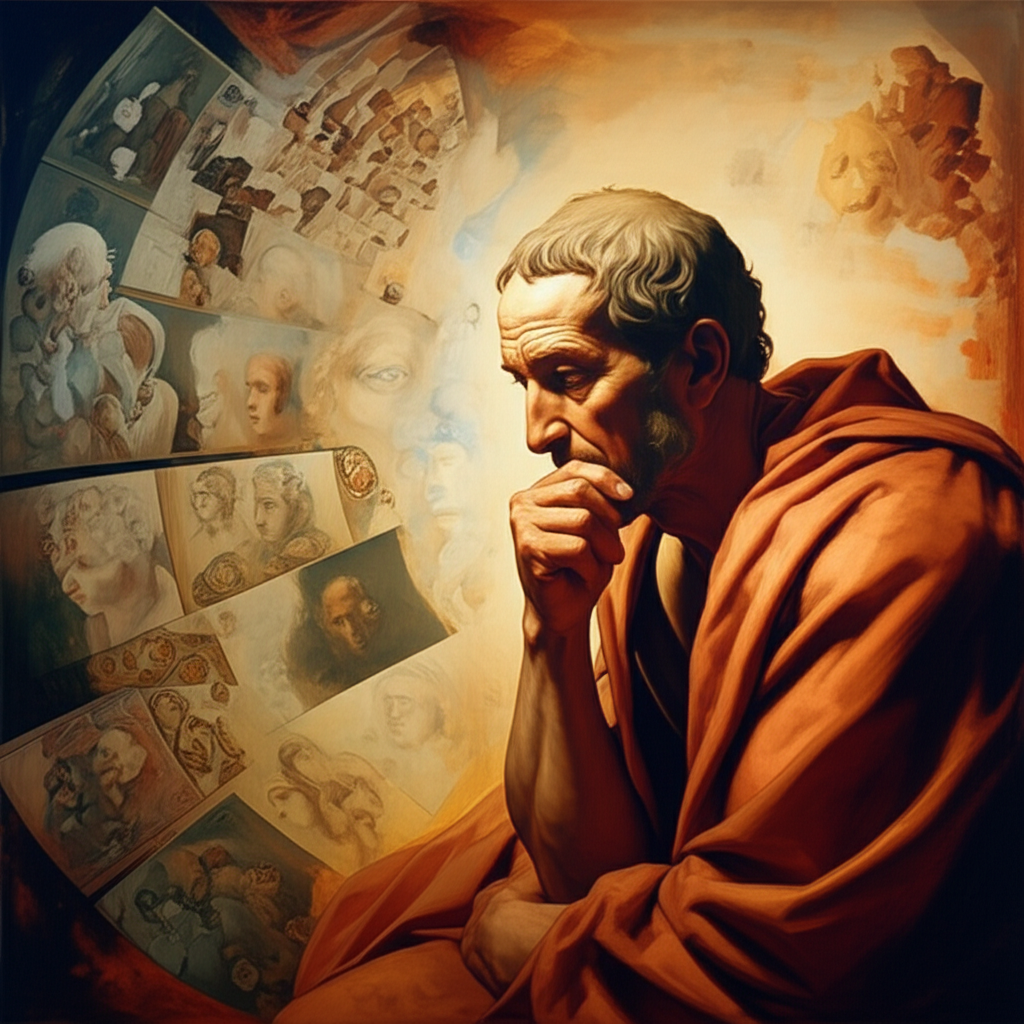
One of the most profound challenges to memory's claim to absolute truth lies in its intimate relationship with imagination. Far from being distinct faculties, memory and imagination are deeply intertwined. When we remember, especially details that have faded or are incomplete, our mind often fills in the gaps, drawing upon general knowledge, expectations, and creative inference. This isn't necessarily a conscious act of fabrication but an inherent part of the reconstructive process.
Consider a vivid childhood memory. How much of it is a perfect playback, and how much is a story embellished over years of retelling, subtly informed by photographs, family anecdotes, and even desires for a more dramatic or idyllic past? The lines blur. Imagination serves not only as the faculty for creating novel ideas but also as a vital partner in solidifying, and sometimes altering, our recollections. This collaboration suggests that every memory carries a trace of invention, a creative input from the mind that shapes its content and emotional resonance.
The Blurring of Boundaries:
- Filling Gaps: When details are missing, imagination provides plausible (or desired) information.
- Emotional Coloring: Current feelings can alter the perceived emotional tone of past events.
- Narrative Cohesion: Our minds strive for a coherent story, sometimes at the expense of precise accuracy.
- Suggestibility: External information or leading questions can subtly implant false details.
The Elusive Truth of Memory
Given this dynamic interplay, what then becomes of the truth of memory? If our recollections are subject to reconstruction and imaginative input, can we truly claim to remember what is "true"? This question strikes at the heart of our understanding of both personal history and objective reality.
Philosophers throughout the ages have grappled with this. Descartes, in his meditations, questioned the reliability of sensory experience and memory, seeking a more certain foundation for knowledge. While he found certainty in the act of thinking itself ("I think, therefore I am"), the external world, and our memory of it, remained subject to doubt.
The truth of memory often exists on a spectrum, not as a binary state. There's factual accuracy, which can be corroborated by external evidence, and then there's personal authenticity, the subjective experience of how an event felt and what it meant to us. These two often diverge. A memory can be factually inaccurate but deeply "true" to our personal narrative and emotional landscape. Conversely, a factually accurate account might feel emotionally distant or inauthentic.
Challenges to Memory's Truth:
| Challenge | Description | Impact on Truth |
|---|---|---|
| Confabulation | Unintentionally creating false memories or distorting real ones. | Direct fabrication, often believed as true. |
| Emotional Bias | Strong emotions at recall (or during the event) alter the memory's content. | Skews perception, highlights or suppresses details. |
| Source Monitoring Errors | Forgetting where information came from (e.g., heard vs. experienced). | Misattributing experiences or knowledge. |
| Suggestibility | Memories being altered by external information, questions, or leading cues. | External forces shape internal recollections. |
| Fading Details | The natural decay of memory over time, leading to simplification and loss. | Reduces precision and richness of the original event. |
The Mind's Narrative: Identity and the Fabric of Self
Our sense of self, our very identity, is inextricably linked to our memories. The mind weaves a continuous narrative from our past experiences, creating a coherent story of who we are. This narrative provides meaning, direction, and a sense of continuity. If our memories are, to some extent, constructed and imagined, then our identities are also, in part, creative acts.
This isn't necessarily a cause for despair. It highlights the incredible adaptive capacity of the human mind. We are not passive recipients of our past but active architects of our present and future selves, constantly reinterpreting and integrating our experiences. Understanding this dynamic relationship between memory, imagination, and truth allows us to approach our own recollections, and those of others, with a nuanced appreciation for their complexity and their profound impact on our lives.
Further Exploration
To delve deeper into the philosophical and psychological aspects of memory and its relationship with truth, consider these resources:
📹 Related Video: PLATO ON: The Allegory of the Cave
Video by: The School of Life
💡 Want different videos? Search YouTube for: ""Philosophical Theories of Memory""
📹 Related Video: What is Philosophy?
Video by: The School of Life
💡 Want different videos? Search YouTube for: ""Memory and Personal Identity Philosophy""
In conclusion, the experience of memory is a rich, multifaceted phenomenon, deeply embedded in the operations of the mind. Its intimate dance with imagination means that its claim to absolute truth is often personal and subjective, rather than purely objective. Embracing this complexity allows for a more profound understanding of ourselves, our histories, and the very nature of reality as we perceive it.