

The Experience of Memory and its Truth
Memory, that intricate tapestry woven from the threads of our past, stands as a cornerstone of human consciousness. Yet, its very nature is fraught with philosophical complexities, particularly when we seek to understand its relationship to truth. This article delves into the profound experience of memory, questioning its fidelity, exploring its intimate dance with imagination, and ultimately grappling with whether our recollections can ever truly deliver an unvarnished truth about what was. We shall navigate the landscape of the mind's most personal archive, examining how our past is not merely stored, but actively constructed and re-constructed, shaping our present and future understanding of reality.
The Labyrinth of Experience and Memory
Our lives are a continuous stream of experience, each moment imprinted upon the canvas of our mind. From the mundane to the monumental, these experiences form the raw material for our memories. However, to conceive of memory as a perfect, unblemished recording device is to misunderstand its profound, active nature. It is not a passive archive, but an dynamic process, constantly being accessed, interpreted, and subtly reshaped by our present consciousness.
Consider the vividness of a childhood memory. The taste of a forgotten meal, the sound of a distant song, the feeling of a particular moment – these sensory details coalesce to form what feels like a direct window into the past. Yet, how much of this vividness is an accurate recall of the original experience, and how much is an embellishment, a filling-in of gaps by a mind eager for completeness? The very act of remembering is, in itself, a new experience, tinged with current emotions and perspectives.
Memory, Imagination, and the Constructive Mind
Herein lies one of the most intriguing philosophical challenges: the inseparable bond between Memory and Imagination. Often, we tend to compartmentalize them, viewing memory as factual and imagination as fanciful. However, the mind does not operate with such rigid distinctions. When we recall an event, especially one from the distant past, our mind often employs imaginative faculties to reconstruct details that have faded.
- Reconstruction: Memory isn't retrieval; it's often reconstruction. We access fragments, and our mind fills in the blanks, drawing upon schemas, expectations, and even desires.
- Narrative Building: We inherently create narratives from our experiences. This narrative-building process, while essential for coherence, can subtly alter the original events to fit a more compelling or personally resonant story.
- Emotional Coloring: The emotional state during recall can influence the memory itself. A joyful present can soften the edges of a past hardship, while a melancholic mood might cast a shadow over once-bright moments.
This interplay suggests that imagination is not merely an adjunct to memory, but an integral part of its functioning. The "what was" becomes inextricably linked with the "what could have been" or "what feels right."
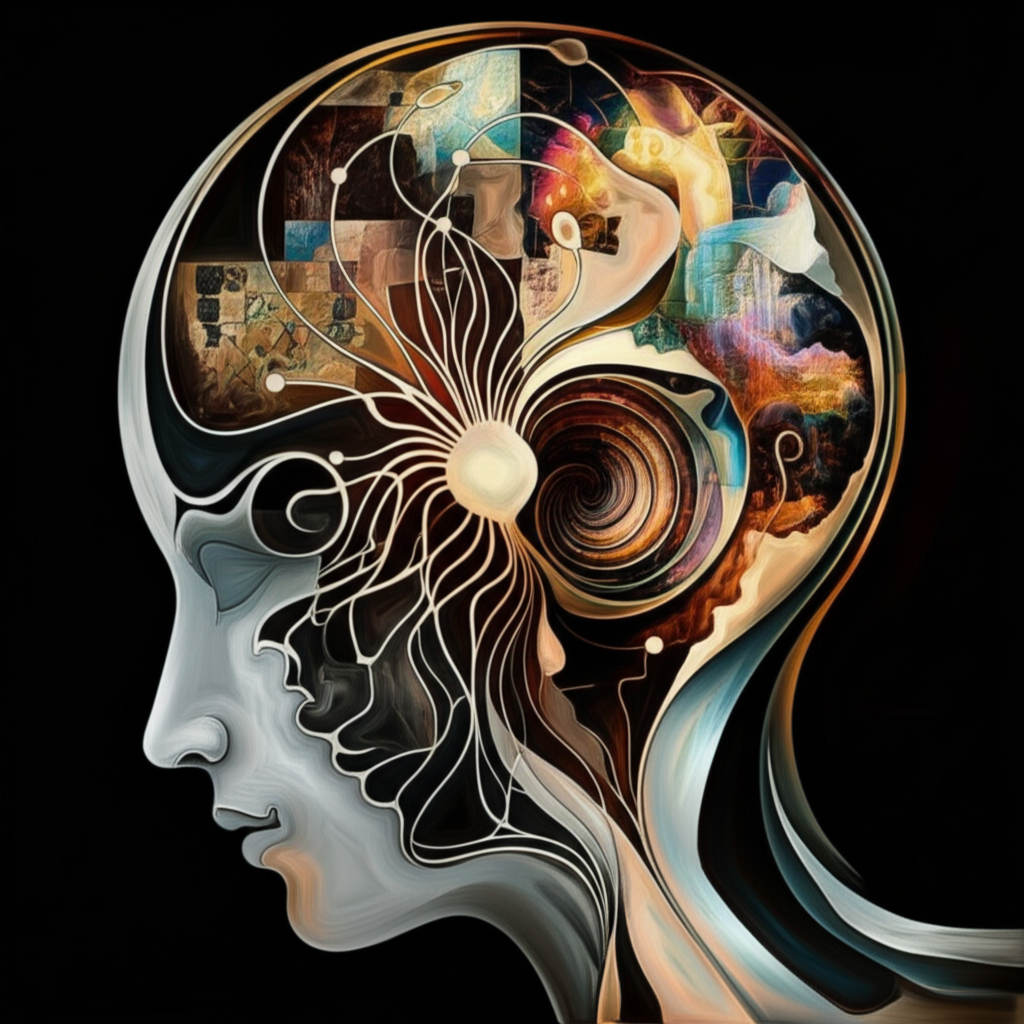
The Elusive Nature of Truth in Recollection
Given the active and constructive nature of memory, we must confront a fundamental question: Can memory truly deliver truth? If our recollections are subject to reconstruction, emotional bias, and the subtle influence of imagination, then the truth they purport to represent becomes a far more elusive concept.
Philosophers throughout history, from the ancient Greeks to modern phenomenologists, have grappled with the reliability of our inner worlds. Is truth in memory a correspondence to an objective past event, or is it a coherence within our personal narrative?
Perspectives on Memory's Truth:
| Philosophical Approach | View on Memory's Truth | Implications |
|---|---|---|
| Correspondence Theory | Memory is true if it accurately reflects an objective past event. | Highly skeptical of memory's absolute truth due to its reconstructive nature. |
| Coherence Theory | Memory is true if it fits consistently within an individual's broader belief system and other memories. | Focuses on internal consistency, even if it deviates from objective fact. |
| Pragmatic Theory | Memory is true if it is useful or functional for the individual in the present. | Truth is less about factual accuracy and more about its utility for personal identity or action. |
The mind's primary function may not be to provide a perfect historical record, but to construct a coherent, functional self-narrative that allows us to navigate the world. In this sense, the "truth" of memory might be less about an objective past and more about a subjective, lived reality.
Echoes from the Great Books: Memory's Philosophical Footprint
The exploration of memory's nature is a recurring theme within the Great Books of the Western World. From Plato's concept of anamnesis (recollection of innate knowledge) to Augustine's profound meditations on the vastness and mystery of memory as a "palace" of the mind, philosophers have long understood its central role in human experience.
Aristotle, in On Memory and Recollection, viewed memory as a trace or impression, a retention of a past experience. He distinguished it from imagination, yet acknowledged the potential for error. Later, figures like John Locke, building on the empirical tradition, emphasized the role of experience in forming ideas, which are then retained by memory, albeit with varying degrees of clarity and duration.
What these diverse perspectives underscore is a consistent recognition of memory as both essential and inherently fallible. It is the repository of our identity, the bridge to our past, yet it is also a dynamic, fluid entity, constantly being shaped by the present and future. The mind, in its intricate workings, does not simply store information; it constantly re-engages with it, imbuing it with new meaning and, in doing so, perhaps altering its original "truth."
Conclusion: The Enduring Mystery
The experience of memory is not merely about recalling facts; it is about the continuous, active engagement of the mind with its own past. It is a process deeply intertwined with imagination, where fragments of what was are reassembled, often unconsciously, to form a coherent narrative. The quest for absolute truth in memory, therefore, becomes a journey fraught with philosophical nuance.
Perhaps the "truth" of memory lies not in its perfect correspondence to an objective past, but in its ability to forge a meaningful connection between our past experiences and our present selves. It is a truth that is personal, dynamic, and profoundly human – a testament to the creative power of the mind itself. As we continue to ponder the nature of memory, we are reminded that our understanding of ourselves is constantly being written, not just recalled, by the very act of remembering.
📹 Related Video: PLATO ON: The Allegory of the Cave
Video by: The School of Life
💡 Want different videos? Search YouTube for: ""Plato Theory of Recollection Anamnesis Explained""
📹 Related Video: What is Philosophy?
Video by: The School of Life
💡 Want different videos? Search YouTube for: ""The Philosophy of Memory: Is Memory Reliable?""