

The Experience of Emotion and Judgment: A Socratic Inquiry into the Human Mind
The human condition is a rich tapestry woven from the threads of our inner lives. At its core lies the intricate, often perplexing, interplay between our experience of the world, the torrents of emotion it evokes, and the subsequent acts of judgment through which our mind attempts to navigate this complex reality. This article delves into this profound philosophical nexus, exploring how these elements are not merely adjacent but fundamentally intertwined, shaping our perceptions, decisions, and ultimately, our understanding of ourselves.
The Raw Tapestry of Experience and Emotion
Our journey through life is fundamentally an experience. From the simplest sensory input to the most profound existential realization, our consciousness is constantly engaging with phenomena. It is from this fertile ground of experience that emotion springs forth, unbidden and potent. Consider the sudden flush of anger, the quiet ache of sorrow, or the soaring joy of achievement – these are not abstract concepts but visceral responses to our lived moments.
The Great Books of the Western World are replete with explorations of this primal connection. Aristotle, in his Rhetoric, meticulously dissects the various passions, demonstrating how they are aroused in us and how they influence our disposition towards others and our reception of arguments. He understood that emotions are not mere irrational outbursts but often carry information, shaping our perceptions of good and ill. Similarly, thinkers like David Hume later posited that reason often serves as a "slave of the passions," suggesting that our ultimate motivations stem from feeling, with reason merely charting the course to satisfy those desires.
These philosophers compel us to acknowledge that our emotional landscape is not a separate realm but an integral part of our experience, coloring every perception and influencing every nascent thought.
The Faculty of Judgment: Navigating the Inner World
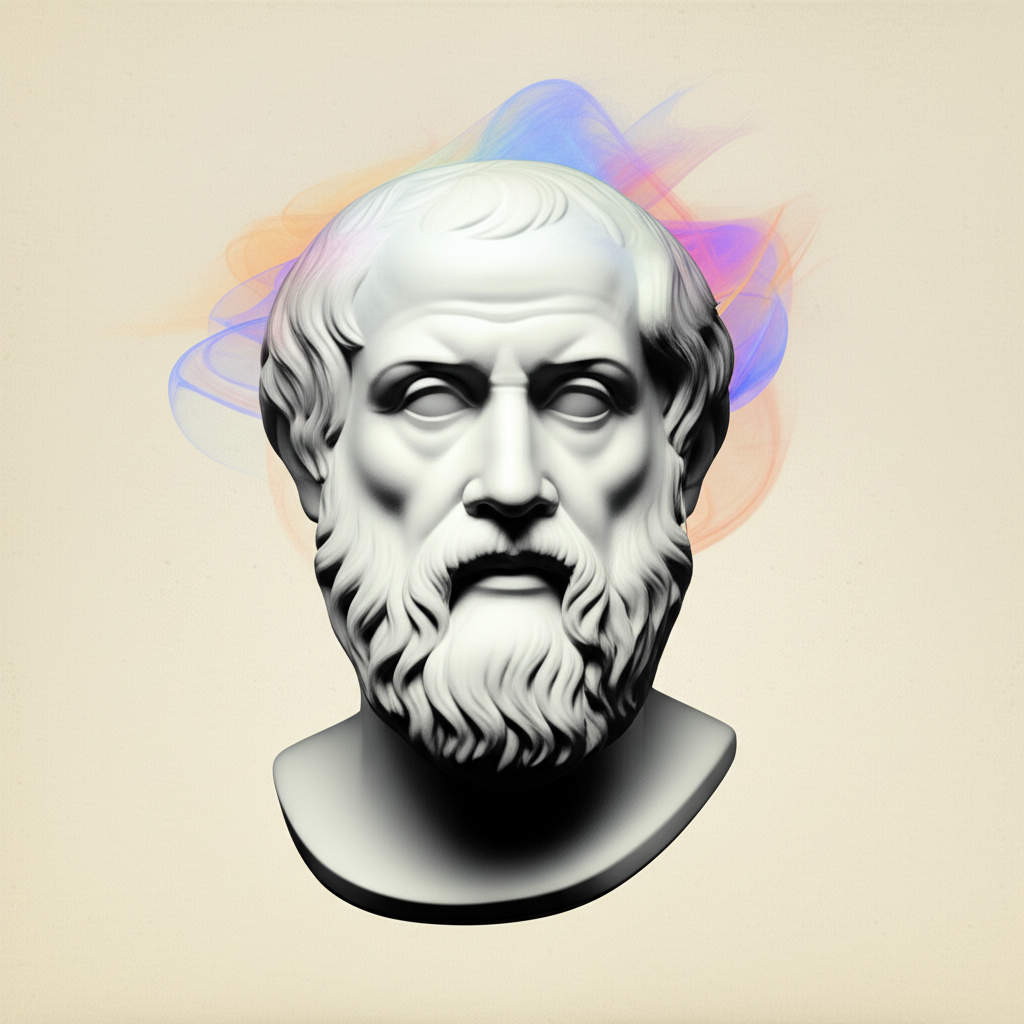
If emotion is the spontaneous eruption of our inner world in response to experience, then judgment is the mind's subsequent, often arduous, endeavor to make sense of, evaluate, and respond to these powerful forces. It is the faculty through which we weigh, compare, assess, and ultimately decide.
Plato, in his Republic, famously articulated a tripartite soul, with reason (logistikon) as the charioteer guiding the spirited (thymoeides) and appetitive (epithymetikon) parts. This metaphor powerfully illustrates the ancient understanding that while emotions and desires are potent drivers, it is reason – the seat of judgment – that must assert control to achieve harmony and virtue. Later, René Descartes, in his Meditations, sought to establish the mind as distinct from the body, a thinking substance capable of clear and distinct perceptions, thereby elevating the role of rational judgment in discerning truth.
The act of judgment is therefore not merely a cold, calculating process but one deeply engaged with, and often challenged by, the very emotions it seeks to manage.
The Peril and Promise of Emotional Judgment
The relationship between emotion and judgment is a double-edged sword:
| Aspect | Peril | Promise |
|---|---|---|
| Clarity | Emotions can cloud rational thought, leading to impulsive or biased decisions. | Emotions can offer intuitive insights and moral guidance. |
| Motivation | Strong emotions might lead to irrational actions or paralysis. | Emotions (e.g., compassion, indignation) can be powerful motivators for ethical judgment and action. |
| Objectivity | Personal feelings can distort perception and prevent objective assessment. | Empathy, an emotional capacity, is crucial for understanding others and making fair judgments. |
| Wisdom | Unchecked passion can lead to folly and regret. | Emotionally informed judgment contributes to a richer, more nuanced understanding of complex situations. |
From Impulse to Deliberation: A Philosophical Journey
The history of philosophy is, in many ways, a continuous dialogue about how to best integrate or separate emotion and judgment. The Stoics, for instance, championed the ideal of apatheia – not an absence of feeling, but freedom from destructive passions – through the rigorous application of reason and judgment. For them, true freedom lay in mastering one's internal responses to external events.
Conversely, later movements, like Romanticism, emphasized the primacy of feeling and intuition, suggesting that an overly rationalistic approach could stifle human creativity and authentic experience. Immanuel Kant, with his emphasis on duty and the categorical imperative, sought to ground moral judgment in universal reason, independent of individual inclinations or emotions. Yet, even he acknowledged the role of "moral feeling" as an aid to duty.
This ongoing philosophical tension underscores a fundamental truth: the experience of emotion and the exercise of judgment are inseparable aspects of the human mind. To ignore one in favor of the other is to embrace an incomplete vision of ourselves. The journey from raw impulse to thoughtful deliberation is not a linear path but a continuous dialectic, demanding constant self-awareness and a nuanced understanding of our inner workings.
Ultimately, to truly live a considered life, one must not merely feel or merely judge, but rather, through the lens of profound philosophical inquiry, learn to understand how these elemental forces coalesce within us, guiding our path through the rich, complex tapestry of existence.
YouTube Video Suggestions:
- YouTube: "Plato's Chariot Allegory explained"
- YouTube: "Hume on Reason and Passion"
📹 Related Video: What is Philosophy?
Video by: The School of Life
💡 Want different videos? Search YouTube for: "The Experience of Emotion and Judgment philosophy"